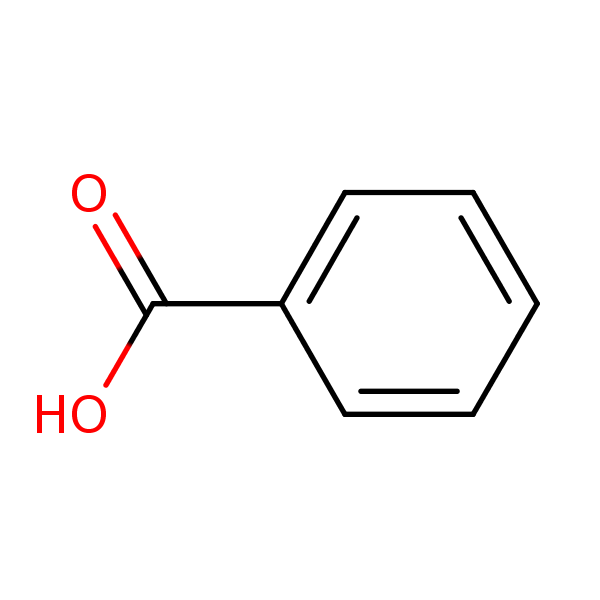
| CAS Number | 65-85-0 |
|---|---|
| Molecular Formula | C7H6O2 |
| Molecular Weight | 122.124 |
| InChI Key | WPYMKLBDIGXBTP-UHFFFAOYSA-N |
| LogP | 1.87 |
| Synonyms |
|
Applications:
HPLC Method for Analysis of Benzoic Acid on Newcrom BH Column on Alltesta™
June 22, 2026
HPLC Method for Benzoic Acid on Newcrom BH by SIELC Technologies
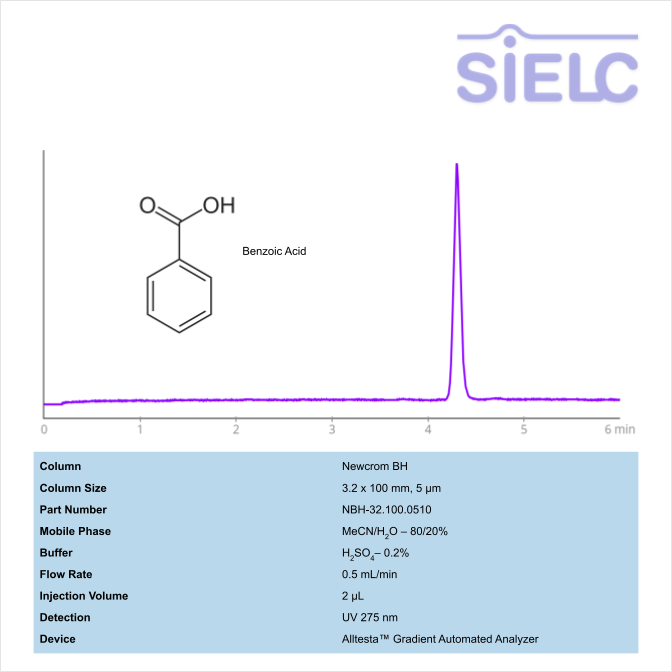
High Performance Liquid Chromatography (HPLC) Method for Analysis of Benzoic Acid
Benzoic Acid is an organic acid with antimicrobial properties. It is typically used in cosmetics, food, and pharmaceuticals as a preservative against yeast and mold. As treatment, it is also used as a topical medicine of fungal skin infections. It can be naturally found in many berries and vegetable resins. With it’s chemical formula being C7H6O2, it is considered the simplest aromatic carboxylic acid. You can find detailed UV spectra of Benzoic Acid and information about its various lambda maxima by visiting the following link.
Benzoic Acid can be retained and analyzed using the Newcrom BH stationary phase column. The analysis utilizes an isocratic method with a simple mobile phase consisting of water and acetonitrile (MeCN) with sulfuric acid as a buffer. Detection is performed using UV.
| Column | Newcrom BH, 3.2 x 100 mm, 5 µm, 100 A, dual ended |
| Mobile Phase | MeCN – 80% |
| Buffer | Sulfuric Acid |
| Flow Rate | 0.5 mL/min |
| Detection | UV 275 nm |
| Class of Compounds | Acid |
| Analyzing Compounds | Benzoic Acid |
Application Column
Newcrom BH
Column Diameter: 3.2 mm
Column Length: 100 mm
Particle Size: 5 µm
Pore Size: 100 A
Column options: dual ended

UV-Vis Spectrum of Benzoic Acid
August 1, 2025
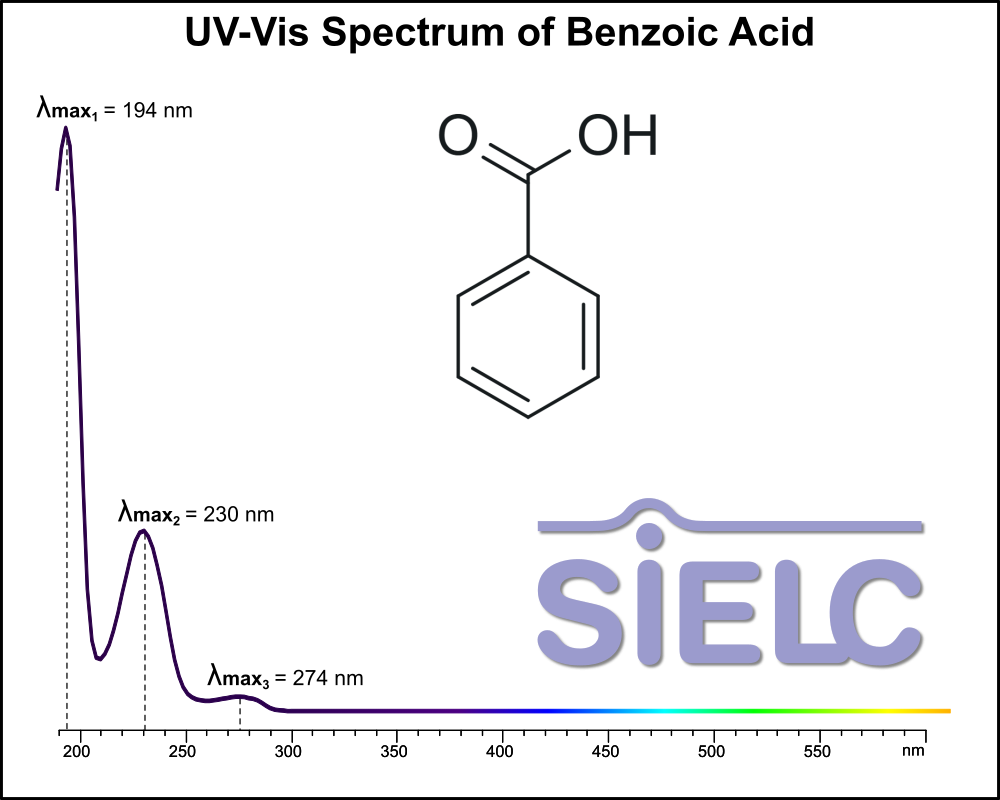
If you are looking for optimized HPLC method to analyze Benzoic Acid check our HPLC Applications library
For optimal results in HPLC analysis, it is recommended to measure absorbance at a wavelength that matches the absorption maximum of the compound(s) being analyzed. The UV spectrum shown can assist in selecting an appropriate wavelength for your analysis. Please note that certain mobile phases and buffers may block wavelengths below 230 nm, rendering absorbance measurement at these wavelengths ineffective. If detection below 230 nm is required, it is recommended to use acetonitrile and water as low UV-transparent mobile phases, with phosphoric acid and its salts, sulfuric acid, and TFA as buffers.
For some compounds, the UV-Vis Spectrum is affected by the pH of the mobile phase. The spectra presented here are measured with an acidic mobile phase that has a pH of 3 or lower.
HPLC Separation of Benzoic and 2-naphtalenesulfonic Acids
June 9, 2020
HPLC Method for Benzoic Acid, 2-Naphthalenesulfonic Acid on Newcrom BH by SIELC Technologies
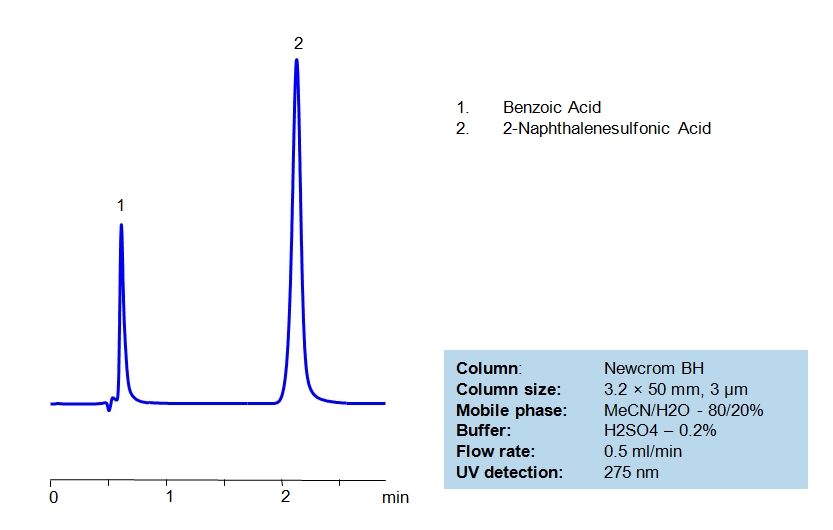
High Performance Liquid Chromatography (HPLC) Method for Analysis of Benzoic Acid, 2-Naphthalenesulfonic Acid.
Benzoic Acid is an organic acid with antimicrobial properties. It is typically used in cosmetics, food, and pharmaceuticals as a preservative against yeast and mold. As treatment, it is also used as a topical medicine of fungal skin infections. It can be naturally found in many berries and vegetable resins. With it’s chemical formula being C7H6O2, it is considered the simplest aromatic carboxylic acid. You can find detailed UV spectra of Benzoic Acid and information about its various lambda maxima by visiting the following link.
2-Naphthalenesulfonic Acid is an organic compound with the formula C10H7SO3H. It is used primarily in the production of dyes, but has also historically been industrially used for a it’s various chemical reactions.
Newcrom BH column is used for HPLC separation of weak and strong organic acids using a mixed-mode method. Benzoic and naphthalenesulfonic acids are retained based on polar interaction mode and anion-exchange mode. The isocratic separation is achieved very quickly on a short 3.2 x 50 mm column in under 3 minutes. The mobile phase is acetonitrile (ACN) and water with sulfuric acid buffer. UV detection at 275nm.
| Column | Newcrom BH, 3.2 x 50 mm, 3 µm, 100 A, dual ended |
| Mobile Phase | MeCN/H2O – 80/20% |
| Buffer | H2SO4 – 0.2% |
| Flow Rate | 0.5 ml/min |
| Detection | UV 275nm |
| Class of Compounds | Acid |
| Analyzing Compounds | Benzoic Acid, 2-Naphthalenesulfonic Acid |
Application Column
Newcrom BH
Column Diameter: 3.2 mm
Column Length: 50 mm
Particle Size: 3 µm
Pore Size: 100 A
Column options: dual ended
Benzoic Acid
HPLC Separation of Denatonium benzoate on Newcrom A Column
September 20, 2019
HPLC Method for Denatonium benzoate, Benzoic Acid on Newcrom A by SIELC Technologies
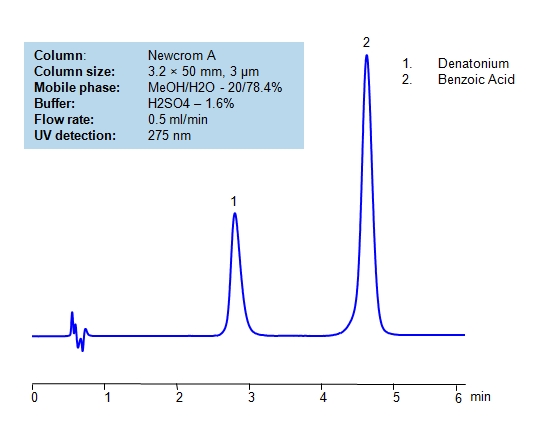
High Performance Liquid Chromatography (HPLC) Method for Analysis of Denatonium benzoate, Benzoic Acid
Denatonium benzoate, also known as Denatonium, is the bitterest chemical that is safe to be ingested. It is often used as a bittering agent to antifreeze, detergents, and cosmetics to prevent consumption. Even low concentrations of it can cause am incredibly bitter taste. In France and Italy it is mandatory to add Denatonium to antifreeze. It has the chemical formula C₂₈H₃₄N₂O₃.
Benzoic Acid is an organic compound with the chemical formula C7H6O2. It is considered to be the simplest aromatic carboxylic acid. In nature, it can be found in many plants, especially berries. It is used for food preservation of food, as it can inhibit growth of bacteria and mold. While it is safe in food, it can cause irritation to skin, eye, and respiratory systems.
Denatonium benzoate, Benzoic Acid can be retained and analyzed using the Newcrom A stationary phase column. The analysis utilizes an isocratic method with a simple mobile phase consisting of water and acetonitrile (MeCN) with a sulfuric acid buffer. Detection is performed using UV.
| Column | Newcrom A, 3.2 x 50 mm, 3 µm, 100 A, dual ended |
| Mobile Phase | MeOH/H2O – 20/78.4% |
| Buffer | H2SO4 – 1.6% |
| Flow Rate | 0.5 ml/min |
| Detection | UV 275 nm |
| Class of Compounds |
Drug, The bitter chemical compound, Basic, Hydrophobic, Ionizable |
| Analyzing Compounds | Denatonium benzoate, Benzoic Acid |
Application Column
Newcrom A
Column Diameter: 3.2 mm
Column Length: 50 mm
Particle Size: 3 µm
Pore Size: 100 A
Column options: dual ended
Denatonium benzoate
Generic Screening Method for Complex Mixtures on Primesep 200
October 15, 2015
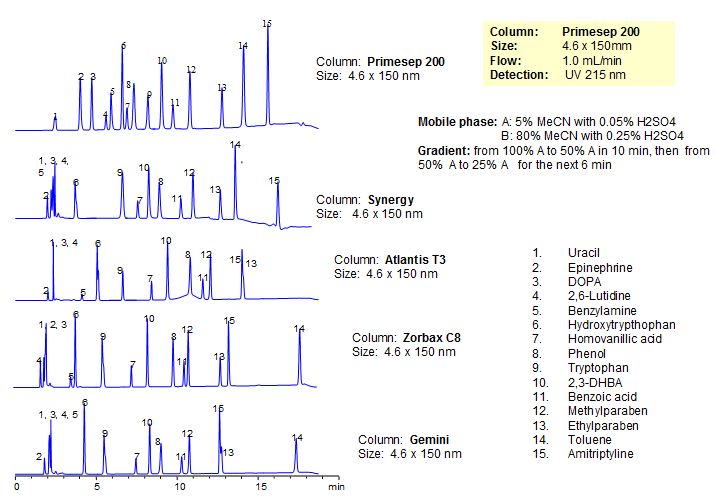
| Column | Primesep 200, 4.6*150 mm 5 µm, 100A |
| Mobile Phase | MeCN/H2O |
| Buffer | H2SO4 |
| Flow Rate | 1.0 ml/min |
| Detection | UV, 215 nm |
| Class of Compounds |
Drug, Acid, Hydrophilic, Ionizable, Hormone |
| Analyzing Compounds | Uracil, Epinephrine, DOPA, 2,6-Lutidine, Benzylamine, Hydroxytrypthophan, Homovanillic acid, Phenol, Tryptophan , 2,3-DHBA, Benzoic acid, Methylparaben, Ethylparaben, Toluene, Amitriptyline |
Application Column
Primesep 200
Column Diameter: 4.6 mm
Column Length: 150 mm
Particle Size: 5 µm
Pore Size: 100 A
Column options: dual ended
2,6-Lutidine
Amitriptyline
Benzoic Acid
Benzylamine
DOPA (3,4-dihydroxy-L-phenylalanine)
Epinephrine
Ethylparaben
Homovanillic Acid
Hydroxytryptophan
Methylparaben
Phenol
Toluene
Tryptophan
Uracil
HPLC Separation of Caffeine, Benzoic acid and Acetaminophen
August 6, 2015
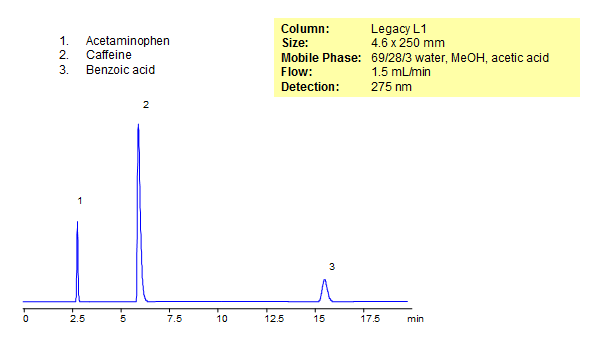
| Column | Legacy L1, 4.6×250 mm, 5 µm, 100A |
| Mobile Phase | MeOH – 28% |
| Buffer | Acetic Acid – 3% |
| Flow Rate | 1.5 ml/min |
| Detection | UV, 275 nm |
| Class of Compounds |
Drug, Acid, Hydrophilic, Hydrophobic, Ionizable |
| Analyzing Compounds | Caffeine, Benzoic acid, Acetaminophen |
&
Application Column
Legacy L1
SIELC's family of Legacy columns is based on the United States Pharmacopeia's (USP) published chromatographic methods and procedures. Numerous brands have columns used in USP reference standards and methods. USP has created various designations to group together columns with similar types of packing and properties in the solid phase. SIELC's Legacy columns adhere to these strict requirements and properties, allowing you to easily replace older columns that are no longer available without needing to significantly modify your method or SOPs.
Select optionsBenzoic Acid
Caffeine
Separation of Benzoic and Acetylbenzoic acid in Hydrogen-Bonding Mode
May 11, 2015
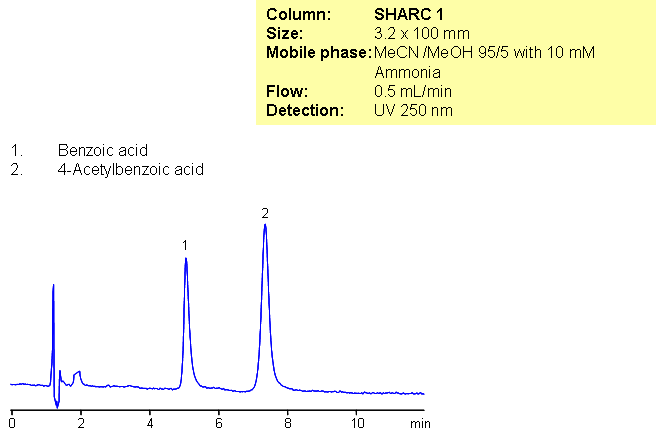
A general approach for analysis of various organic acids with MS detection in negative mode was developed using hydrogen-bonding stationary phase – SHARC 1. A highly sensitive method allows to analyze traces of organic acids in various matrices using ACN/MeOH/ammonia mobile phase. In hydrogen-bonding chromatography acetonitrile is a weaker solvent and alcohol is a stronger solvent. Various gradient and isocratic conditions can be used
| Column | Sharc 1, 3.2×100 mm, 5 µm, 100A |
| Mobile Phase | MeCN/MeOH – 95/5% |
| Buffer | Ammonia 10mM |
| Flow Rate | 005 ml/min |
| Detection | UV, 250 nm |
| Class of Compounds |
Acid, Hydrophilic, Ionizable, Vitamin, Supplements |
| Analyzing Compounds | Benzoic Acid, Acetylbenzoic acid |
Application Column
SHARC 1
The SHARC™ family of innovative columns represents the first commercially available columns primarily utilizing separation based on hydrogen bonding. SHARC stands for Specific Hydrogen-bond Adsorption Resolution Column. Hydrogen bonding involves an interaction or attraction between a bound hydrogen atom and molecules containing electronegative atoms, such as oxygen, nitrogen, and fluorine.
Select optionsBenzoic Acid
UV Detection
Separation of Phthalic Acids and Related Impurities
July 2, 2013
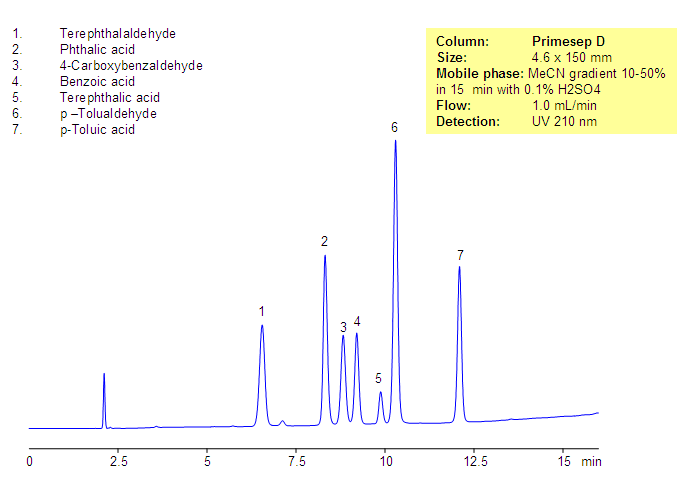
Phthalic acid, phthalic acid isomers, and related products present in the production of phthalic acid were separated on the Primesep D column, based on reversed-phase and in-exchange mechanisms. Neutral, hydrophobic compounds of the phthalic acid production are retained by a reversed-phase mechanism, and phthalic acid and other acidic compounds are retained by a combination of reversed-phase and anion-exchange mechanisms. Resolution and selectivity of this separation can be modified by varying the amount of acetonitrile, buffer concentrations, and buffer pH. This method can be used for monitoring the production cycle of phthalic acid and related impurities.
| Column | Primesep D, 4.6×150 mm, 5 µm, 100A |
| Mobile Phase | Gradient MeCN – 10-50%, 15 min |
| Buffer | H2SO4 – 0.1% |
| Flow Rate | 1.0 ml/min |
| Detection | UV, 210 nm |
| Class of Compounds |
Acid, Hydrophilic, Ionizable |
| Analyzing Compounds | Terephthalaldehyde, Phthalic acid, 4-Carboxybenzaldehyde, Benzoic acid, Terephthalic acid, p –Tolualdehyde, p-Toluic acid |
Application Column
Primesep D
The Primesep family of mixed-mode columns offers a wide variety of stationary phases, boasting unprecedented selectivity in the separation of a broad array of chemical compounds across multiple applications. Corresponding Primesep guard columns, available with all stationary phases, do not require holders. SIELC provides a method development service available to all customers. Inquire about our specially-tailored custom LC-phases for specific separations.
Select optionsBenzoic Acid
Phthalic Acid
Terephthalaldehyde
Terephthalic Acid
p-Tolualdehyde
p-Toluic Acid
USP Methods for the Analysis of Guaifenesin Using a Legacy L1 Column
June 21, 2012
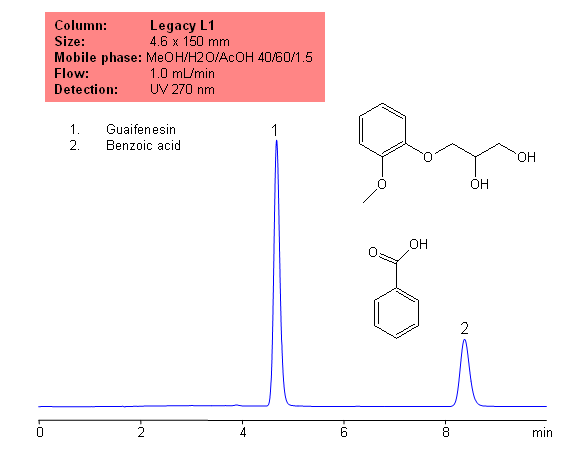
Application Notes: Guaifenesin is common, over the counter expectorant. Guaifenesin contain no less than 98 percent and not more than 102 percent of the labeled amount of guaifenesin calculated on a dried basis, according to the USP methods. the The USP HPLC method for the analysis of guaifenesin was developed on our Legacy L1 column according to the US Pharmacopeia methodology. L1 classification is assigned to reversed-phase HPLC column containing C18 ligand. Support for the material is spherical silica gel with particles size 3-10 um and pore size of 100-120A.
Application Columns: Legacy L1 C18 HPLC column
Application compounds: Guaifenesin, benzoic acid
Mobile phase: MeOH/H2O/AcOH 40:60:1.5
Detection technique: UV
Reference: USP 35- NF30
| Column | Legacy L1, 4.6×150 mm, 5 µm, 100A |
| Mobile Phase | MeOH/H2O/AcOH 40/60/1.5 |
| Buffer | NaH2PO4 |
| Flow Rate | 1.0 ml/min |
| Detection | UV, 270 nm |
| Class of Compounds |
Drug, Antibiotics, Hydrophobic, Ionizable, Acid |
| Analyzing Compounds | Guaifenesin, Benzoic acid |
Application Column
Legacy L1
SIELC's family of Legacy columns is based on the United States Pharmacopeia's (USP) published chromatographic methods and procedures. Numerous brands have columns used in USP reference standards and methods. USP has created various designations to group together columns with similar types of packing and properties in the solid phase. SIELC's Legacy columns adhere to these strict requirements and properties, allowing you to easily replace older columns that are no longer available without needing to significantly modify your method or SOPs.
Select optionsGuaifenesin
USP Methods for the Analysis of an Analgesic Mixture Using the Legacy L1 Column
June 21, 2012
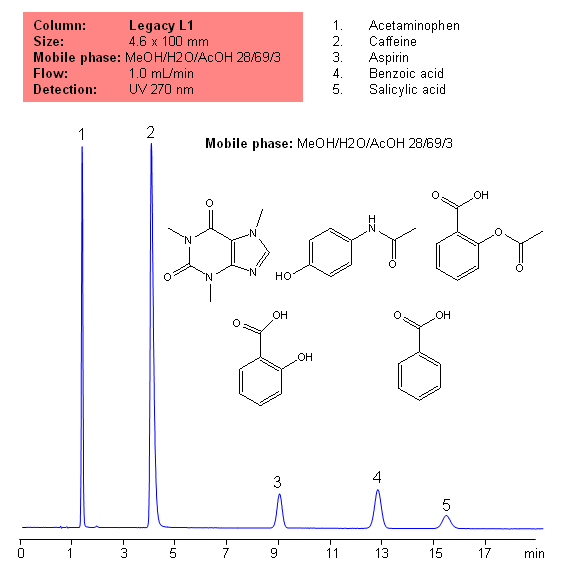
Application Notes: Acetametaphin, aspirin, and caffeine tablets contain not less than 90 percent and not more than 110 percent of the labeled amounts if acetametaphin, asprin, and caffeine according the USP methods. USP HPLC method for separation of acetaminophen, aspirin and caffeine was developed on Legacy L1 column according to US Pharmacopeia methodology. L1 classification is assigned to reversed-phase HPLC column contains C18 ligands. Support for the material is a spherical silica gel with particles size 3-10 um and pore size of 100-120A. Resolution between critical pairs corresponds to rules and specifications of USP.
Application Columns: Legacy L1 C18 HPLC column
Application compounds: Acetaminophen, Aspirin, Caffeine, benzoic acid, and salicylic acid
Mobile phase: MeOH/H2O/AcOH 28/69/3
Detection technique: UV
Reference: USP30: NF35
| Column | Legacy L1, 4.6×150 mm, 5 µm, 100A |
| Mobile Phase | MeOH/H2O/AcOH 28/69/3 |
| Buffer | AcOH |
| Flow Rate | 1.0 ml/min |
| Detection | UV, 270 nm |
| Class of Compounds |
Drug, Acid, Hydrophobic, Ionizable |
| Analyzing Compounds | Acetaminophen, Caffeine, Aspirin, Benzoic acid, Salicylic acid |
Application Column
Legacy L1
SIELC's family of Legacy columns is based on the United States Pharmacopeia's (USP) published chromatographic methods and procedures. Numerous brands have columns used in USP reference standards and methods. USP has created various designations to group together columns with similar types of packing and properties in the solid phase. SIELC's Legacy columns adhere to these strict requirements and properties, allowing you to easily replace older columns that are no longer available without needing to significantly modify your method or SOPs.
Select optionsAcetaminophen (Paracetamol)
Acetylsalicylic Acid (Aspirin)
Benzoic Acid
Caffeine
USP Analysis of Dopamine Using a Legacy L1 column
June 21, 2012
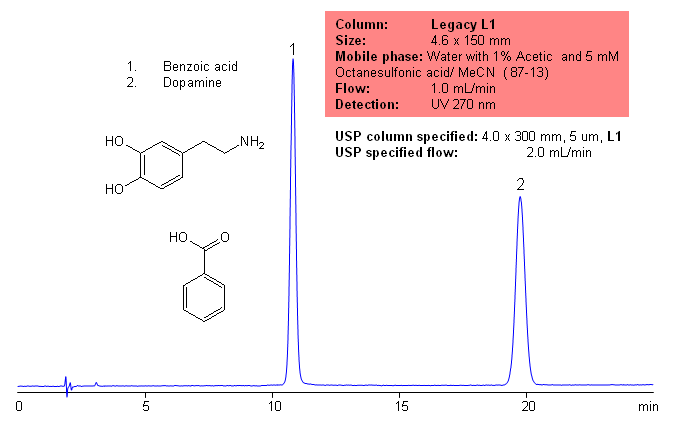
Application Notes: Dopamine is a naturally occurring neurotransmitter found in the brain. Dopamine is a well studied compound because dopamine is an important neurotransmitter known to regulate many functions from pain response to behavior disorders. According to USP methods, dopamine hydrochloride contains not less than 98% and not more than 102% dopamine hydrochloride calculated on the dried basis. The USP HPLC method for the separation of hydrocortisone was developed on Legacy L1 column according to the US Pharmacopeia methodology. L1 classification is assigned to reversed-phase HPLC column containing C18 ligand. Support for the material is spherical silica gel with particles size 3-10 um and pore size of 100-120A. Resolution between critical pairs corresponds to rules and specifications of USP.
Application Columns: Legacy L1 C18 HPLC column
Application compounds: Dopamine hydrochloride
Mobile phase: Water with 1% acetic and 5mM octanesulfonic acid/MeCN
Detection technique: UV
Reference: USP35: NF30
| Column | Legacy L1, 4.6×150 mm, 5 µm, 100A |
| Mobile Phase | Water with 1% Acetic and 5 mM Octanesulfonic acid/ MeCN ( 87-13) |
| Flow Rate | 1.0 ml/min |
| Detection | UV, 270 nm |
| Class of Compounds |
Drug, Hydrophilic, Ionizable, Hormone, Acid |
| Analyzing Compounds | Dopamine |
Application Column
Legacy L1
SIELC's family of Legacy columns is based on the United States Pharmacopeia's (USP) published chromatographic methods and procedures. Numerous brands have columns used in USP reference standards and methods. USP has created various designations to group together columns with similar types of packing and properties in the solid phase. SIELC's Legacy columns adhere to these strict requirements and properties, allowing you to easily replace older columns that are no longer available without needing to significantly modify your method or SOPs.
Select optionsDopamine
HPLC Separation of 8 Generic Compounds on Primesep 200
March 27, 2011
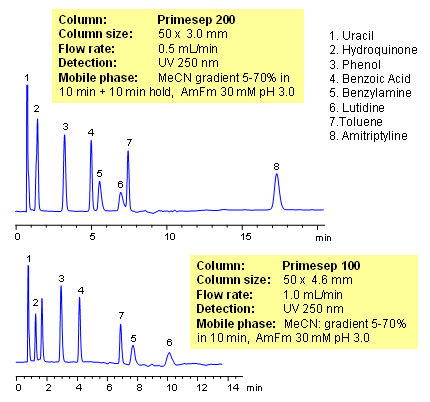
Mixed-mode HPLC columns allow to analyze compounds with drastically different properties in one run. Acidic, basic, and neutral compounds can be separated in one run using either isocratic or gradient conditions. In this application, neutral hydrophilic (uracil, phenol and hydroquinone), neutral hydrophobic (toluene), hydrophilic acidic (benzoic acid), hydrophilic basic (lutidine) and hydrophobic basic (amitriptyline) are separated using gradient of ACN. Neutral compounds are retained by reversed-phase mechanism, hydrophilic acidic compound become more hydrophobic at lower pH and retain by reversed-phase mechanism too. Basic compounds are retained by cation exchange mechanism, and hydrophobic basic compounds are retained by reversed-phase and cation-exchange mechanisms. All compounds are resolved within 17 minutes on a short column. Method can be applied to various polar and hydrophobic compounds, which can be separated on one column and in one run. Mixed-mode columns can operate in single or combination of several modes: reversed-phase, ion-exchange, ion-exclusion and HILIC. This mixed-mode HPLC column can be used as a general column for separation of wide range of compounds.
| Column | Primesep 200, Primesep 100 5 µm, 100A |
| Mobile Phase | MeCN/H2O |
| Buffer | AmFm pH3.0 |
| Flow Rate | 0.5 ml/min, 1.0 ml/min |
| Detection | UV, 250 nm |
| Class of Compounds |
Drug, Acid, Hydrophilic, Ionizable, Hormone |
| Analyzing Compounds | Uracil, Hydroquinone, Phenol, Benzoic Acid, Benzylamine, Lutidine, Toluene, Amitriptyline |
Application Column
Primesep 200
Column Diameter: 3.2 mm
Column Length: 50 mm
Particle Size: 5 µm
Pore Size: 100 A
Column options: dual ended
Benzoic Acid
Benzylamine
Hydroquinone
Lutidine
Phenol
Toluene
Uracil
HPLC Separation of 8 Generic Compounds on Primesep 100
March 27, 2011
Mixed-mode HPLC columns allow to analyze compounds with drastically different properties in one run. Acidic, basic, and neutral compounds can be separated in one run using either isocratic or gradient conditions. In this application, neutral hydrophilic (uracil, phenol and hydroquinone), neutral hydrophobic (toluene), hydrophilic acidic (benzoic acid), hydrophilic basic (lutidine) and hydrophobic basic (amitriptyline) are separated using gradient of ACN. Neutral compounds are retained by reversed-phase mechanism, hydrophilic acidic compound become more hydrophobic at lower pH and retain by reversed-phase mechanism too. Basic compounds are retained by cation exchange mechanism, and hydrophobic basic compounds are retained by reversed-phase and cation-exchange mechanisms. All compounds are resolved within 17 minutes on a short column. Method can be applied to various polar and hydrophobic compounds, which can be separated on one column and in one run. Mixed-mode columns can operate in single or combination of several modes: reversed-phase, ion-exchange, ion-exclusion and HILIC. This mixed-mode HPLC column can be used as a general column for separation of wide range of compounds.
| Column | Primesep 200, Primesep 100 5 µm, 100A |
| Mobile Phase | MeCN/H2O |
| Buffer | AmFm pH3.0 |
| Flow Rate | 0.5 ml/min, 1.0 ml/min |
| Detection | UV, 250 nm |
| Class of Compounds |
Drug, Acid, Hydrophilic, Ionizable, Hormone |
| Analyzing Compounds | Uracil, Hydroquinone, Phenol, Benzoic Acid, Benzylamine, Lutidine, Toluene, Amitriptyline |
Application Column
Primesep 100
Column Diameter: 4.6 mm
Column Length: 50 mm
Particle Size: 5 µm
Pore Size: 100 A
Column options: dual ended
Benzoic Acid
Benzylamine
Hydroquinone
Lutidine
Phenol
Toluene
Uracil
HPLC Separation of Acidic, Basic, and Neutral Compounds on Primesep 200
November 21, 2010

Primesep 100 and Primesep 200 columns can be used as a universal column for analysis of wide range of compounds. These mixed-mode reversed-phase ion-exchange HPLC columns can provide a valuable alternative to traditional reversed-phase column. Amines, amino acids, quaternary amines, and various zwitter-ions can be analyzed along with hydrophobic compounds and organic and inorganic counter-ions. In this application, 8 compounds with different hydrophobic, hydrophilic, basic and acidic properties are separated based on their properties. Primesep 100 column is a mixed-mode HPLC column with a C12 carbon chain and carboxylic acid on the surface with pKa of 1. Primesep 200 column is a mixed-mode HPLC column with a C12 carbon chain and carboxylic acid on the surface with pKa of 2. These columns can be used with 100% organic (ACN) and 100% aqueous mobile phases. This HPLC method can be adopted as a generic and robust approach for analysis of acidic, basic and neutral compounds within the same run.
| Column | Primesep 200, 3.0×50 mm, 5 µm, 100A |
| Mobile Phase | MeCN/H2O |
| Buffer | AmFm pH3.0 |
| Flow Rate | 0.5 ml/min |
| Detection | UV, 250 nm |
| Class of Compounds |
Drug, Acid, Hydrophilic, Ionizable, Hormone |
| Analyzing Compounds | Uracil, Hydroquinone, Phenol, Benzoic Acid, Benzylamine, Lutidine, Toluene, Amitriptyline |
Application Column
Primesep 200
Column Diameter: 3.2 mm
Column Length: 50 mm
Particle Size: 5 µm
Pore Size: 100 A
Column options: dual ended
Benzoic Acid
Benzylamine
Hydroquinone
Lutidine
Phenol
Toluene
Uracil
Acid Effect on Retention of Acidic Analytes
July 8, 2010
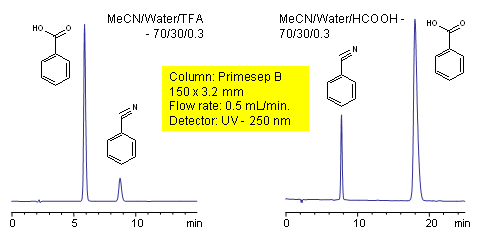
Benzonitrile
HPLC Analysis of Polar Basic and Acetic Compounds on Primesep AB Column
May 6, 2010
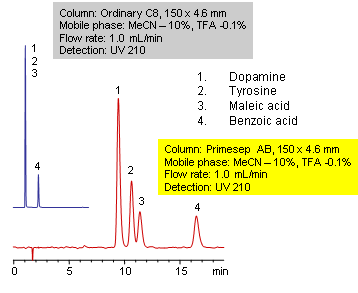
Mixture of polar acidic and basic compounds is separated on a Primesep AB mixed-mode HPLC column. Dopamine and tyrosine are retained by combination of reversed-phase and cation-exchange mechanisms. Maleic acid is retained by anion-exchange mechanism, and benzoic acid is retained by reversed-phase mechanism. Primesep AB is a trimodal column with a C12 hydrophobic chain and cation-exchange and anion exchange groups on the surface. Method utilizes UV detection but can be used with other detection techniques (ELSD, LC/MS, Corona).
| Column | Primesep AB, 4.6×150 mm, 5 µm, 100A |
| Mobile Phase | MeCN/H2O |
| Buffer | TFA – 0.1% |
| Flow Rate | 1.0 ml/min |
| Detection | UV, 210 nm |
| Class of Compounds |
Drug, Acid, Monocarboxylic acid, Hydrophilic, Ionizable, Hormone |
| Analyzing Compounds | Tyrosine, Dopamine, Maleic Acid, Benzoic Acid |
Application Column
Primesep AB
The Primesep family of mixed-mode columns offers a wide variety of stationary phases, boasting unprecedented selectivity in the separation of a broad array of chemical compounds across multiple applications. Corresponding Primesep guard columns, available with all stationary phases, do not require holders. SIELC provides a method development service available to all customers. Inquire about our specially-tailored custom LC-phases for specific separations.
Select optionsDopamine
Maleic Acid
Tyrosine
Effect of mobile phase composition on retention of 3 compounds on Obelisc R
March 3, 2010
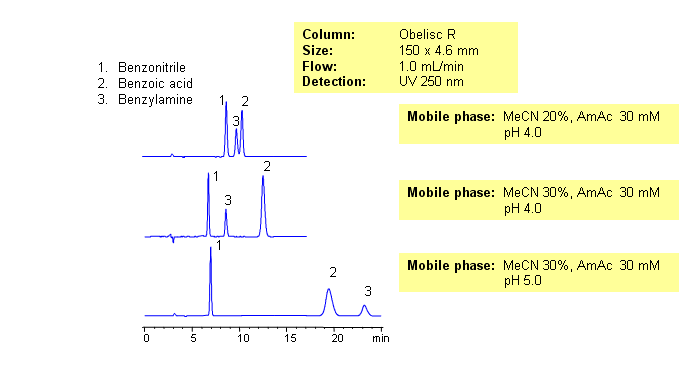
This application shows the effect of mobile phase composition on retention of acidic, basic and neutral compound. Retention of basic and acidic compounds is controlled by buffer pH and concentration, while retention of neutral compound is controlled by the amount of acetonitrile. Buffer pH changes not only ionization state of ionizable basic and acidic compounds, but ionization state of trimodal stationary phase Obelisc R. Available detection techniques include UV, ELSD, LC/MS, and Corona.
| Column | Obelisc R, 4.6×150 mm, 5 µm, 100A |
| Mobile Phase | MeCN/H2O |
| Buffer | AmAc |
| Flow Rate | 1.0 ml/min |
| Detection | 250 |
| Class of Compounds |
Acid, Hydrophilic, Neutral, BasicIonizable |
| Analyzing Compounds | Benzonitrile, Benzoic Acid, Benzylamine |
Application Column
Obelisc R
SIELC has developed the Obelisc™ columns, which are mixed-mode and utilize Liquid Separation Cell technology (LiSC™). These cost-effective columns are the first of their kind to be commercially available and can replace multiple HPLC columns, including reversed-phase (RP), AQ-type reversed-phase, polar-embedded group RP columns, normal-phase, cation-exchange, anion-exchange, ion-exclusion, and HILIC (Hydrophilic Interaction Liquid Chromatography) columns. By controlling just three orthogonal method parameters - buffer concentration, buffer pH, and organic modifier concentration - users can adjust the column properties with pinpoint precision to separate complex mixtures.
Select optionsBenzonitrile
Benzylamine
HPLC Separation of Components of Excedrin (Benzoic acid, Acetaminophen, Caffeine, Aspirin)
July 16, 2009
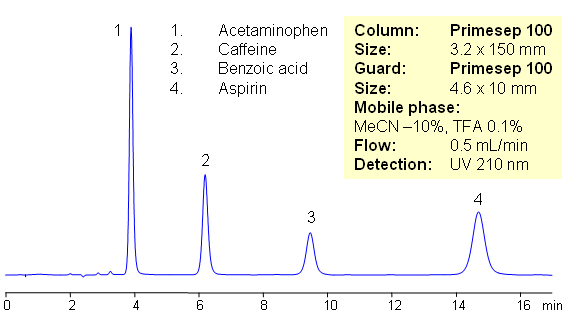
Excedrin is over-the-counter pain reliever containing acetaminophen, caffeine and aspirin as active ingredients of this drug composition. Acetaminophen (paracetamol) is used as analgesic and pain reliever. It is a neutral compound with low hydrophobicity. Aspirin or acetylsalicylic acid is used as analgesic and anti-inflammatory component of many OTC compositions. It is weakly acidic and slightly hydrophobic compound. Caffeine is xanthine alkaloid which is psychoactive stimulant drug. All four compounds are separated on mixed-mode Primesep 100 HPLC column with acetonitrile/water/TFA mobile phase. In this HPLC application compounds are retained by reversed phase mechanism. This HPLC method is short and robust.
| Column | Primesep 100, 3.2×150 mm, 5 µm, 100A |
| Mobile Phase | MeCN/H2O |
| Buffer | TFA |
| Flow Rate | 0.5 ml/min |
| Detection | UV, 210 nm |
| Class of Compounds |
Acid, Hydrophilic, Ionizable |
| Analyzing Compounds | Benzoic acid, Acetaminophen, Caffeine, Aspirin |
Application Column
Primesep 100
The Primesep family of mixed-mode columns offers a wide variety of stationary phases, boasting unprecedented selectivity in the separation of a broad array of chemical compounds across multiple applications. Corresponding Primesep guard columns, available with all stationary phases, do not require holders. SIELC provides a method development service available to all customers. Inquire about our specially-tailored custom LC-phases for specific separations.
Select optionsAcetaminophen (Paracetamol)
Acetylsalicylic Acid (Aspirin)
Benzoic Acid
Caffeine
UV Detection
Separation of Alginic Acid and Related Products
August 22, 2008
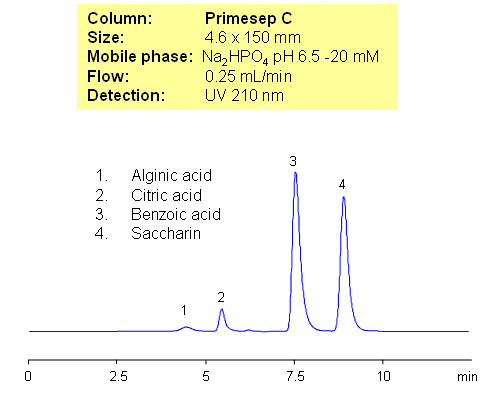
Alginate is used in various pharmaceutical preparations. Chemically, it is a linear copolymer with homopolymeric blocks of (1-4)-linked ?-D-mannuronate (M) and its C-5 epimer ?-L-guluronate (G) residues, respectively, covalently linked together in different sequences or blocks. Alginic acid can be separated from benzoate, citric acid and saccharin by mixed-mode chromatography on Primesep C HPLC column. This method can be used to quantitate alginic acid, citric acid or saccharin in complex mixtures. Various detection technique can be used (UV, ELSD, LC/MS), based on mobile phase selection.
| Column | Primesep C, 4.6×150 mm, 5 µm, 100A |
| Mobile Phase | MeCN/H2O |
| Buffer | Na2HPO4 |
| Flow Rate | 0.25 ml/min |
| Detection | UV, 210 nm |
| Class of Compounds |
Acid, Hydrophilic, Ionizable |
| Analyzing Compounds | Alginic acid, Citric acid, Benzoic acid, Saccharin |
Application Column
Primesep C
The Primesep family of mixed-mode columns offers a wide variety of stationary phases, boasting unprecedented selectivity in the separation of a broad array of chemical compounds across multiple applications. Corresponding Primesep guard columns, available with all stationary phases, do not require holders. SIELC provides a method development service available to all customers. Inquire about our specially-tailored custom LC-phases for specific separations.
Select optionsBenzoic Acid
Citric Acid
Saccharin
HILIC Separation of Aromatic Acids
August 22, 2008
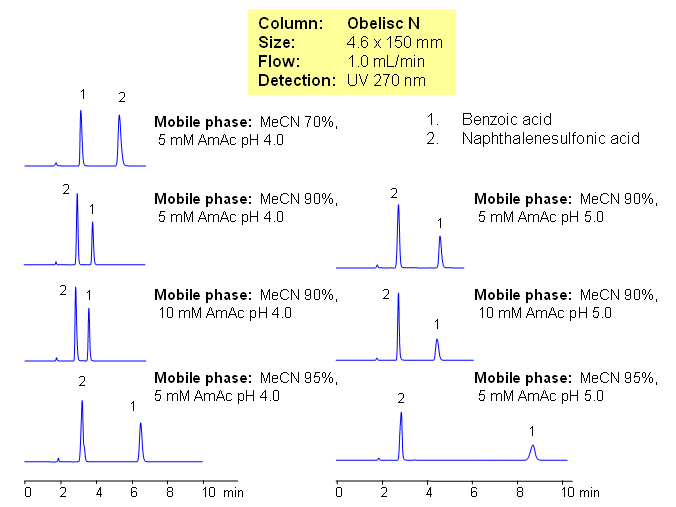
Obelisc N column are used for separation of weak and strong organic acids in mixed-mode HILIC. Benzoic and naphthalenesulfonic acids are retained based on polar interaction mode and anion-exchange mode. Order of elution and retention pattern can be changed by modifying mobile phase. PH of the mobile phase changes ionization state of stationary phase and analytes. Fast quantitation method for benzoic and naphthalenesulfonic acid can be developed using UV, ELSD or LC/MS detection. HPLC Method can be used for mixture of organic and inorganic strong and weak acids.
| Column | Obelisc N, 4.6×150 mm, 5 µm, 100A |
| Mobile Phase | MeCN/H2O |
| Buffer | AmAc |
| Flow Rate | 1.0 ml/min |
| Detection | UV, 270 nm |
| Class of Compounds |
Acid, Hydrophilic, Ionizable |
| Analyzing Compounds | Benzoic acid, Naphthalenesulfonic Acid |
Application Column
Obelisc N
SIELC has developed the Obelisc™ columns, which are mixed-mode and utilize Liquid Separation Cell technology (LiSC™). These cost-effective columns are the first of their kind to be commercially available and can replace multiple HPLC columns, including reversed-phase (RP), AQ-type reversed-phase, polar-embedded group RP columns, normal-phase, cation-exchange, anion-exchange, ion-exclusion, and HILIC (Hydrophilic Interaction Liquid Chromatography) columns. By controlling just three orthogonal method parameters - buffer concentration, buffer pH, and organic modifier concentration - users can adjust the column properties with pinpoint precision to separate complex mixtures.
Select optionsBenzoic Acid
Organic Acids
HPLC Application for Simultaneous Separation of Amino Acids, Hydrophilic Acidic and Hydrophobic Neutral Compounds
December 6, 2007
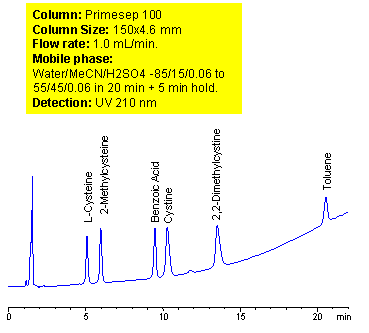
Mixed-mode chromatography allows separating, in single run, compounds with vastly different properties. A method for separation of amino acids (cysteine, methylcysteine, cystine and dimethylcysteine) in the presence of carboxylic acid (benzoic) and hydrophobic neutral compounds was developed on Primesep 100 mixed-mode column. At lower pH ionization of carboxylic acids is suppressed. Amino acids are retained as basic compound based on reverse phase and cation exchange mechanisms. Carboxylic acids are retained on this column based on weak reverse phase mechanisms. Neutral compounds are retained by reverse phase mechanism as on any other column. Retention time of basic, zwitter-ionic and hydrophobic compound can be adjusted by manipulation of mobile phase composition. ELSD, UV or LC/MS detection can be used based on the properties of analytes and mobile phase selection.
| Column | Primesep 100, 4.6×150 mm, 5 µm, 100A |
| Mobile Phase | MeCN/H2O |
| Buffer | H2SO4 |
| Flow Rate | 1.0 ml/min |
| Detection | UV, 210 nm |
| Class of Compounds |
Drug, Acid, Hydrophilic, Ionizable, Vitamin, Supplements, Amino acid |
| Analyzing Compounds | Cysteine, Methylcysteine, Cystine, Dimethylcysteine, Benzoic acid, Toluene, |
Application Column
Primesep 100
The Primesep family of mixed-mode columns offers a wide variety of stationary phases, boasting unprecedented selectivity in the separation of a broad array of chemical compounds across multiple applications. Corresponding Primesep guard columns, available with all stationary phases, do not require holders. SIELC provides a method development service available to all customers. Inquire about our specially-tailored custom LC-phases for specific separations.
Select options2-Methylcysteine
Benzoic Acid
Cystine
L-Cysteine
Toluene
HPLC Separation of Guanidine and Benzoic Acids on Primesep 100 Column
October 4, 2007
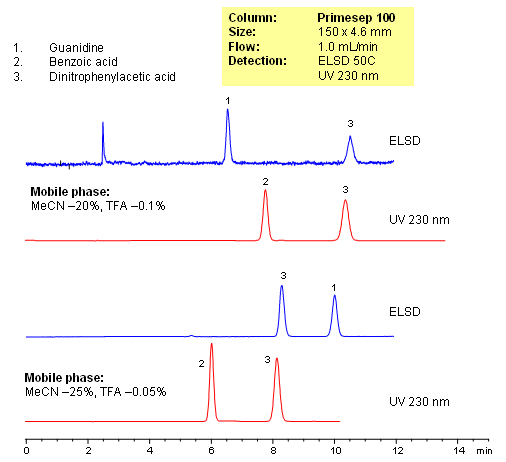
| Column | Primesep 100, 4.6×150 mm, 5 µm, 100A |
| Mobile Phase | MeCN/H2O |
| Buffer | TFA |
| Flow Rate | 1.0 ml/min |
| Detection | UV, 230 nm, ELSD |
| Class of Compounds |
Acid, Hydrophilic, Ionizable |
| Analyzing Compounds | Guanidine, Benzoic acid, Dinitrophenylacetic Acid |
Application Column
Primesep 100
The Primesep family of mixed-mode columns offers a wide variety of stationary phases, boasting unprecedented selectivity in the separation of a broad array of chemical compounds across multiple applications. Corresponding Primesep guard columns, available with all stationary phases, do not require holders. SIELC provides a method development service available to all customers. Inquire about our specially-tailored custom LC-phases for specific separations.
Select optionsDinitrophenylacetic Acid
Guanidine
UV Detection
HPLC Separation of Amino Acids, Bases, Acids, and Neutrals on Obelisc R
March 3, 2007
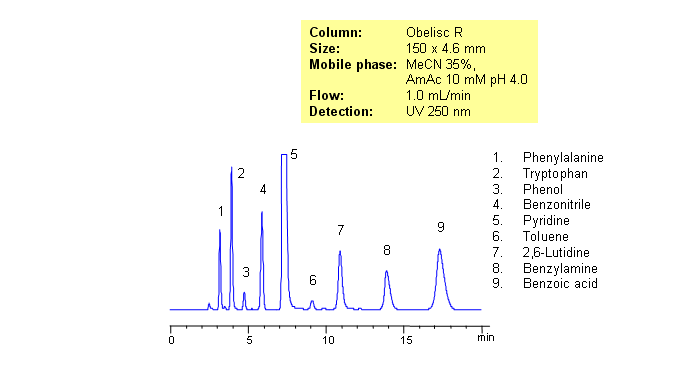
Separating basic, acidic and zwitterionic compounds in one run in reverse-phase HPLC can be very challenging. The methods might require the use of ion-pairing reagents and complex gradients that can make MS-compatibility difficult. Obelisc R column which has both positive and negative ion-pairs embedded in the stationary phase allows for fine tuning and separation of a wide range of compounds with different ionic properties. Acids, bases, amino acids and neutral compounds were separated isocratically in one run using a simple MS-compatible mobile phase of acetonitrile (ACN) and water with Ammonium Acetate (AmAc) buffer. Can also be UV detected at 250nm.
| Column | Obelisc R, 4.6×250 mm, 5 µm, 100A |
| Mobile Phase | MeCN/H2O – 35/65% |
| Buffer | AmAc 10 mM pH 4.0 |
| Flow Rate | 1.0 ml/min |
| Detection | UV, 250 nm |
| Class of Compounds |
Drug, Acid, Bases, Neutral, Hydrophilic, Ionizable, Vitamin, Supplements, Amino acid |
| Analyzing Compounds | Amino acids |
Application Column
Obelisc R
SIELC has developed the Obelisc™ columns, which are mixed-mode and utilize Liquid Separation Cell technology (LiSC™). These cost-effective columns are the first of their kind to be commercially available and can replace multiple HPLC columns, including reversed-phase (RP), AQ-type reversed-phase, polar-embedded group RP columns, normal-phase, cation-exchange, anion-exchange, ion-exclusion, and HILIC (Hydrophilic Interaction Liquid Chromatography) columns. By controlling just three orthogonal method parameters - buffer concentration, buffer pH, and organic modifier concentration - users can adjust the column properties with pinpoint precision to separate complex mixtures.
Select optionsBenzoic Acid
Benzonitrile
Benzylamine
Phenol
Phenylalanine
Pyridine
Toluene
Tryptophan
HPLC Separation of Organics Acids
November 21, 2006
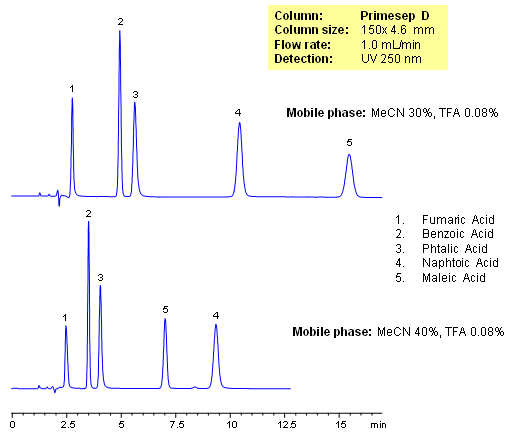
Primesep D separates organic acids such as fumaric, benzoic, phthalic, naphthoic, and maleic acids by a mixture of anion exchange and reversed phase. Retention times and elution order can be changed by adjusting the percentage of acetonitrile in the mobile. This can not be done by traditional ion-exchange and ion-exclusion chromatography. The HPLC separation uses a mobile phase of water, acetonitrile (MeCN, ACN) and trifluoroacetic acid (TFA) and UV detection at 250 nm.
| Column | Primesep D, 4.6×150 mm, 5 µm, 100A |
| Mobile Phase | MeCN/H2O |
| Buffer | AmFm |
| Flow Rate | 1.0 ml/min |
| Detection | UV 250 nm |
| Class of Compounds |
Acid, Hydrophilic, Ionizable |
| Analyzing Compounds | Fumaric Acid, Benzoic Acid, Phthalic Acid, Maleic Acid, Naphtoic Acid |
Application Column
Primesep D
The Primesep family of mixed-mode columns offers a wide variety of stationary phases, boasting unprecedented selectivity in the separation of a broad array of chemical compounds across multiple applications. Corresponding Primesep guard columns, available with all stationary phases, do not require holders. SIELC provides a method development service available to all customers. Inquire about our specially-tailored custom LC-phases for specific separations.
Select optionsFumaric Acid
Maleic Acid
Naphthoic Acid
Organic Acids
Phthalic Acid
Complex Mixture of Acids, Bases, Amino Acids, and Neutral Compounds
October 14, 2006
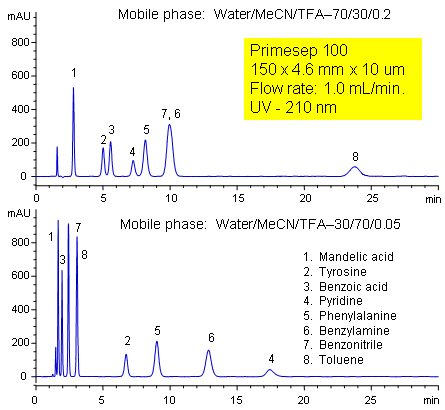
Primesep 100 separates a mixture of amino acids (tyrosine, phenylalanine), organic acids (benzoic acid, mandelic acid), amines (benzylamine, pyridine), and neutrals (benzonitrile, toluene) in one HPLC run by combining reversed-phase, cation-exchange, and polar interactions. The method is tunable and peak order can be changed significantly by adjusting acetonitrile and trifluoroacetic acid concentrations. The separation method uses a mobile phase mixture of water, acetonitrile (MeCN, ACN) and trifluoracetic acid (TFA) and compatible with UV, mass spec (LC/MS) and evaporative light scattering (ELSD) detection.
| Column | Primesep 100, 4.6×250 mm, 5 µm, 100A |
| Mobile Phase | MeCN/H2O – 30/70% |
| Buffer | TFA – 0.2 |
| Flow Rate | 1.0 ml/min |
| Detection | UV, 210 nm |
| Class of Compounds |
Drug, Acid, Hydrophilic, Ionizable, Vitamin, Supplements, Amino acid |
| Analyzing Compounds | Tyrosine, phenylalanine, Benzoic acid, mandelic acid, Benzylamine, Pyridine, Benzonitrile, Toluene |
Application Column
Primesep 100
The Primesep family of mixed-mode columns offers a wide variety of stationary phases, boasting unprecedented selectivity in the separation of a broad array of chemical compounds across multiple applications. Corresponding Primesep guard columns, available with all stationary phases, do not require holders. SIELC provides a method development service available to all customers. Inquire about our specially-tailored custom LC-phases for specific separations.
Select optionsBenzoic Acid
Benzonitrile
Benzylamine
Mandelic Acid
Organic Acids
Phenylalanine
Pyridine
Toluene
Tyrosine
HPLC Separation of Parabens and Benzoic Acid
June 5, 2006

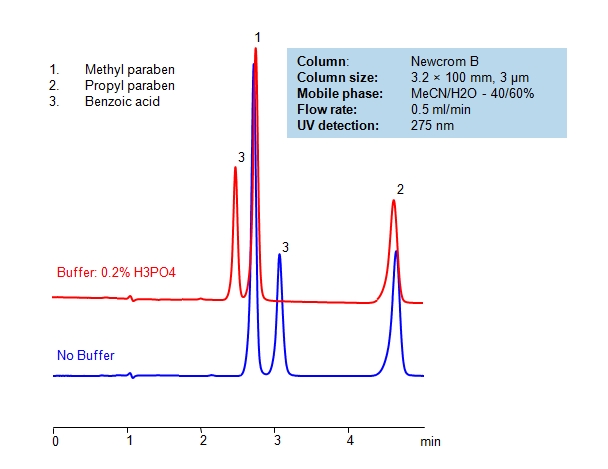
| Column | Newcrom B, 3.2×100 mm, 3 µm, 100A |
| Mobile Phase | MeCN/H2O – 40/60% |
| Buffer | |
| Flow Rate | 0.5 ml/min |
| Detection | UV 275nm |
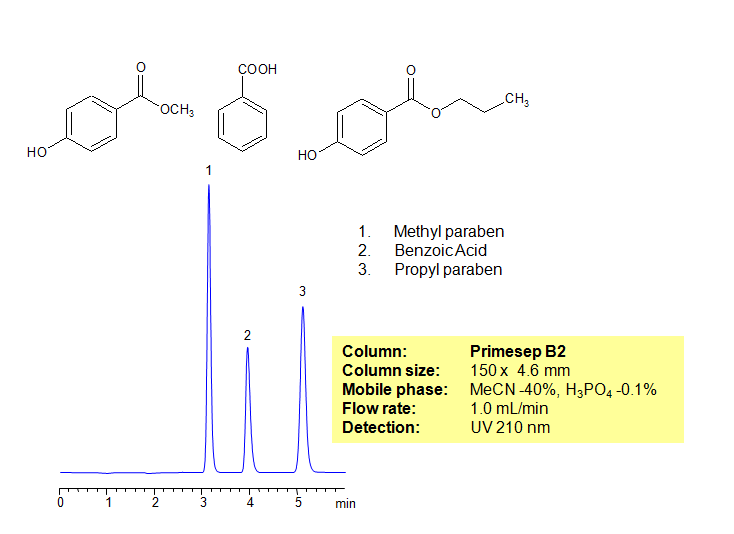
Parabens possess antibacterial and antifungal properties and are therefore widely used in pharmaceutical and cosmetic industries as preservatives in products. Parabens and benzoic acid can be baseline separated in a short time frame using Primesep B2 reverse-phase HPLC column with a simple mobile phase of water, acetonitrile (ACN, MeCN) and phosphoric acid of 0.1% as buffer. UV detection at 210nm.
| Column | Primesep B2, 4.6×150 mm, 5 µm, 100A |
| Mobile Phase | MeCN/H2O |
| Buffer | H3PO4 |
| Flow Rate | 1.0 ml/min |
| Detection | UV, 210 nm |
| Class of Compounds |
Acid, Hydrophilic, Preservative |
| Analyzing Compounds | Methyl paraben, Benzoic Acid, Propyl paraben |
Application Column
Newcrom B
The Newcrom columns are a family of reverse-phase-based columns. Newcrom A, AH, B, and BH are all mixed-mode columns with either positive or negative ion-pairing groups attached to either short (25 Å) or long (100 Å) ligand chains. Newcrom R1 is a special reverse-phase column with low silanol activity.
Select options
Primesep B2
The Primesep family of mixed-mode columns offers a wide variety of stationary phases, boasting unprecedented selectivity in the separation of a broad array of chemical compounds across multiple applications. Corresponding Primesep guard columns, available with all stationary phases, do not require holders. SIELC provides a method development service available to all customers. Inquire about our specially-tailored custom LC-phases for specific separations.
Select optionsMethylparaben
Parabens
Propylparaben
Separation of Diacid Hydrophobic and Ion Exchange Modes
October 11, 2005
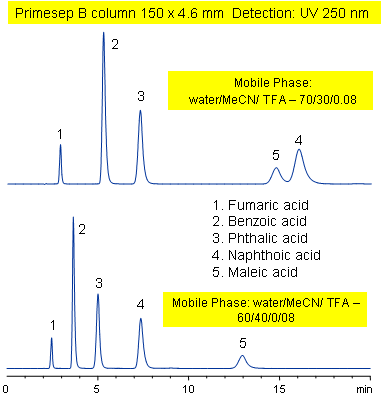
Primesep B combines a hydrophobic, reversed-phase mechanism with ion exchange to separate the diacids, fumaric, benzoic, phthalic, naphthoic, and maleic acids. Changing the acetonitrile content of the mobile phase reverses the peak order for naphthoic and maleic acids. Primesep B combines reversed-phase and anion-exchange mechanism with a mobile phase of water, acetonitrile (MeCN, ACN) and trifluoracetic acid (TFA) and UV detection at 250 nm.
| Column | Primesep B, 4.6×150 mm, 5 µm, 100A |
| Mobile Phase | MeCN/H2O |
| Buffer | TFA |
| Flow Rate | 1.0 ml/min |
| Detection | UV, 250 nm |
| Class of Compounds |
Acid, Hydrophilic, Ionizable |
| Analyzing Compounds | Fumaric acid, Benzoic acid, Phthalic acid, Naphthoic acid, Maleic acid, ) |
Application Column
Primesep B
The Primesep family of mixed-mode columns offers a wide variety of stationary phases, boasting unprecedented selectivity in the separation of a broad array of chemical compounds across multiple applications. Corresponding Primesep guard columns, available with all stationary phases, do not require holders. SIELC provides a method development service available to all customers. Inquire about our specially-tailored custom LC-phases for specific separations.
Select optionsDicarboxylic Acids
Fumaric Acid
Maleic Acid
Naphthoic Acid
Phthalic Acid
HPLC Separation of Carboxylic Acids
January 13, 2005
| Column | Newcrom B, 3.2×50 mm, 3 µm, 100A |
| Mobile Phase | MeCN/H2O- 30/70% |
| Buffer | H3PO4 – 0.5% |
| Flow Rate | 0.5 ml/min |
| Detection | UV, 275 nm |
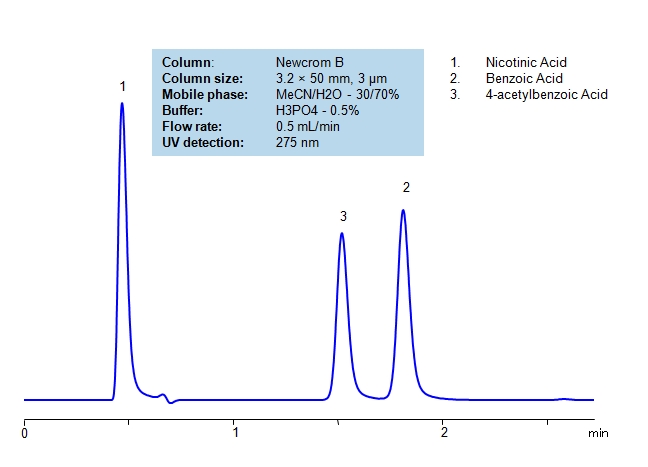
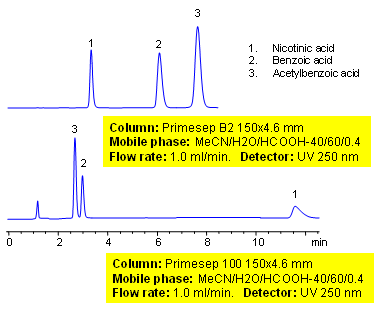
HPLC separation of carboxylic acids (nicotinic acid, benzoic acid and acetylbenzoic acid) on Primesep B2 column using an isocratic method by reverse-phase and anion-exchange mechanisms. The elution of carboxylic acids using the same isocratic method and mobile phase can be reversed by using a reverse-phase cation-exchange mechanisms of the Primesep 100 column. The mobile phase is water, acetonitrile (MeCN, ACN) and formic acid with a UV detector.
| Column | Primesep B2, 4.6×150 mm, 5 µm, 100A |
| Mobile Phase | MeCN/H2O |
| Buffer | Formic Acid |
| Flow Rate | 1.0 ml/min |
| Detection | UV, 250 nm |
| Class of Compounds |
Acid, Hydrophilic |
| Analyzing Compounds | Nicotinic acid, Benzoic acid, Acetylbenzoic acid,
1.4-acetylbenzoic Acid |
Application Column
Primesep 100
The Primesep family of mixed-mode columns offers a wide variety of stationary phases, boasting unprecedented selectivity in the separation of a broad array of chemical compounds across multiple applications. Corresponding Primesep guard columns, available with all stationary phases, do not require holders. SIELC provides a method development service available to all customers. Inquire about our specially-tailored custom LC-phases for specific separations.
Select options
Primesep B2
The Primesep family of mixed-mode columns offers a wide variety of stationary phases, boasting unprecedented selectivity in the separation of a broad array of chemical compounds across multiple applications. Corresponding Primesep guard columns, available with all stationary phases, do not require holders. SIELC provides a method development service available to all customers. Inquire about our specially-tailored custom LC-phases for specific separations.
Select optionsBenzoic Acid
Nicotinic Acid (Vitamin B3)
HPLC Separation of Active Compounds in Drug Formulation
January 13, 2005
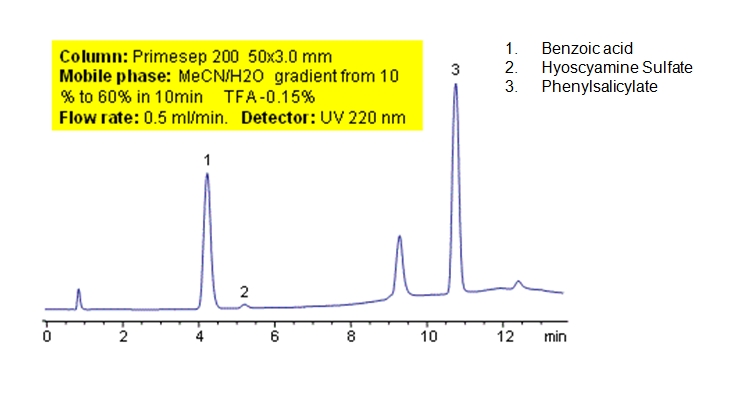
An HPLC method for the separation of active drug compounds on a Primesep 200 column. The retention of compounds is achieved through reverse-phase, cation exchange and hydrophobic interactions. Benzoic acid, hyoscyamine sulfate and phenyl salicylate are baseline separated using simple mobile phases of water, acetonitrile (MeCN, ACN) and trifluoroacetic acid (TFA) with a UV detector.
| Column | Primesep 200, 3.0×50 mm, 5 µm, 100A |
| Mobile Phase | MeCN/H2O |
| Buffer | TFA |
| Flow Rate | 1.0 ml/min |
| Detection | UV, 220 nm |
| Class of Compounds |
Acid, Hydrophilic, Ionizable |
| Analyzing Compounds | Benzoic acid, Hyoscyamine Sulfate, Phenylsalicylate) |
Application Column
Primesep 200
The Primesep family of mixed-mode columns offers a wide variety of stationary phases, boasting unprecedented selectivity in the separation of a broad array of chemical compounds across multiple applications. Corresponding Primesep guard columns, available with all stationary phases, do not require holders. SIELC provides a method development service available to all customers. Inquire about our specially-tailored custom LC-phases for specific separations.
Select optionsHyoscyamine Sulfate
Phenylsalicylate
Hydrophobic and Hydrophilic Compound Separation
September 25, 2003
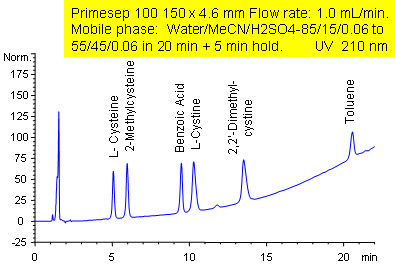
Primesep 100 separates a mixture of polar and nonpolar compounds in one analytical run. The amino acid cysteine; amino acid derivatives L-cystine, 2,2-dimethylcystine, and 2-methylcysteine; the polar acid benzoic acid; and the nonpolar neutral toluene are separated by a gradient using a combination of polar and hydrophobic interactions. The separation method uses a mobile phase mixture of water, acetonitrile (MeCN, ACN) and sulfuric acid (H2SO4) with UV detection at 210 nm.
| Column | Primesep 100, 4.6×150 mm, 5 µm, 100A |
| Mobile Phase | MeCN/H2O |
| Buffer | H2SO4 |
| Flow Rate | 1.0 ml/min |
| Detection | UV 210 nm |
| Class of Compounds |
Drug, Acid, Hydrophilic, Ionizable, Nonpolar, Polar, Supplements |
| Analyzing Compounds | Cysteine, L-cystine, 2,2-dimethylcystine, 2-methylcysteine, Benzoic Acid, Toluene |
Application Column
Primesep 100
The Primesep family of mixed-mode columns offers a wide variety of stationary phases, boasting unprecedented selectivity in the separation of a broad array of chemical compounds across multiple applications. Corresponding Primesep guard columns, available with all stationary phases, do not require holders. SIELC provides a method development service available to all customers. Inquire about our specially-tailored custom LC-phases for specific separations.
Select options2-Methylcysteine
Amino Acids
Benzoic Acid
Cysteine
L-Cystine
Toluene
