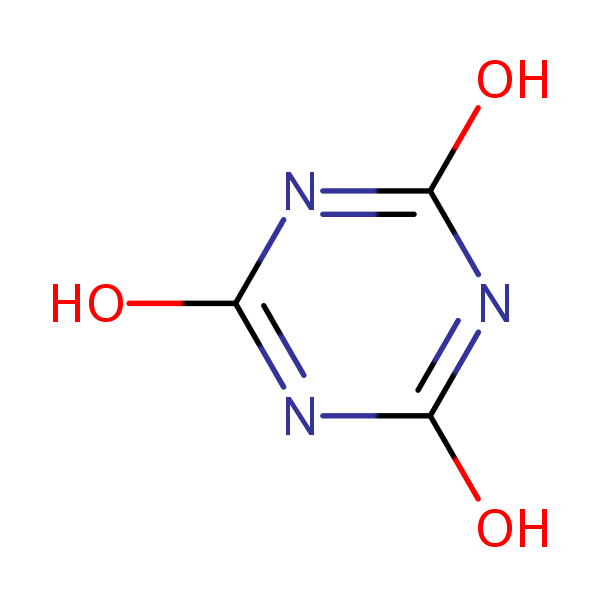
| CAS Number | 108-80-5 |
|---|---|
| Molecular Formula | C3H3N3O3 |
| Molecular Weight | 129.075 |
| InChI Key | ZFSLODLOARCGLH-UHFFFAOYSA-N |
| LogP | -0.768 |
| Synonyms |
|
Applications:
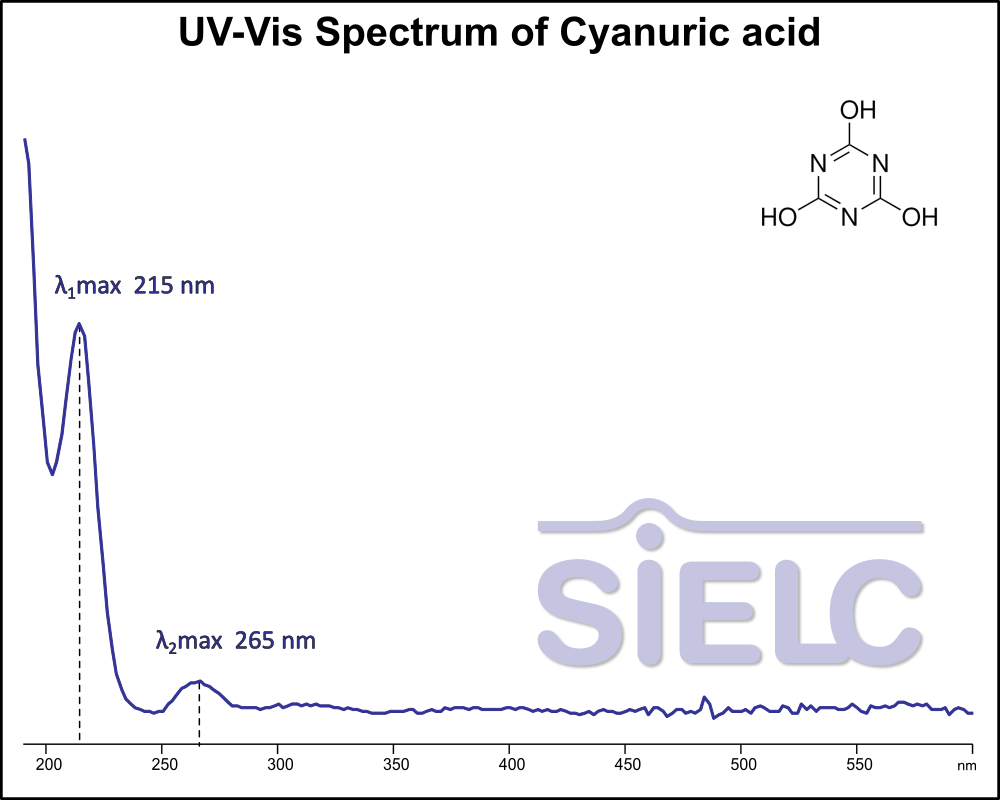
UV-Vis Spectrum of Cyanuric acid
December 19, 2025
If you are looking for optimized HPLC method to analyze Cyanuric Acid check our HPLC Applications library
For optimal results in HPLC analysis, it is recommended to measure absorbance at a wavelength that matches the absorption maximum of the compound(s) being analyzed. The UV spectrum shown can assist in selecting an appropriate wavelength for your analysis. Please note that certain mobile phases and buffers may block wavelengths below 230 nm, rendering absorbance measurement at these wavelengths ineffective. If detection below 230 nm is required, it is recommended to use acetonitrile and water as low UV-transparent mobile phases, with phosphoric acid and its salts, sulfuric acid, and TFA as buffers.
For some compounds, the UV-Vis Spectrum is affected by the pH of the mobile phase. The spectra presented here are measured with an acidic mobile phase that has a pH of 3 or lower.

HPLC Method for the Simultaneous Separation of Melamine and Cyanuric Acid on an Obelisc R Column
July 8, 2011
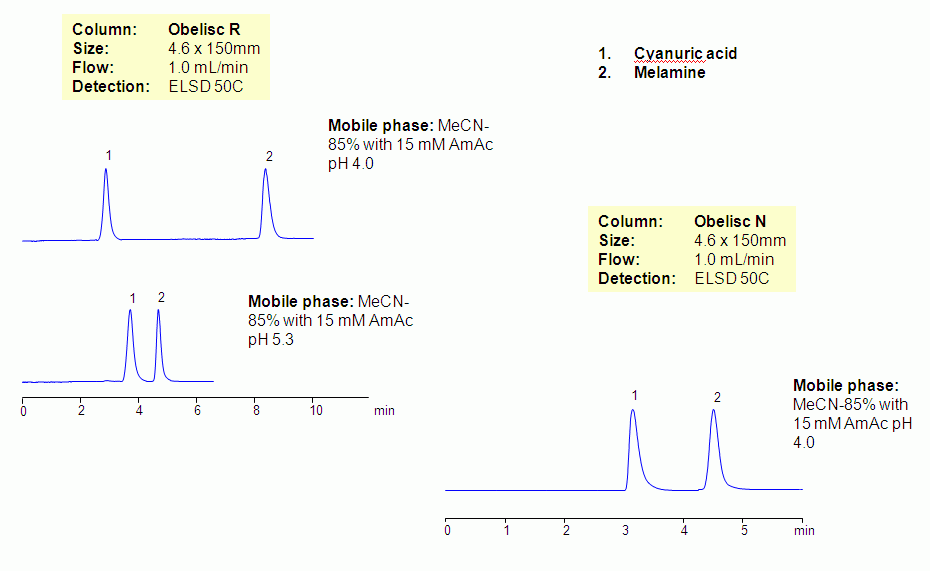
Melamine is an organic basic compound that is derived from cyanamide. It contains 66% nitrogen by mass. Addition of melamine is used to increase protein count in milk products. Cyanuric acid is a trimer of cyanic acid. Melamine and cyanuric acid can form a insoluble complex. Both compounds has been linked as additives to modify nitrogen count in products. Cyanuric acid is a slightly acidic hydrophilic compound, while melamine is a basic hydrophilic compound. Both compounds were separated on Obelisc R reversed-phase ion-exchange column with LC/Ms compatible mobile phase. Method can be used for generic analysis of basic and acidic compounds with LC/MS compatible conditions.
| Column | Obelisc R, 4.6 x 150 mm, 5 µm, 100 A, dual ended |
| Mobile Phase | MeCN |
| Buffer | AmAc |
| Flow Rate | 1.0 ml/min |
| Detection | ELSD 50C |
<
| Class of Compounds |
Acid, Hydrophobic, Ionizable |
| Analyzing Compounds | Melamine, Cyanuric Acid |
Application Column
Obelisc R
Column Diameter: 4.6 mm
Column Length: 150 mm
Particle Size: 5 µm
Pore Size: 100 A
Column options: dual ended
Melamine
HPLC Method for the Simultaneous Separation of Melamine and Cyanuric Acid on an Obelisc N Column
June 11, 2004
Melamine is an organic basic compound that is derived from cyanamide. It contains 66% nitrogen by mass. Addition of melamine is used to increase protein count in milk products. Cyanuric acid is a trimer of cyanic acid. Melamine and cyanuric acid can form a insoluble complex. Both compounds has been linked as additives to modify nitrogen count in products. Cyanuric acid is a slightly acidic hydrophilic compound, while melamine is a basic hydrophilic compound. Both compounds were separated on Obelisc R reversed-phase ion-exchange column with LC/Ms compatible mobile phase. Method can be used for generic analysis of basic and acidic compounds with LC/MS compatible conditions.
| Column | Obelisc N, 4.6 x 150 mm, 5 µm, 100 A, dual ended |
| Mobile Phase | MeCN |
| Buffer | AmAc |
| Flow Rate | 1.0 ml/min |
| Detection | ELSD 50C |
<
| Class of Compounds |
Acid, Hydrophobic, Ionizable |
| Analyzing Compounds | Melamine, Cyanuric Acid |
Application Column
Obelisc N
Column Diameter: 4.6 mm
Column Length: 150 mm
Particle Size: 5 µm
Pore Size: 100 A
Column options: dual ended
Melamine
