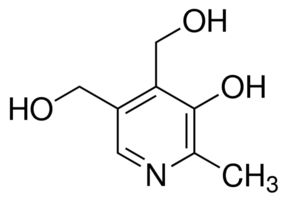
| CAS Number | 65-23-6 |
|---|---|
| Molecular Formula | C8H11NO3 |
| Molecular Weight | 169.180 |
| InChI Key | LXNHXLLTXMVWPM-UHFFFAOYSA-N |
| LogP | -0.770 |
| Synonyms |
|
Applications:
HPLC Method for Analysis of Pyridoxine on Primesep 100 Column on Alltesta™
November 5, 2025
HPLC Method for Vitamin B6 (Pyridoxine) on Primesep 100 by SIELC Technologies
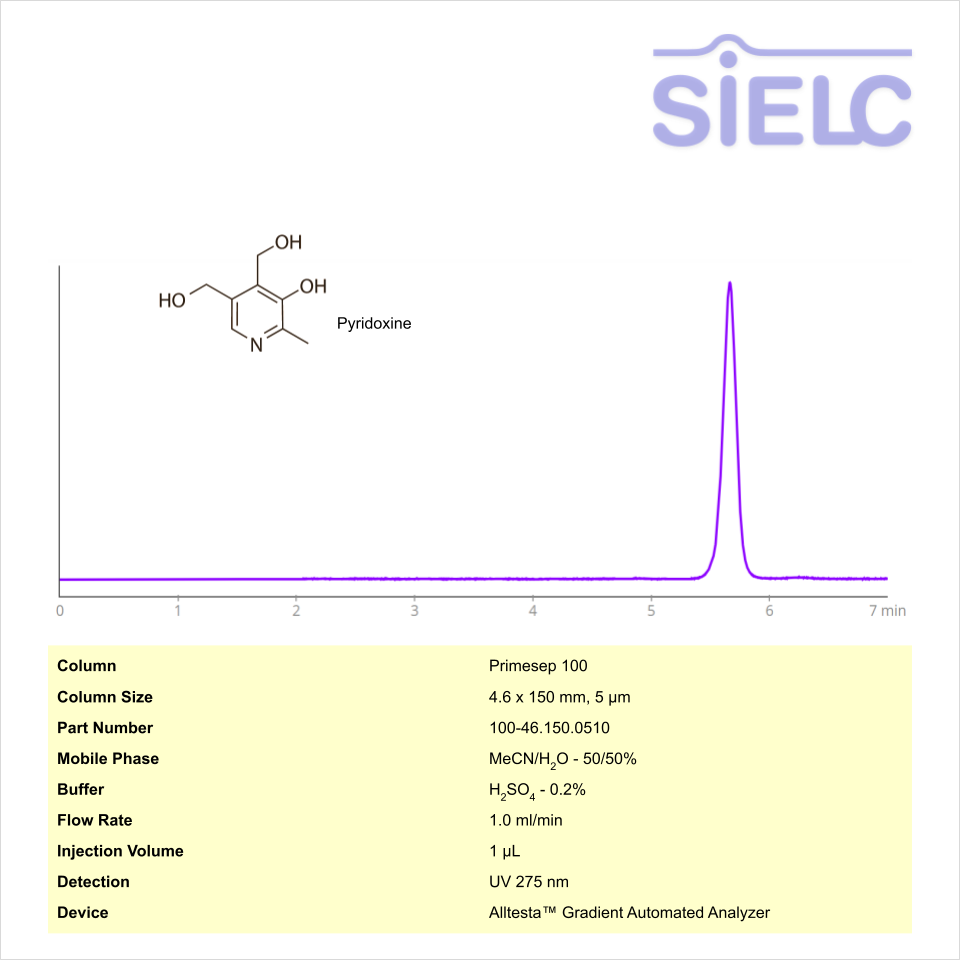
High Performance Liquid Chromatography (HPLC) Method for Analysis of Vitamin B6 (Pyridoxine)
Pyridoxine, also known as Vitamin B6, with the chemical formula C8H11NO3. It is an essential nutrient required by the body to produce red blood cells and for proper nerve functioning. Sources of it include fish, beef liver, chicken, eggs, dark leafy greens, potatoes, chickpeas, cereals, and more. Deficiency of Vitamin B6 can case dermatitis, sores in the mouth, depression, anemia, and seizures. You can find detailed UV spectra of Vitamin B6 (Pyridoxine) and information about its various lambda maxima by visiting the following link.
Vitamin B6 (Pyridoxine) can be retained and analyzed using the Primesep 100 stationary phase column. The analysis utilizes an isocratic method with a simple mobile phase consisting of water and acetonitrile (MeCN) with phosphoric acid as a buffer. Detection is performed using UV.
| Column | Primesep 100, 4.6 x 150 mm, 5 µm, 100 A, dual ended |
| Mobile Phase | MeCN – 50% |
| Buffer | H2SO4 – 0.2% |
| Flow Rate | 1.0 ml/min |
| Detection | UV 275 nm |
| Class of Compounds | Vitamin |
| Analyzing Compounds | Vitamin B6 (Pyridoxine) |
Application Column
Primesep 100
Column Diameter: 4.6 mm
Column Length: 150 mm
Particle Size: 5 µm
Pore Size: 100 A
Column options: dual ended

HPLC Method for Separation of 8 Water-Soluble Vitamins on Chromni Column
September 17, 2025
HPLC Method for Separation of 8 Water-Soluble Vitamins on Chromni by SIELC Technologies
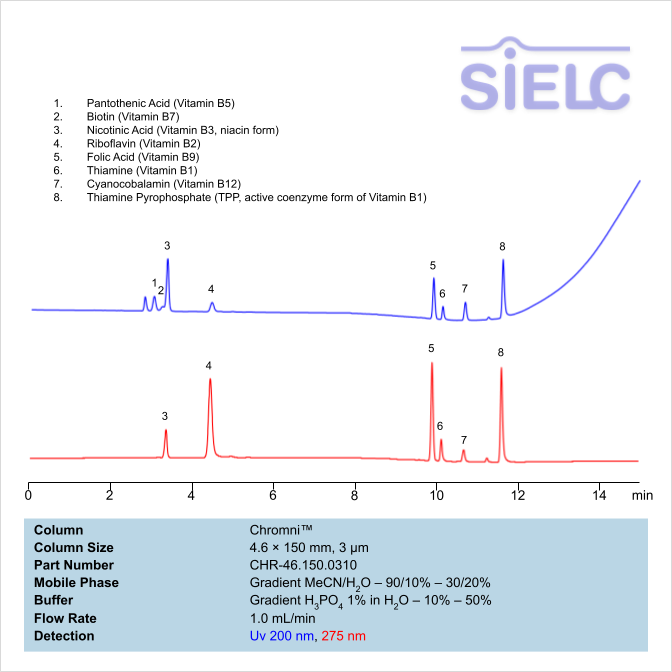
High Performance Liquid Chromatography (HPLC) Method for separation of Vitamin B2 (Riboflavin), Nicotinic Acid (Vitamin B3), Vitamin B6 (Pyridoxine), Folic Acid, Cyanocobalamin, Thiamine diphosphate (Thiamine pyrophosphate), Vitamin B1 (Thiamine), Pantothenic Acid (Vitamin B5), Biotin
Riboflavin (B2), Nicotinic Acid (B3), Folic Acid (B9), Cyanocobalamin (B12), Thiamine Pyrophosphate (coenzyme of B1), Thiamine (B1), Pantothenic Acid (B5), Biotin (B7) are water soluble vitamins with a key function of energy metabolism. These coenzymes are responsible for converting food into usable energy.
Pantothenic Acid, also known as vitamin B5, is an essential nutrient with the chemical formula C19H17NO5. It plays a crucial role in energy and coenzyme A production. That energy and coenzyme are used for synthesis and degradation of proteins, carbohydrates, and fats. You can find detailed UV spectra of Pantothenic Acid (Vitamin B5) and information about its various lambda maxima by visiting the following link.
Biotin (Vitamin B7) is a water-soluble vitamin with the chemical formula C10H16N2O3S. It helps the body breakdown key nutrients in order for it to absorb and utilize them. A lack of biotin can lead to hair loss, rash, and brittle nails. A healthy diet including eggs, milk, and bananas can supply the body with a healthy dose of biotin. You can find detailed UV spectra of Biotin and information about its various lambda maxima by visiting the following link.
Nicotinic acid, also known as niacin and vitamin B3, is a water-soluble B vitamin with C₆H₅NO₂ molecular formula. It is an essential nutrient that is crucial for energy production. Nicotinic acid is commonly used as a dietary supplement to treat vitamin B3 deficiency, and it’s also prescribed in higher doses to help lower cholesterol levels. It works by dilating blood vessels, which can lead to a flushing sensation, hence it is sometimes referred to as “flushing niacin.” You can find detailed UV spectra of Niacin and information about its various lambda maxima by visiting the following link.
Riboflavin, also known as Vitamin B2, is an essential vitamin with the chemical formula C17H20N4O6. It is crucial in the formation of flavin mononucleotide and flavin adenine dinucleotide. Those coenzyme are involved in a large variety of tasks, including but not limited to energy metabolism, cellular respiration, antibody production, and metabolism of niacin and folate. It is also used as yellow food coloring. You can find detailed UV spectra of Riboflavin and information about its various lambda maxima by visiting the following link.
Folic Acid, also known as vitamin B9, folic acid is crucial for many functions in the body, including DNA synthesis and repair, cell division, and growth. As an essential vitamin, Folic acid must be obtained through diet or supplementation, as humans cannot synthesize it. Vitamin B-9 is a crucial prenatal vitamin. that also helps the body use iron properly. It has the chemical formula C19H19N7O6. You can find detailed UV spectra of Folic Acid and information about its various lambda maxima by visiting the following link.
Thiamine, also known as vitamin B1, is an essential nutrient with the chemical formula C12H17ClN4OS. It plays a crucial role in energy metabolism and the proper functioning of the nervous system. It helps the body convert carbohydrates into energy and is vital for the growth, development, and function of cells. You can find detailed UV spectra of Vitamin B1 (Thiamine) and information about its various lambda maxima by visiting the following link.
Cyanocobalamin, also known as vitamin B12, is an essential nutrient with the chemical formula C63H88CoN14O14P. It is naturally present in some foods and available as a dietary supplement and as prescription medication. Vitamin B12 exists in several forms and contains the mineral cobalt, so compounds with vitamin B12 activity are collectively called “cobalamins”. It plays an essential role in the production of the red blood cells and DNA, as well as in the proper functioning of the nervous system. You can find detailed UV spectra of Cyanocobalamin and information about its various lambda maxima by visiting the following link.
Thiamine Pyrophosphate, an active form of Vitamin B1, is a vitamin with the chemical formula C12H19N4O7P2S+. B1 is a water soluble vitamin with a key function of energy metabolism. It is not produced in the body naturally and is stored in very small amounts; therefore must be regularly consumed through diet of whole rains, nuts, seeds, and legumes. It is vital as a coenzyme in carbohydrate metabolism and in decarboxylation of pyruvate, alpha-ketoglutarate, and branched-chain keto acids. You can find detailed UV spectra of Thiamine and information about its various lambda maxima by visiting the following link.
Vitamin B2 (Riboflavin), Nicotinic Acid (Vitamin B3), Vitamin B6 (Pyridoxine), Folic Acid, Cyanocobalamin, Thiamine diphosphate (Thiamine pyrophosphate), Vitamin B1 (Thiamine), Pantothenic Acid (Vitamin B5), Biotin can be retained and analyzed using the Chromni stationary phase column. The analysis utilizes a gradient method with a simple mobile phase consisting of water, acetonitrile (MeCN). Detection is performed using UV.
| Column | Chromni, 4.6 x 150 mm, 3 µm, 100 A, dual ended |
| Mobile Phase | MeCN/H2O – see table |
| Buffer | H3PO4 – see table |
| Flow Rate | 1.0 ml/min |
| Detection | UV 200 nm, 275 nm |
Gradient Elution Program for HPLC Method
| Time (min) | A – H2O (%) | B – MeCN (%) | C – H3PO4 1% in H2O (%) | Notes |
| 0 | 0 | 90 | 10 | Starting Conditions (Hold) |
| 4 | 0 | 90 | 10 | Gradient Start |
| 15 | 20 | 30 | 50 | Gradient End |
| 15.01 | 0 | 90 | 10 | Column Equilibration |
| 25 | 0 | 90 | 10 | End of Run |
| Class of Compounds | Vitamins |
| Analyzing Compounds | Vitamin B2 (Riboflavin), Nicotinic Acid (Vitamin B3), Vitamin B6 (Pyridoxine), Folic Acid, Cyanocobalamin, Thiamine diphosphate (Thiamine pyrophosphate), Vitamin B1 (Thiamine), Pantothenic Acid (Vitamin B5), Biotin |
Application Column
Chromni
Column Diameter: 4.6 mm
Column Length: 150 mm
Particle Size: 3 µm
Pore Size: 100 A
Column options: dual ended
Cyanocobalamin
Folic Acid
Nicotinic Acid (Vitamin B3)
Pantothenic Acid (Vitamin B5)
Thiamine diphosphate (Thiamine pyrophosphate)
Vitamin B1 (Thiamine)
Vitamin B2 (Riboflavin)
Vitamin B6 (Pyridoxine)
HPLC Method for Analysis of Water-Soluble Vitamins (B1, B2, B3, B6) on Primesep 100 Column
August 28, 2024
High Performance Liquid Chromatography (HPLC) Method for Analysis of Water-Soluble Vitamins (B1, B2, B3, B6) on Primesep 100 by SIELC Technologies
Separation type: Liquid Chromatography Mixed-mode SIELC Technologies
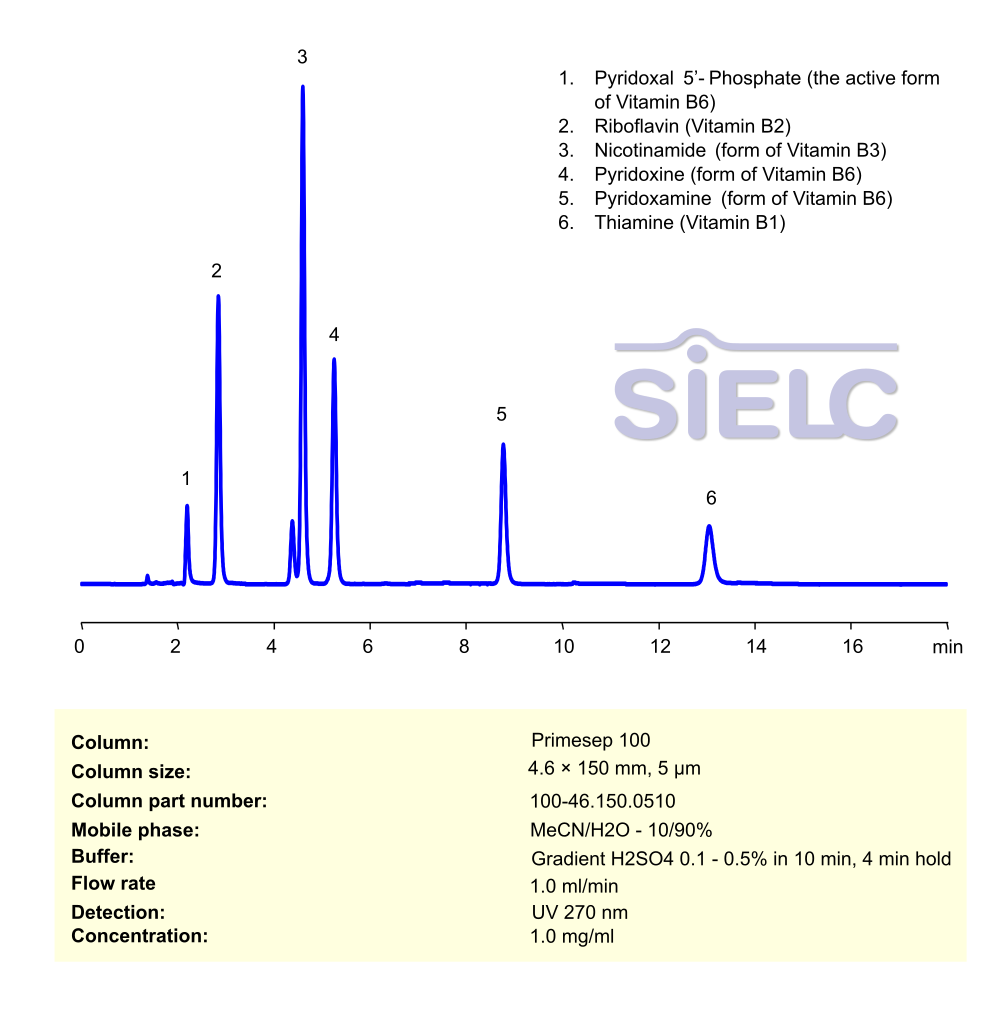
High Performance Liquid Chromatography (HPLC) Method for Analysis of Vitamin B1 (Thiamine), Vitamin B2 (Riboflavin), Nicotinamide, Vitamin B6 (Pyridoxine), Pyridoxamine, Pyridoxal Phosphate
Water-Soluble Vitamins (B1, B2, B3, B6) can be retained, separated and analyzed using a Primesep 100 mixed-mode stationary phase column. The analysis employs an gradient method with a simple mobile phase comprising water, acetonitrile (MeCN), and sulfuric acid as a buffer. This method allows for detection using UV 300 nm.
You can find detailed UV spectra of Vitamin B1 (Thiamine), Vitamin B2 (Riboflavin), Nicotinamide, Vitamin B6 (Pyridoxine), Pyridoxamine, Pyridoxal Phosphate and information about its various lambda maxima by visiting the following links: Vitamins (B1, B2, B3, B6)
| Column | Primesep 100, 4.6 x 150 mm, 5 µm, 100 A, dual ended |
| Mobile Phase | MeCN – 10% |
| Buffer | Gradient H2SO4 -0.1-0.5% in 10 min |
| Flow Rate | 1.0 ml/min |
| Detection | UV 270 nm |
| Class of Compounds | Water-Soluble Vitamins (B1, B2, B3, B6) |
| Analyzing Compounds | Vitamin B1 (Thiamine), Vitamin B2 (Riboflavin), Nicotinamide, Vitamin B6 (Pyridoxine), Pyridoxamine, Pyridoxal Phosphate |
Application Column
Primesep 100
Column Diameter: 4.6 mm
Column Length: 150 mm
Particle Size: 5 µm
Pore Size: 100 A
Column options: dual ended
Pyridoxal Phosphate
Pyridoxamine
Vitamin B1 (Thiamine)
Vitamin B2 (Riboflavin)
Vitamin B6 (Pyridoxine)
HPLC Method for Analysis of Nicotinamide and Pyridoxine on Primesep 100 Column
August 13, 2024
High Performance Liquid Chromatography (HPLC) Method for Analysis of Nicotinamide, Vitamin B6 (Pyridoxine) on Primesep 100 by SIELC Technologies
Separation type: Liquid Chromatography Mixed-mode SIELC Technologies
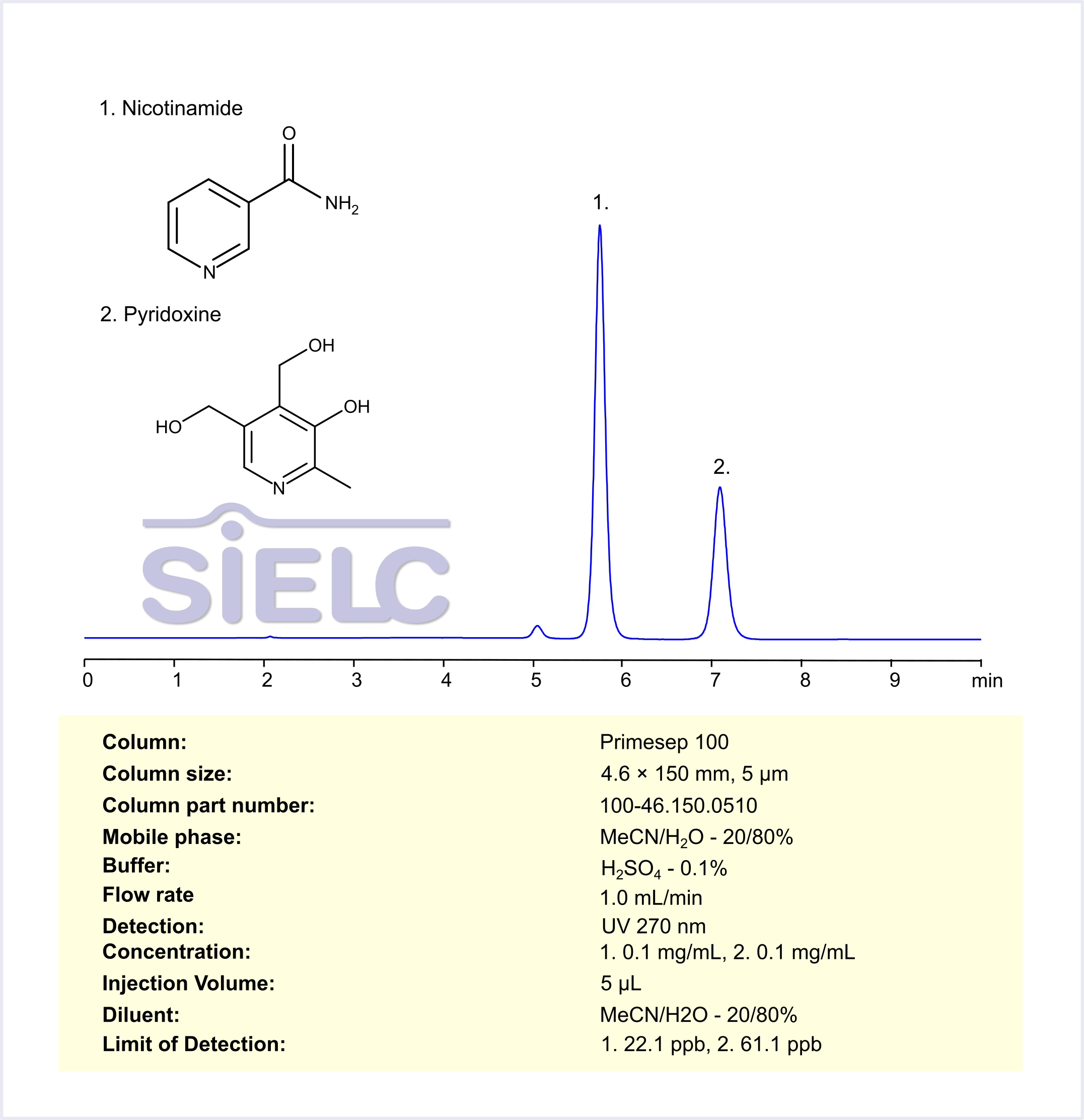
High Performance Liquid Chromatography (HPLC) Method for Analysis of Nicotinamide, Vitamin B6 (Pyridoxine)
Nicotinamide is a specific form of vitamin B3, an essential nutrient that is crucial for various bodily functions. Along with niacin (nicotinic acid), nicotinamide is one of the primary forms of vitamin B3 that the body uses. Both of these forms are converted into coenzymes NAD+ and NADP+, which play vital roles in energy production, DNA repair, and cellular communication. This conversion is essential for maintaining the body’s metabolic processes, highlighting the importance of nicotinamide as a form of vitamin B3.
Pyridoxine is a form of vitamin B6, which is essential for numerous biochemical processes in the body. Vitamin B6 exists in three natural forms—pyridoxine, pyridoxal, and pyridoxamine—all of which are converted into the active coenzyme pyridoxal 5′-phosphate (PLP). This active form is critical for amino acid metabolism, neurotransmitter synthesis, and hemoglobin production. As a form of vitamin B6, pyridoxine is key to maintaining proper neurological and immune function, ensuring that the body can perform a wide range of essential functions.
Nicotinamide, Vitamin B6 (Pyridoxine) can be retained, separated and analyzed using a Primesep 100 mixed-mode stationary phase column. The analysis employs an isocratic method with a simple mobile phase comprising water, acetonitrile (MeCN), and sulfuric acid as a buffer. This method allows for detection using UV 270 nm.
You can find detailed UV spectra of Nicotinamide, Vitamin B6 (Pyridoxine) and information about its various lambda maxima by visiting the following links: UV-Vis Spectrum of Nicotinamide, UV-Vis Spectrum of Pyridoxine.
| Column | Primesep 100, 4.6 x 150 mm, 5 µm, 100 A, dual ended |
| Mobile Phase | MeCN – 20% |
| Buffer | H2SO4 – 0.1% |
| Flow Rate | 1.0 ml/min |
| Detection | UV 270 nm |
| Limit of Detection | 1. 22.1 ppb, 2. 61.1 |
| Class of Compounds | Vitamin B |
| Analyzing Compounds | Nicotinamide, Vitamin B6 (Pyridoxine) |
Application Column
Primesep 100
Column Diameter: 4.6 mm
Column Length: 150 mm
Particle Size: 5 µm
Pore Size: 100 A
Column options: dual ended
Vitamin B6 (Pyridoxine)
UV-Vis Spectrum of Pyridoxine
August 2, 2024
Access the UV-Vis Spectrum SIELC Library
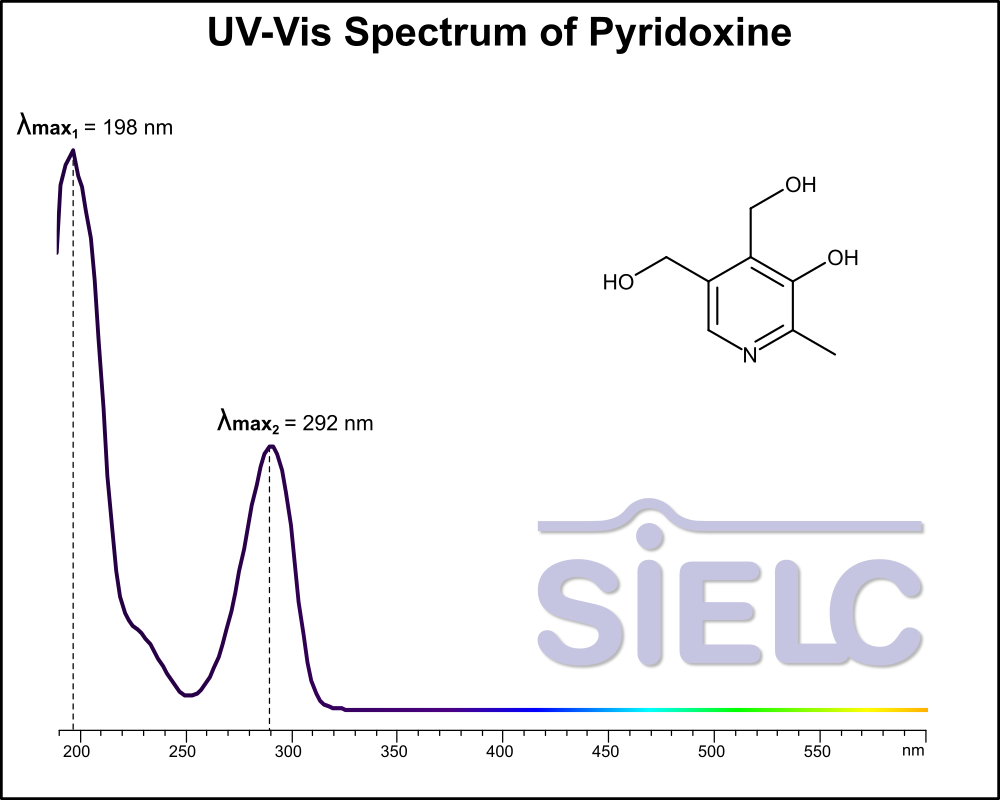
If you are looking for optimized HPLC method to analyze Vitamin B6 (Pyridoxine) check our HPLC Applications library
For optimal results in HPLC analysis, it is recommended to measure absorbance at a wavelength that matches the absorption maximum of the compound(s) being analyzed. The UV spectrum shown can assist in selecting an appropriate wavelength for your analysis. Please note that certain mobile phases and buffers may block wavelengths below 230 nm, rendering absorbance measurement at these wavelengths ineffective. If detection below 230 nm is required, it is recommended to use acetonitrile and water as low UV-transparent mobile phases, with phosphoric acid and its salts, sulfuric acid, and TFA as buffers.
For some compounds, the UV-Vis Spectrum is affected by the pH of the mobile phase. The spectra presented here are measured with an acidic mobile phase that has a pH of 3 or lower.
HPLC Separation of Pyridoxine Hydrochloride (Vitamin B6) and Benfotiamine in Milgamma 100 Tablets on Primesep S Column
December 10, 2020
HPLC Method for Pyridoxine hydrochloride, Benfotiamine, Vitamin B6 (Pyridoxine) on Primesep S by SIELC Technologies
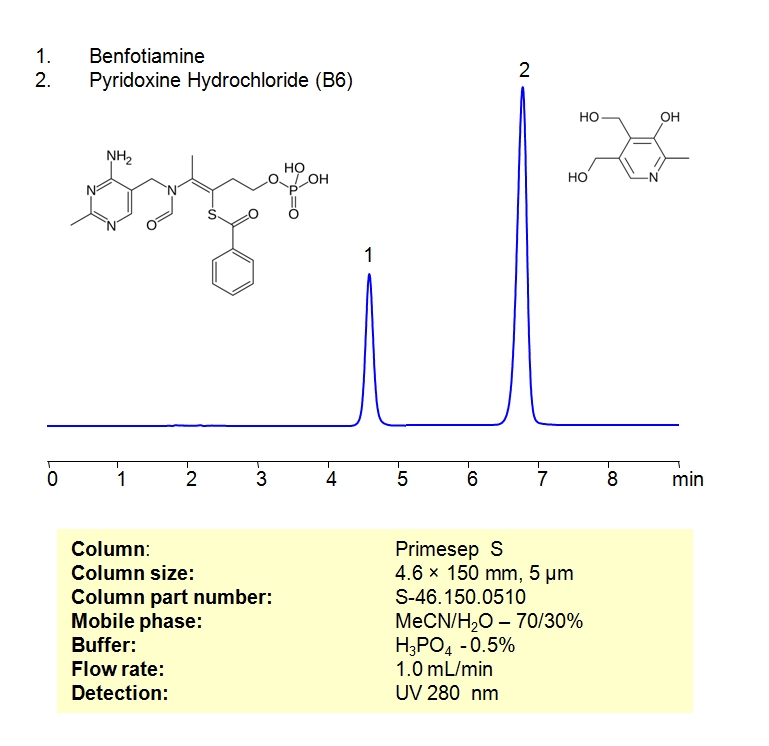
High Performance Liquid Chromatography (HPLC) Method for Analysis of Pyridoxine Hydrochloride (Vitamin B6) and Benfotiamine
Pyridoxine Hydrochloride (also known as Vitamin B6), is a naturally occurring vitamin that can be found in a wide variety of common foods, such as meat, grains, and avocados. Benfotiamine is a synthetic form of Vitamin B1 that has shown early signs of treating nerve damage, Alzheimer’s, alcohol dependence. They can both be found in Milgamma 100 tablets, a medicine prescribed to treat Vitamin B1 and B6 deficiency.
These two vitamins can be detected in the low UV regime. Using a Primesep S normal-phase column and a mobile phase consisting of water and acetonitrile (MeCN) with a phosphoric acid (H3PO4) buffer, Pyridoxine Hydrochloride and Benfotiamine can be retained, separated, and analyzed. This analysis method can be UV detected at 280 nm.
| Column | Primesep S, 4.6 x 150 mm, 5 µm, 100 A, dual ended |
| Mobile Phase | MeCN/H2O -70/30%, |
| Buffer | H3PO4 – 0.5% |
| Flow Rate | 1.0 ml/min |
| Detection | UV 280 nm |
| Class of Compounds |
Vitamin, Drug |
| Analyzing Compounds | Pyridoxine hydrochloride, Benfotiamine, Vitamin B6 (Pyridoxine) |
Application Column
Primesep S
Column Diameter: 4.6 mm
Column Length: 150 mm
Particle Size: 5 µm
Pore Size: 100 A
Column options: dual ended
Pyridoxine hydrochloride
Vitamin B6 (Pyridoxine)
HPLC Method for Separation of Pyridoxine and Doxylamine on Obelisc R Column
March 26, 2020
HPLC Method for Doxylamine, Vitamin B6 (Pyridoxine) on Obelisc R by SIELC Technologies
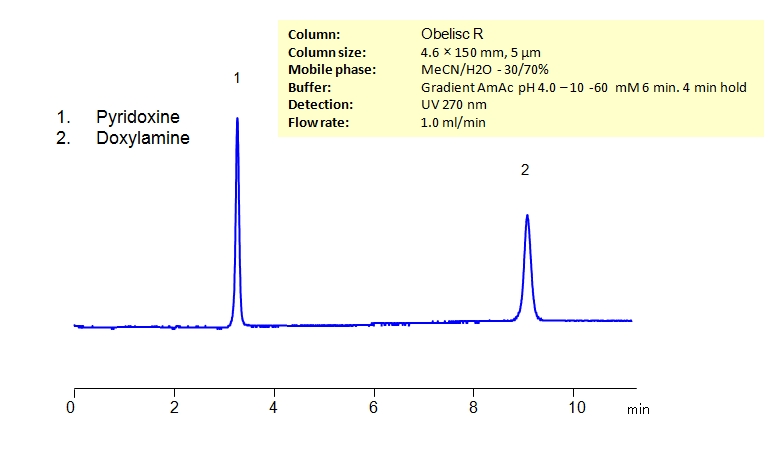
High Performance Liquid Chromatography (HPLC) Method for Analysis of Doxylamine, Vitamin B6 (Pyridoxine).
Pyridoxine, also known as Vitamin B6, with the chemical formula C8H11NO3. It is an essential nutrient required by the body to produce red blood cells and for proper nerve functioning. Sources of it include fish, beef liver, chicken, eggs, dark leafy greens, potatoes, chickpeas, cereals, and more. Deficiency of Vitamin B6 can case dermatitis, sores in the mouth, depression, anemia, and seizures. You can find detailed UV spectra of Doxylamine, Vitamin B6 (Pyridoxine) and information about its various lambda maxima by visiting the following link.
Doxylamine is an antihistamine with the chemical formula C17H22N2O. It is a common treatment for insomnia and allergies. When taken together with Vitamin B, they can treat morning sickness in pregnant women.
Pyridoxine and Doxylamine can be retained, separated, and detected on a normal-phase Obelisc R using an isocratic analytical method with a simple mobile phase of water, Acetonitrile, and an Ammonium Formate buffer. This analysis method can be detected in the low UV regime at 270 nm.
| Column | Obelisc R, 4.6 x 150 mm, 5 µm, 100 A, dual ended |
| Mobile Phase | MeCN/H2O – 30/70% |
| Buffer | AmAc pH 4.0. gradient from 10 to 60 mM in 6 min, 4 min hold |
| Flow Rate | 1.0 ml/min |
| Detection | UV 270 nm, MS- compatible mobile phase |
| Class of Compounds | Hydrophobic, Drug |
| Analyzing Compounds | Doxylamine, Vitamin B6 (Pyridoxine) |
Application Column
Obelisc R
Column Diameter: 4.6 mm
Column Length: 150 mm
Particle Size: 5 µm
Pore Size: 100 A
Column options: dual ended
Vitamin B6 (Pyridoxine)
HPLC Method for Separation of Pyridoxine and Doxylamine on Primesep S Column
March 26, 2020
HPLC Method for Doxylamine, Vitamin B6 (Pyridoxine) on Primesep S by SIELC Technologies

High Performance Liquid Chromatography (HPLC) Method for Analysis of Doxylamine, Vitamin B6 (Pyridoxine).
Pyridoxine, also known as Vitamin B6, with the chemical formula C8H11NO3. It is an essential nutrient required by the body to produce red blood cells and for proper nerve functioning. Sources of it include fish, beef liver, chicken, eggs, dark leafy greens, potatoes, chickpeas, cereals, and more. Deficiency of Vitamin B6 can case dermatitis, sores in the mouth, depression, anemia, and seizures. You can find detailed UV spectra of Pyridoxine and information about its various lambda maxima by visiting the following link.
Doxylamine is an antihistamine with the chemical formula C17H22N2O. It is a common treatment for insomnia and allergies. When taken together with Vitamin B, they can treat morning sickness in pregnant women.
Pyridoxine and Doxylamine can be retained, separated, and detected on a normal-phase Primsep S using an isocratic analytical method with a simple mobile phase of water, Acetonitrile, and an Ammonium Formate buffer. This analysis method can be detected in the low UV regime at 270 nm.
| Column | Primesep S, 4.6 x 150 mm, 5 µm, 100 A, dual ended |
| Mobile Phase | MeCN/H2O |
| Buffer | AmFm pH 3.0- 100 mM |
| Flow Rate | 1.0 ml/min |
| Detection | UV 270 nm, MS- compatible mobile phase |
| Class of Compounds | Hydrophobic, Drug |
| Analyzing Compounds | Doxylamine, Vitamin B6 (Pyridoxine) |
Application Column
Primesep S
Column Diameter: 4.6 mm
Column Length: 150 mm
Particle Size: 5 µm
Pore Size: 100 A
Column options: dual ended
Vitamin B6 (Pyridoxine)
USP Methods for the Analysis of Pyridoxine for the Legacy L1 Column
June 21, 2012
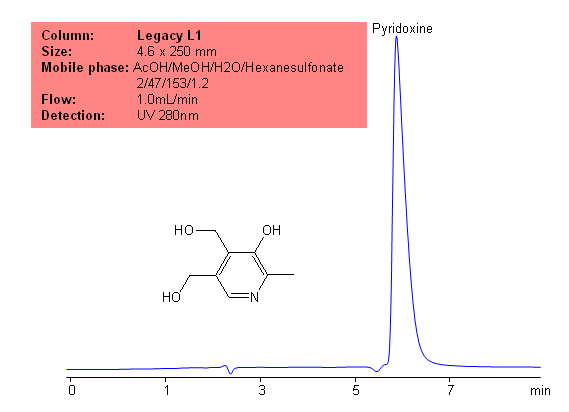
Application Notes: Pyridoxine is part of the vitamin B complex group. Pyridoxine is important in the body’s daily function as it regulates many enzymatic reactions. The USP HPLC method for the separation of pyridoxine was developed on Legacy L1 column according to the US Pharmacopeia methodology. L1 classification is assigned to reversed-phase HPLC column containing C18 ligand. Support for the material is spherical silica gel with particles size 3-10 um and pore size of 100-120A. Resolution between critical pairs corresponds to rules and specifications of UPS.
Application Columns: Legacy L1 C18 HPLC column
Application compounds: Pyridoxine
Mobile phase: AcOH/MeOH/H2O/Hexanesulfonate (2/47/153/1.2)
Detection technique: UV
Reference: USP35- NF30
| Column | Legacy L1, 4.6×250 mm, 5 µm, 100A |
| Mobile Phase | AcOH/MeOH/H2O/Hexanesulfonate 2/47/153/1.2 |
| Buffer | Hexanesulfonate |
| Flow Rate | 1.0 ml/min |
| Detection | UV, 280 nm |
| Class of Compounds |
Drug, Vitamin B₆, Hydrophobic, Ionizable |
| Analyzing Compounds | Pyridoxine |
Application Column
Legacy L1
SIELC's family of Legacy columns is based on the United States Pharmacopeia's (USP) published chromatographic methods and procedures. Numerous brands have columns used in USP reference standards and methods. USP has created various designations to group together columns with similar types of packing and properties in the solid phase. SIELC's Legacy columns adhere to these strict requirements and properties, allowing you to easily replace older columns that are no longer available without needing to significantly modify your method or SOPs.
Select optionsVitamin B6 (Pyridoxine)
HPLC Analysis of Active Drug in a Formulation
October 4, 2010
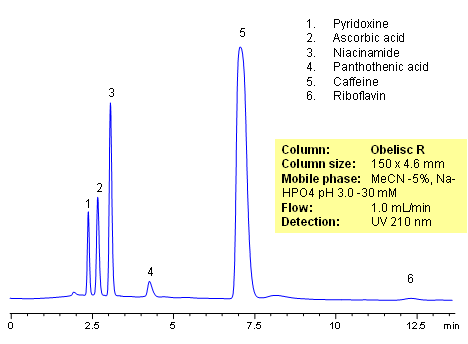
HPLC method for separation of active ingredients of drug/supplemental composition was developed on an Obelisc R trimodal HPLC column. Compounds are retained by combination of reversed-phase, cation-exchange and anion-exchange mechanisms. Compounds are well separated, and method can be used for quantitation of pyridoxine, ascorbic acid, niacinamide, pantothenic acid, caffeine and riboflavin in a mixture or as separate compounds in various complex mixtures. Various detection techniques can be applied for quantitation (ELSD, UV, LC/MS, Corona). This HPLC method can be adopted as general approach for analysis of active drug components in various formulations.
| Column | Obelisc R , 4.6×150 mm, 5 µm, 100A |
| Mobile Phase | MeCN/H2O -5/95% |
| Buffer | NaHPO4 pH 3.0 – 30 mM |
| Flow Rate | 1.0 ml/min |
| Detection | UV, 210 nm |
| Class of Compounds |
Drug, Vitamin B₆, Hydrophobic, Ionizable |
| Analyzing Compounds | Pyridoxine, Ascorbic acid, Niacinamide, Pantothenic acid, Caffeine, Riboflavin |
Application Column
Obelisc R
SIELC has developed the Obelisc™ columns, which are mixed-mode and utilize Liquid Separation Cell technology (LiSC™). These cost-effective columns are the first of their kind to be commercially available and can replace multiple HPLC columns, including reversed-phase (RP), AQ-type reversed-phase, polar-embedded group RP columns, normal-phase, cation-exchange, anion-exchange, ion-exclusion, and HILIC (Hydrophilic Interaction Liquid Chromatography) columns. By controlling just three orthogonal method parameters - buffer concentration, buffer pH, and organic modifier concentration - users can adjust the column properties with pinpoint precision to separate complex mixtures.
Select optionsAscorbic Acid
Caffeine
Niacinamide
Pantothenic Acid (Vitamin B5)
Vitamin B6 (Pyridoxine)
HPLC Separation of Vitamin C, Vitamin Group B, and Related Impurities
August 22, 2008
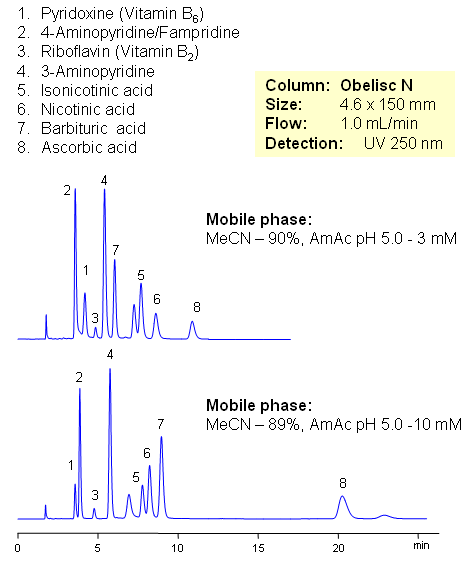
Vitamin C (ascorbic acid) and Vitamins Group B are separated on Obelisc N mixed-mode column. Method can be used in quantitation and determination of polar vitamins in various formulations and dietary supplements. HPLC method can be based on UV, Evaporative Light Scattering Detection (ESLD), RI or MS detection. Effect of sample matrix can be eliminated by changing mobile phase conditions. Buffer concentration, buffer pH and amount of ACN will affect every vitamin differently due to difference in polar and ionic properties.
| Column | Obelisc N , 4.6×150 mm, 5 µm, 100A |
| Mobile Phase | MeCN/H2O |
| Buffer | AmAc pH 5.0 |
| Flow Rate | 1.0 ml/min |
| Detection | UV, 250 nm |
| Class of Compounds |
Drug, Vitamin B₆, Hydrophobic, Ionizable |
| Analyzing Compounds | Pyridoxine, Ascorbic acid, Niacinamide, Pantothenic acid, Caffeine, Riboflavin, Barbituric Acid, 3- Aminopyrine |
Application Column
Obelisc N
SIELC has developed the Obelisc™ columns, which are mixed-mode and utilize Liquid Separation Cell technology (LiSC™). These cost-effective columns are the first of their kind to be commercially available and can replace multiple HPLC columns, including reversed-phase (RP), AQ-type reversed-phase, polar-embedded group RP columns, normal-phase, cation-exchange, anion-exchange, ion-exclusion, and HILIC (Hydrophilic Interaction Liquid Chromatography) columns. By controlling just three orthogonal method parameters - buffer concentration, buffer pH, and organic modifier concentration - users can adjust the column properties with pinpoint precision to separate complex mixtures.
Select options3-Aminopyridine
4-Aminopyridine
Ascorbic Acid
Barbituric Acid
Isonicotinic Acid
Nicotinic Acid (Vitamin B3)
Vitamin B2 (Riboflavin)
Vitamin B6 (Pyridoxine)
HPLC Method for Separation of Vitamins Group B such as Nicotinic Acid, Pyridoxine, Niacinamide, Pantothenic Acid, Riboflavin on Obelisc N Column
August 22, 2008
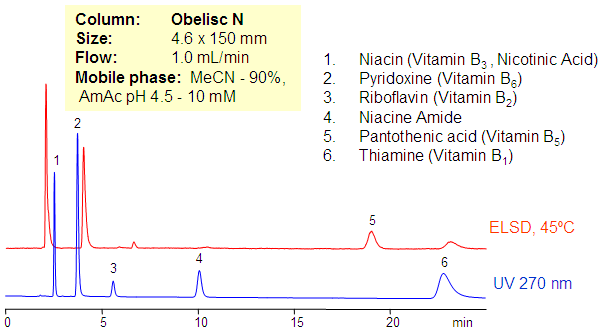
Separation of vitamins group B is achieved on Obelisc N column in HILIC mixed-mode. Vitamins of this group are different in polarity and ionic properties. Retention and separation is achieved by optimization of amount of ACN, buffer and buffer pH. Combination of UV and ELSD detection is used to monitor HPLC separation. B vitamins are water-soluble vitamins that play an important role in cell metabolism. Supplements containing all six are generally referred to as a vitamin B complex. Individual B vitamin supplements are referred to by the specific name of each vitamin. This method can be used to analyze individual B vitamins as well as vitamin B complex. Isolation of impurities as well as degradation products is possible by preparative chromatography.
| Column | Obelisc N , 4.6×150 mm, 5 µm, 100A |
| Mobile Phase | MeCN/H2O |
| Buffer | AmAC pH 4.5 – 10 mM |
| Flow Rate | 1.0 ml/min |
| Detection | UV, 270 nm, ELSD |
| Class of Compounds |
Drug, Vitamin B₆, Hydrophobic, Ionizable |
| Analyzing Compounds | Pyridoxine, Niacinamide, Pantothenic acid, Riboflavin |
Application Column
Obelisc N
SIELC has developed the Obelisc™ columns, which are mixed-mode and utilize Liquid Separation Cell technology (LiSC™). These cost-effective columns are the first of their kind to be commercially available and can replace multiple HPLC columns, including reversed-phase (RP), AQ-type reversed-phase, polar-embedded group RP columns, normal-phase, cation-exchange, anion-exchange, ion-exclusion, and HILIC (Hydrophilic Interaction Liquid Chromatography) columns. By controlling just three orthogonal method parameters - buffer concentration, buffer pH, and organic modifier concentration - users can adjust the column properties with pinpoint precision to separate complex mixtures.
Select optionsNiacinamide
Pantothenic Acid (Vitamin B5)
Vitamin B1 (Thiamine)
Vitamin B2 (Riboflavin)
Vitamin B3 (Niacin)
Vitamin B6 (Pyridoxine)
UV Detection
HPLC Separation of Vitamin B
April 3, 2004
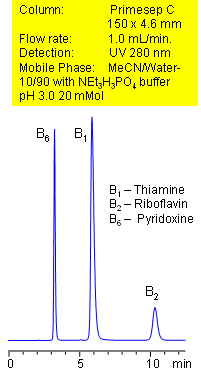
Primesep C separates B vitamins with baseline resolution by a combination of cation exchange, complex formation, and hydrophobic interactions. Vitamin B1 (thiamine), vitamin B2 (riboflavin), and vitamin B6 (pyridoxine) are separated with a mobile phase of water, acetonitrile (MeCN, ACN) and triethylamine (TEA) phosphate with UV detection at 280 nm.
| Column | Primesep C , 4.6×150 mm, 5 µm, 100A |
| Mobile Phase | MeCN/H2O -10/90% |
| Buffer | NEt3H3PO4 Ph 3.0 – 20 Mm |
| Flow Rate | 1.0 ml/min |
| Detection | UV, 280 nm |
| Class of Compounds |
Drug, Vitamin B₆, Hydrophobic, Ionizable |
| Analyzing Compounds | Pyridoxine, Thiamine, Riboflavin |
Application Column
Primesep C
The Primesep family of mixed-mode columns offers a wide variety of stationary phases, boasting unprecedented selectivity in the separation of a broad array of chemical compounds across multiple applications. Corresponding Primesep guard columns, available with all stationary phases, do not require holders. SIELC provides a method development service available to all customers. Inquire about our specially-tailored custom LC-phases for specific separations.
Select optionsVitamin B1 (Thiamine)
Vitamin B2 (Riboflavin)
Vitamin B6 (Pyridoxine)
Vitamins
