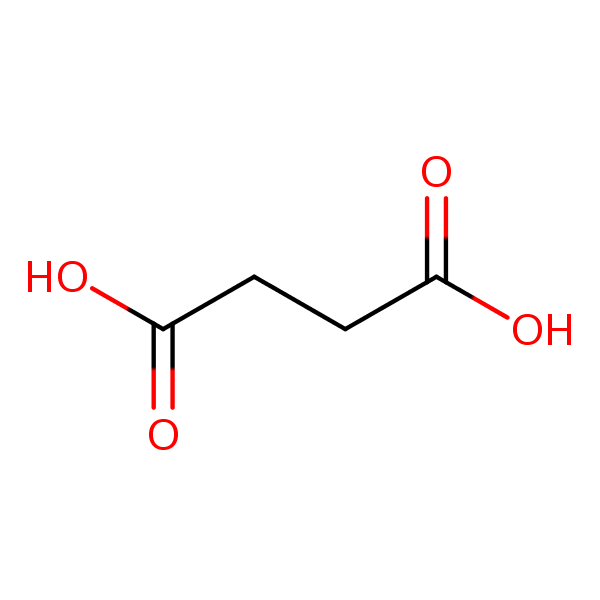
| CAS Number | 110-15-6 |
|---|---|
| Molecular Formula | C4H6O4 |
| Molecular Weight | 118.088 |
| InChI Key | KDYFGRWQOYBRFD-UHFFFAOYSA-N |
| LogP | -0.590 |
| Synonyms |
|
Applications:
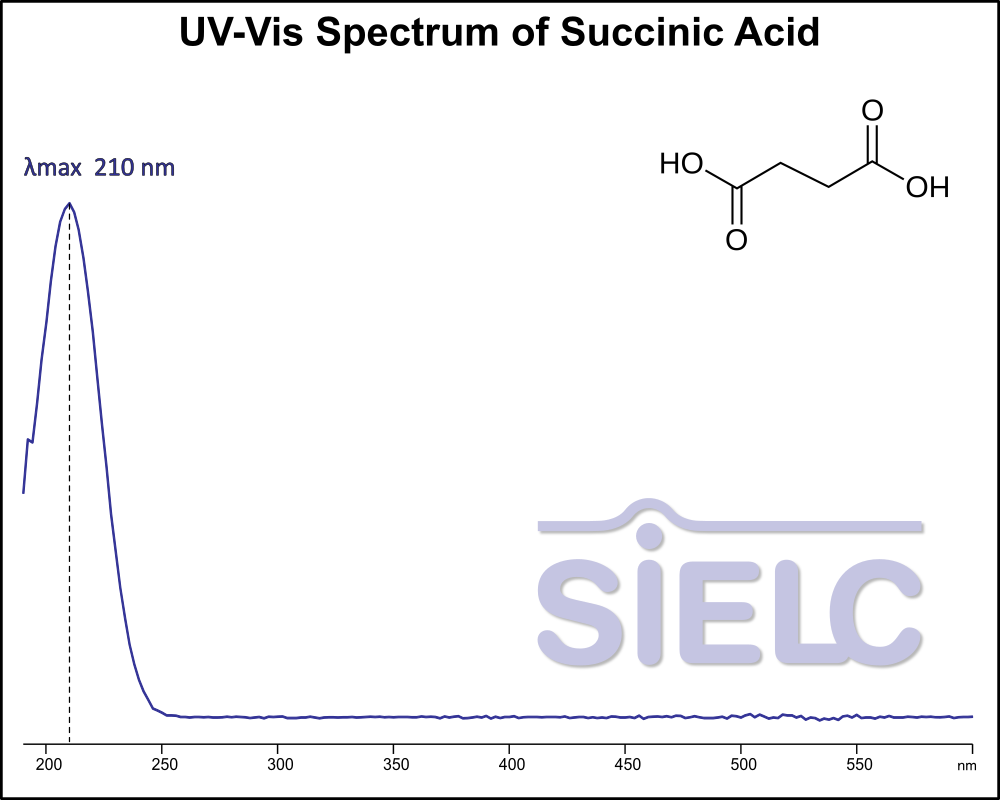
UV-Vis Absorption Spectrum of Succinic Acid
December 17, 2025
If you are looking for optimized HPLC method to analyze Succinic Acid check our HPLC Applications library
For optimal results in HPLC analysis, it is recommended to measure absorbance at a wavelength that matches the absorption maximum of the compound(s) being analyzed. The UV spectrum shown can assist in selecting an appropriate wavelength for your analysis. Please note that certain mobile phases and buffers may block wavelengths below 230 nm, rendering absorbance measurement at these wavelengths ineffective. If detection below 230 nm is required, it is recommended to use acetonitrile and water as low UV-transparent mobile phases, with phosphoric acid and its salts, sulfuric acid, and TFA as buffers.
For some compounds, the UV-Vis Spectrum is affected by the pH of the mobile phase. The spectra presented here are measured with an acidic mobile phase that has a pH of 3 or lower.

HPLC Method for Analysis of Succinic Acid on BIST A+ Column
November 30, 2022
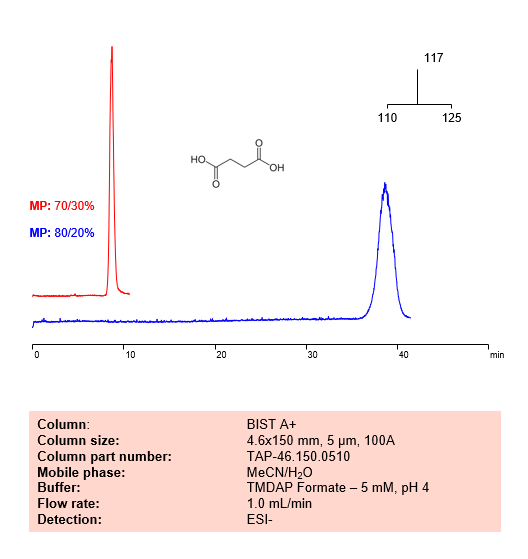
HPLC Method for Succinic Acid on BIST A+ by SIELC Technologies
Succinic Acid is a dicarboxylic acid with the chemical formula C4H6O4. It is a precursor of some polyesters as well as a component of some alkyd resins. In food, it is typically used as an acidity regulator and flavoring agent. Sulfonic acids like 1-Pentanesulfonic acid, 1-Heptanesulfonic acid, 1-Decanesulfonic acid, and 1=Dodecanesulfonic acid are typically used in ion chromatography and for organic syntheses. You can find detailed UV spectra of Succinic Acid and information about its various lambda maxima by visiting the following link.
Using SIELC’s newly introduced BIST™ method, Succinic Acid can be separated on a negatively-charged, cation-exchange BIST A+ column, contrary to conventional chromatographic wisdom. There are two keys to this retention method: 1) a multi-charged, positive buffer, such as N,N,N’,N’-Tetramethyl-1,3-propanediamine (TMDAP), which acts as a bridge, linking the negatively-charged anion analytes to the negatively-charged column surface and 2) a mobile phase consisting mostly of organic solvent (such as MeCN) to minimize the formation of a solvation layer around the charged analytes. Other positively-charged buffers that can generate BIST™ include Calcium acetate and Magnesium acetate. Using this new and unique analysis method, these Sulfonic acids can be separated, retained, and detected through ELSD. This method is also compatible with Mass Spectrometry (LC-MS) and CAD.
Condition
| Column | BIST A+, 4.6 x 150 mm, 5 µm, 100 A, dual ended |
| Mobile Phase | Gradient MeCN |
| Buffer | TMDAP phosphate – 5 mM pH 4.0 |
| Flow Rate | 1.0 mL/min |
| Detection | Vis 600 nm |
Description
| Class of Compounds | Dyes |
| Analyzing Compounds | Succinic Acid |
Application Column
BIST A+
Column Diameter: 4.6 mm
Column Length: 150 mm
Particle Size: 5 µm
Pore Size: 100 A
Column options: dual ended
HPLC Method for Analysis of Dibasic Acids on Newcrom B Column
July 29, 2022
HPLC Method for Adipic Acid, Succinic Acid, Glutaric acid, Methylmalonic Acid on Newcrom B by SIELC Technologies
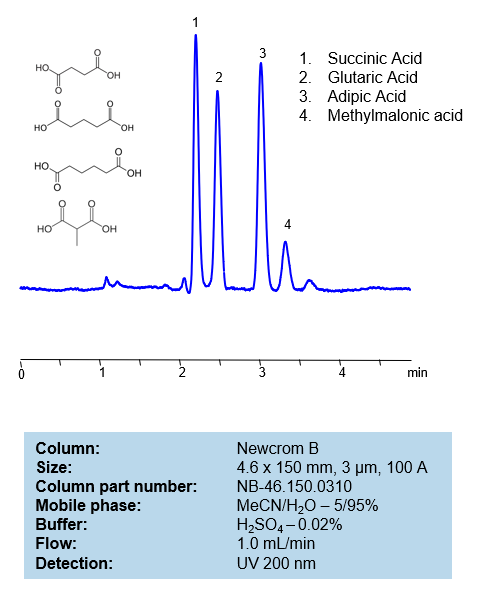
High Performance Liquid Chromatography (HPLC) Method for Analysis of Adipic Acid, Succinic Acid, Glutaric acid, Methylmalonic Acid.
Succinic acid is a key intermediary (in the form of its anion, succinate) in the electron transport chain, a process that is the key power source for our cells. It also has a few limited functions outside of the mitochondria. It has the chemical formula C4H6O4.
Glutaric acid is a common plasticizer precursor with the chemical formula C5H8O4. It is often used in the production of polyester polyols and polyamides. Interestingly, it is significantly more water soluble than either Succinic or Adipic acid.
Adipic acid, also known as hexanedioic acid, is a key precursor to nylon, and more than 2.5 billion kilograms are produced every year. In medicinal uses, it has been incorporated into controlled-release formulation as well as the polymeric coating of hydrophilic monolithic systems. It has the chemical formula C6H10O4.
Methylmalonic Acid is an organic acid with the chemical formula C4H6O4. It works as an intermediate in the breakdown of certain amino acids and fatty acids. Elevated levels of Methylmalonic acid can be a sign of a Vitamin B12 deficiency or Methylmalonic acidemia, which is a rare genetic disorder where the previously mentioned acid is not properly metabolized.
Adipic Acid, Succinic Acid, Glutaric acid, Methylmalonic Acid can be separated, retained, and analyzed on a mixed-mode Newcrom B column with a mobile phase consisting of water, Acetonitrile (MeCN), and Sulfuric acid (FA). This analytical method can be UV detected at 200 nm with high resolution and peak symmetry.
| Column | Newcrom B, 4.6 x 150 mm, 3 µm, 100 A, dual ended |
| Mobile Phase | MeCN/H2O -5/95% |
| Buffer | H2SO4 – 0.02% |
| Flow Rate | 1.0 ml/min |
| Detection | UV 200 nm |
| Class of Compounds | Acid, Hydrophilic |
| Analyzing Compounds | Adipic Acid, Succinic Acid, Glutaric acid, Methylmalonic Acid |
Application Column
Newcrom B
Column Diameter: 4.6 mm
Column Length: 150 mm
Particle Size: 3 µm
Pore Size: 100 A
Column options: dual ended
Glutaric acid
Methylmalonic Acid
Succinic Acid
HPLC Determination of Succinic Anhydride and Succinic Acid on SHARC 1 Column
February 8, 2022
HPLC Method for Succinic anhydride, Succinic Acid on SHARC 1 by SIELC Technologies
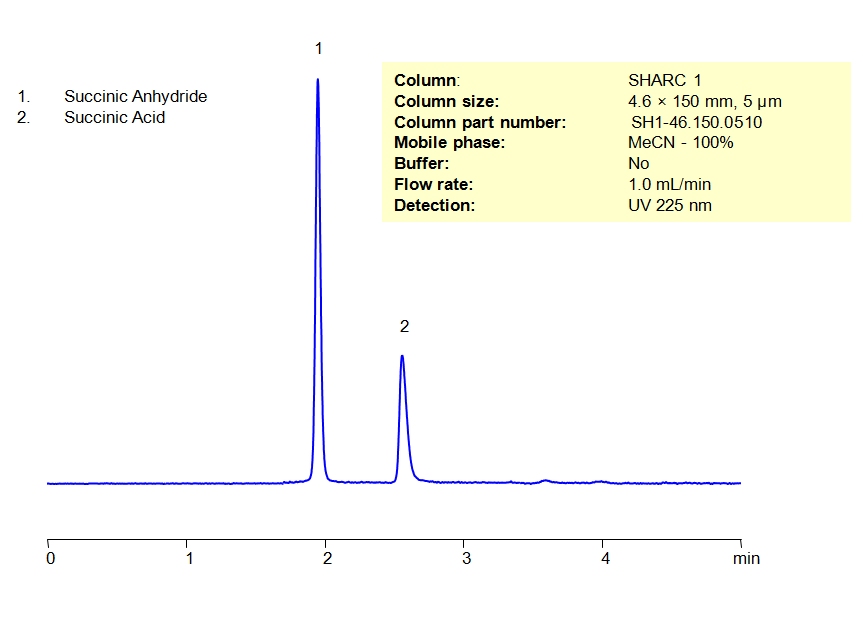
High Performance Liquid Chromatography (HPLC) Method for Analysis of Succinic Anhydride and Succinic Acid
Succinic Acid is a dicarboxylic acid with the chemical formula C4H6O4. It is a precursor of some polyesters as well as a component of some alkyd resins. In food, it is typically used as an acidity regulator and flavoring agent. Sulfonic acids like 1-Pentanesulfonic acid, 1-Heptanesulfonic acid, 1-Decanesulfonic acid, and 1=Dodecanesulfonic acid are typically used in ion chromatography and for organic syntheses. You can find detailed UV spectra of Succinic Acid and information about its various lambda maxima by visiting the following link.
Succinic anhydride is a colorless, crystalline compound with the chemical formula C4H4O3. It is used often in the production of polymer resins, especially of the alkyd variety. It has the ability to increase the solubility of various proteins and has other benefits for the pharmaceutical, flavor, and fragrance industries.You can find detailed UV spectra of Succinic anhydride and information about its various lambda maxima by visiting the following link.
Succinic anhydride, Succinic Acid can be retained and analyzed using the SHARC 1 stationary phase column. The analysis utilizes an isocratic method with a simple mobile phase consisting of acetonitrile (MeCN). Detection is performed using UV.
| Column | SHARC 1, 4.6 x 150 mm, 5 µm, 100 A, dual ended |
| Mobile Phase | MeCN- 100%* |
| Buffer | No |
| Flow Rate | 1.0 ml/min |
| Detection | UV 210 nm |
*Before running, wash the column using 0.5 % phosphoric acid in water and run this MP for a couple of hours. Then switch to pure MeCN.
| Class of Compounds | Anhydride, Acid |
| Analyzing Compounds | Succinic anhydride, Succinic Acid |
Application Column
SHARC 1
Column Diameter: 4.6 mm
Column Length: 150 mm
Particle Size: 5 µm
Pore Size: 100 A
Column options: dual ended
Succinic anhydride
HPLC Method For Analysis Of Succinic Anhydride and Succinic Acid on Primesep S2 Column
February 1, 2022
HPLC Method for Succinic anhydride, Succinic Acid on Primesep S2 by SIELC Technologies

High Performance Liquid Chromatography (HPLC) Method for Analysis of Succinic anhydride, Succinic Acid.
Succinic Acid is a dicarboxylic acid with the chemical formula C4H6O4. It is a precursor of some polyesters as well as a component of some alkyd resins. In food, it is typically used as an acidity regulator and flavoring agent. Sulfonic acids like 1-Pentanesulfonic acid, 1-Heptanesulfonic acid, 1-Decanesulfonic acid, and 1=Dodecanesulfonic acid are typically used in ion chromatography and for organic syntheses. You can find detailed UV spectra of Succinic anhydride, Succinic Acid and information about its various lambda maxima by visiting the following link.
Succinic anhydride is a colorless, crystalline compound with the chemical formula C4H4O3. It is used often in the production of polymer resins, especially of the alkyd variety. It has the ability to increase the solubility of various proteins and has other benefits for the pharmaceutical, flavor, and fragrance industries.You can find detailed UV spectra of Succinic anhydride, Succinic Acid and information about its various lambda maxima by visiting the following link.
Succinic anhydride, Succinic Acid can be retained and analyzed using the Primesep S2 stationary phase column. The analysis utilizes an isocratic method with a simple mobile phase consisting of acetonitrile (MeCN). Detection is performed using UV.
| Column | Primesep S2, 4.6 x 250 mm, 5 µm, 100 A, dual ended |
| Mobile Phase | MeCN- 100% |
| Buffer | No |
| Flow Rate | 1.0 ml/min |
| Detection | UV 225 nm |
| Class of Compounds | Anhydride, Acid |
| Analyzing Compounds | Succinic anhydride, Succinic Acid |
Application Column
Primesep S2
Column Diameter: 4.6 mm
Column Length: 250 mm
Particle Size: 5 µm
Pore Size: 100 A
Column options: dual ended
Succinic anhydride
HPLC Separation of Small Organic Acids on Newcrom B Column
October 22, 2019
HPLC Method for Glycolic acid, Malic Acid, Maleic Acid, Methylmalonic Acid, Succinic Acid, Tartaric Acid, dl-Tartaric acid, Fumaric Acid, Citric Acid, Malonic Acid, Gluconic acid on Newcrom B by SIELC Technologies
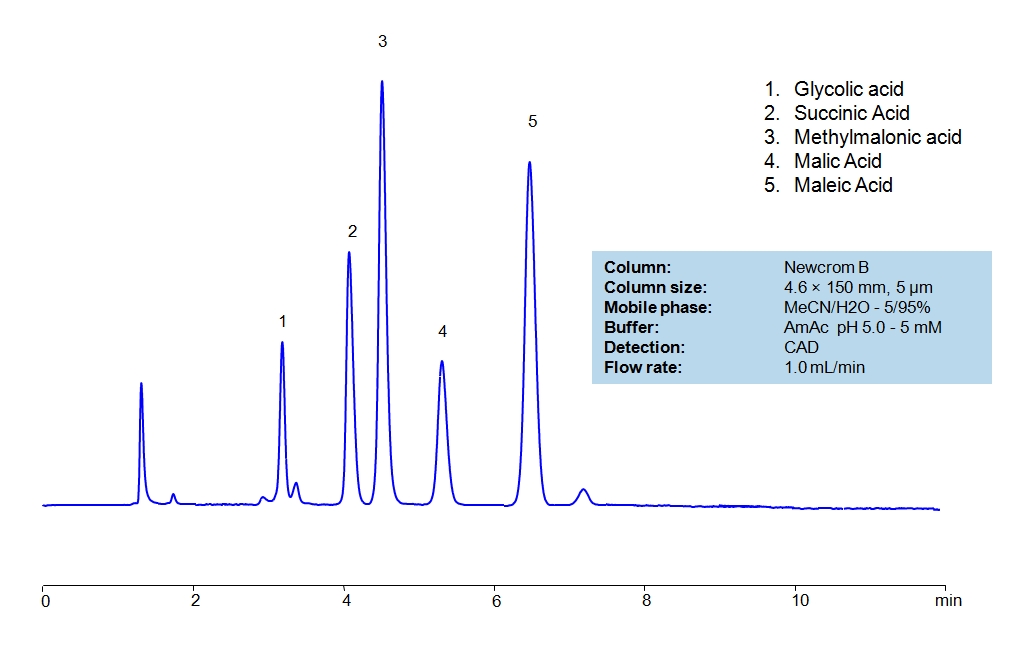
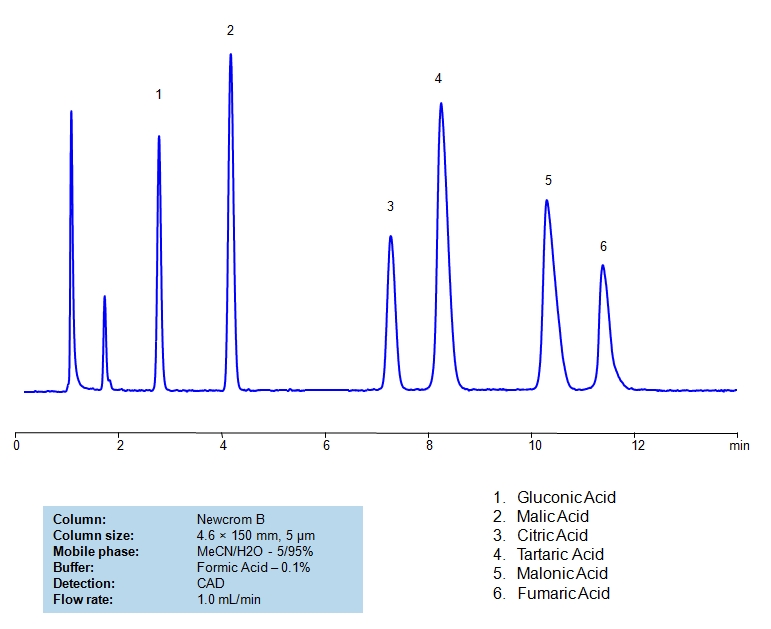
High Performance Liquid Chromatography (HPLC) Method for Analysis of Glycolic acid, Malic Acid, Maleic Acid, Methylmalonic Acid, Succinic Acid, Tartaric Acid, dl-Tartaric acid, Fumaric Acid, Citric Acid, Malonic Acid, Gluconic acid.
Gluconic Acid is an organic acid with the chemical formula C6H12O7. It is naturally found in fruits. Industrially, it is found in honey that is produced by fermenting starch. Typically, it is used in food, beverage, cosmetic, and skin care industries.
Malic Acid is an alpha hydroxy acid with the chemical formula C4H6O5. It is most commonly found in fruits and wines. It is sour, which is partially why it is often used as a food additive. Besides food, it is also used in skin-care as an exfoliant.
Citric Acid is a naturally occurring organic acid found in citrus fruits; it is also an intermediate in the citric acid cycle of aerobic organisms. It is used industrially as an acidity regulator, flavoring, detergent, and more than 2 million tons are produced annually. It’s chemical formula is C₆H₈O₇.
Tartaric Acid is an organic acid with the chemical formula C4H6O6. It is found in fruits like grapes and tamarinds and is a vital component of wine. It is also used in metal cleaning, as an antioxidant, and as an acidulant.
Malonic Acid is an organic compound with the chemical formula C3H4O4. It is also known as cis-butenedioic acid. It is a trans counterpart of fumaric acid. It has a variety of uses from dyeing natural fibers to oil and fat preservative, to synthesis of hydrogels.
Fumaric Acid, also known as trans-butenedioic acid, is an organic compound with C4H4O4 chemical formula. It is used across Food, industrial, and medical industries. In food, is it often used as a preservative, pH regulator, and flavoring akin to citric acid. Industrially, it is used in making polyester resins, polyhydric alcohols, and more. Medically, it is used in denture cleaners and it’s derivatives are used in treating psoriasis.
Glycolic acid, Malic Acid, Maleic Acid, Methylmalonic Acid, Succinic Acid, Tartaric Acid, dl-Tartaric acid, Fumaric Acid, Citric Acid, Malonic Acid, Gluconic acid can be retained and analyzed using the Newcrom B stationary phase column. The analysis utilizes an isocratic method with a simple mobile phase consisting of water and acetonitrile (MeCN). Detection is performed using CAD.
| Column | Newcrom B, 4.6 x 150 mm, 5 µm, 100 A, dual ended |
| Mobile Phase | MeCN/H2O – 5/95% |
| Buffer | AmAc pH 5.0, Formic Acid |
| Flow Rate | 1.0 ml/min |
| Detection | CAD (Corona) MS- compatible mobile phase |
| Class of Compounds | Acid, Hydrophilic, Ionizable |
| Analyzing Compounds | Glycolic acid, Malic Acid, Maleic Acid, Methylmalonic Acid, Succinic Acid, Tartaric Acid, dl-Tartaric acid, Fumaric Acid, Citric Acid, Malonic Acid, Gluconic acid |
Application Column
Newcrom B
Column Diameter: 4.6 mm
Column Length: 150 mm
Particle Size: 5 µm
Pore Size: 100 A
Column options: dual ended
Fumaric Acid
Gluconic acid
Glycolic acid
Maleic Acid
Malic Acid
Malonic Acid
Methylmalonic Acid
Succinic Acid
Tartaric Acid
dl-Tartaric acid
Separation of Compounds in TCA Cycle on Primesep D Column
July 3, 2013
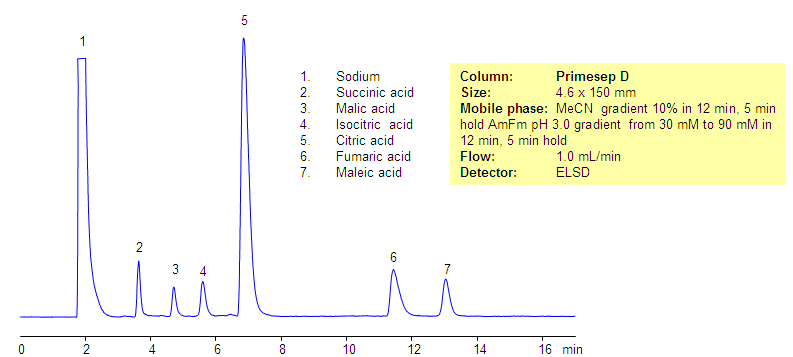
The citric acid cycle (tricarboxylic acid cycle, Krebs cycle) is a key process in the metabolic pathway by which all aerobic organisms generate energy. Compounds generated during TCA are hydrophilic, acidic compounds. Some of the hydrophilic acids are very strong while others are relatively weaker. All compounds have very low hydrophobicity and do not retain by the reversed-phase mechanism on the C18 or C8 HPLC columns. Citric acid and related products were separated in reversed-phase, anion-exchange mode on the Primesep D mixed-mode column. All hydrophilic, acidic compounds are well separated and demonstrate good shape. This robust method can be used for analysis of components of the TCA cycle and other highly hydrophilic compounds. This method is fully compatible with LC/MS and prep chromatography.
| Column | Primesep D, 4.6×150 mm, 5 µm, 100A |
| Mobile Phase | MeCN/H2O |
| Buffer | AmFm, pH 3.0 |
| Flow Rate | 1.0 ml/min |
| Detection | ELSD |
| Class of Compounds |
Acid, Hydrophilic, Ionizable |
| Analyzing Compounds | Sodium, Succinic acid, Malic acid, Isocitric acid, Citric acid, Fumaric acid, Maleic acid |
Application Column
Primesep D
The Primesep family of mixed-mode columns offers a wide variety of stationary phases, boasting unprecedented selectivity in the separation of a broad array of chemical compounds across multiple applications. Corresponding Primesep guard columns, available with all stationary phases, do not require holders. SIELC provides a method development service available to all customers. Inquire about our specially-tailored custom LC-phases for specific separations.
Select optionsFumaric Acid
Isocitric Acid
Maleic Acid
Malic Acid
Sodium
Succinic Acid
Analysis of Compounds of TCA Cycle on SHARC 1 Column
July 2, 2013
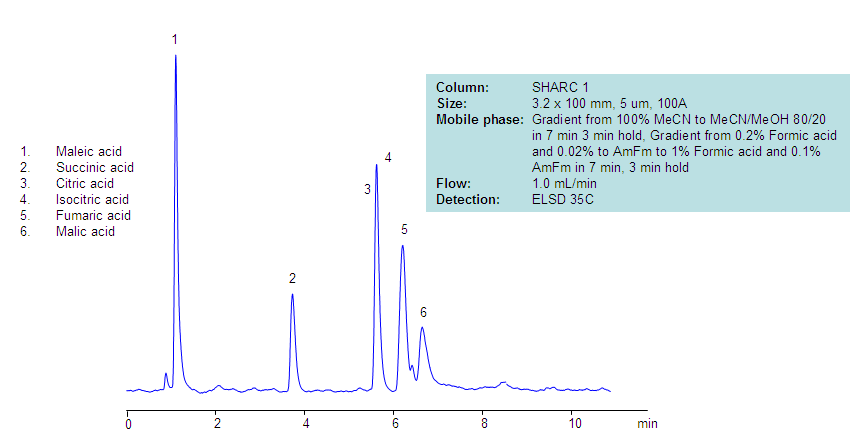
This is an alternative approach for the separation of the TCA cycle intermediates that was developed using novel hydrogen-bonding HPLC column. The organic nature of the mobile phase helps obtain a highly sensitive LC/MS compatible method.
Application Column
SHARC 1
The SHARC™ family of innovative columns represents the first commercially available columns primarily utilizing separation based on hydrogen bonding. SHARC stands for Specific Hydrogen-bond Adsorption Resolution Column. Hydrogen bonding involves an interaction or attraction between a bound hydrogen atom and molecules containing electronegative atoms, such as oxygen, nitrogen, and fluorine.
Select optionsFumaric Acid
Isocitric Acid
Maleic Acid
Malic Acid
Succinic Acid
HPLC Separation of Succinylcholine and Choline Using a Primesep 200 Column
July 11, 2012
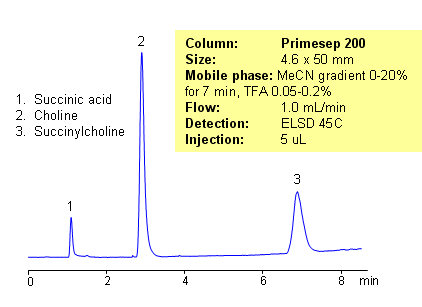
| Column | Primesep 200, 4.6×50 mm, 5 µm, 100A |
| Mobile Phase | Gradient MeCN 0 – 20 %, 7 min |
| Buffer | TFA – 0.05-0.20% |
| Flow Rate | 1.0 ml/min |
| Detection | ELSD 45C |
| Class of Compounds |
Drug, Acid, Paralytic, Hydrophilic, Ionizable |
| Analyzing Compounds | Succinic Acid, Succinylcholine, Choline |
Application Column
Primesep 200
The Primesep family of mixed-mode columns offers a wide variety of stationary phases, boasting unprecedented selectivity in the separation of a broad array of chemical compounds across multiple applications. Corresponding Primesep guard columns, available with all stationary phases, do not require holders. SIELC provides a method development service available to all customers. Inquire about our specially-tailored custom LC-phases for specific separations.
Select optionsSuccinic Acid
Succinylcholine
HPLC Separation of Organic Acids
July 10, 2012
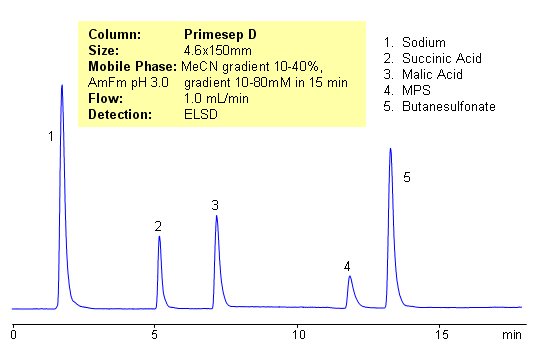
Primesep D mixed-mode column separates organic acids such as succinic acid, malic acid, MPS and butanesulfonate by a mixture of anion exchange and reversed phase mechanisms. Retention times can be changed by adjusting the percentage of acetonitrile in the mobile phase. This can not be done by traditional ion-exchange and ion-exclusion chromatography. The HPLC separation uses a mobile phase of water, acetonitrile (MeCN, ACN) and ammonium formate as a buffer, making the method MS-compatible. Can also use UV detection at 250 nm.
| Column | Primesep D, 4.6×150 mm, 5 µm, 100A |
| Mobile Phase | MeCN/H2O |
| Buffer | AmFm |
| Flow Rate | 1.0 ml/min |
| Detection | ELSD |
| Class of Compounds |
Acid, Hydrophilic, Ionizable |
| Analyzing Compounds | Sodium, Succinic Acid, Malic Acid, MPS, Butanesulfonate |
Application Column
Primesep D
The Primesep family of mixed-mode columns offers a wide variety of stationary phases, boasting unprecedented selectivity in the separation of a broad array of chemical compounds across multiple applications. Corresponding Primesep guard columns, available with all stationary phases, do not require holders. SIELC provides a method development service available to all customers. Inquire about our specially-tailored custom LC-phases for specific separations.
Select optionsMalic Acid
Organic Acids
Sodium
Succinic Acid
UV Detection
Separation of Maleic and Succinic Acid on Primesep B2 column
July 8, 2011
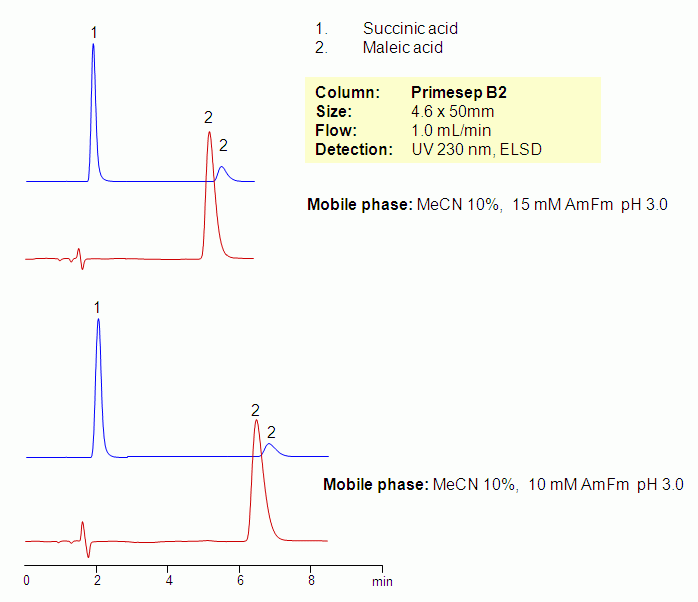
Organic and inorganic acids can be retained and separated on mixed-mode columns based on weak reversed-phase and weak/medium anion-exchange mechanisms. Amount of ACN, buffer concentration and buffer pH will affect retention time of organic and inorganic acids. Acids can be monitored by low UV, ELSD or LC/MS. Presence of ions is required to facilitate ion-exchange mechanism. Method can be used as a general approach for analysis of acidic hydrophilic and acidic hydrophobic compounds. Carboxylic acids along with inorganic acid can be retained and separated without ion-pairing reagent.
| Column | Primesep B2, 4.6×50 mm, 5 µm, 100A |
| Mobile Phase | MeCN/H2O – 10/90% |
| Buffer | AmFm pH 3.0 |
| Flow Rate | 1.0 ml/min |
| Detection | ELSD, UV 230nm |
| Class of Compounds | Acid, Hydrophilic, Ionizable |
| Analyzing Compounds | Succinic Acid, Maleic Acid |
Application Column
Primesep B2
The Primesep family of mixed-mode columns offers a wide variety of stationary phases, boasting unprecedented selectivity in the separation of a broad array of chemical compounds across multiple applications. Corresponding Primesep guard columns, available with all stationary phases, do not require holders. SIELC provides a method development service available to all customers. Inquire about our specially-tailored custom LC-phases for specific separations.
Select optionsOrganic Acids
Succinic Acid
UV Detection
HPLC Separation of Succinic and Methylmalonic Acids
November 12, 2010

Organic and inorganic acids can be separated by reversed-phase anion-exchange Primesep D column. Succinic and methylmalonic acids were separated based on their hydrophobic and ionic properties. Method can be used for analysis of other acids by HPLC.
Application Column
Primesep D
The Primesep family of mixed-mode columns offers a wide variety of stationary phases, boasting unprecedented selectivity in the separation of a broad array of chemical compounds across multiple applications. Corresponding Primesep guard columns, available with all stationary phases, do not require holders. SIELC provides a method development service available to all customers. Inquire about our specially-tailored custom LC-phases for specific separations.
Select optionsOrganic Acids
Succinic Acid
Effect of Both pH and Organic Content on a Separation of Sugars, Amino Acids, and Carboxylic Acids
March 3, 2010
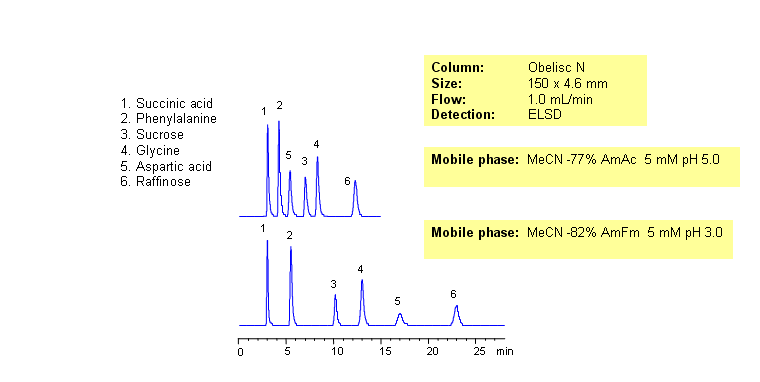
In mixed-mode HILIC chromatography, selectivity of separation can be adjusted by amount of acetonitrile, amount of buffer and buffer pH. Buffer concentration and pH will affect retention of ionizable compounds to a different degree. Retention of neutral compounds can be adjusted by the amount of acetonitrile. Carboxylic acid, three amino acids and two sugars are separated by combination of HILIC and ion-exchange mechanisms. Compounds can be monitored by ELSD, Corona (CAD), LC/MS or low UV. UV-transparent mobile phase /buffer is required for UV monitoring of this mixed-mode separation. This HPLC method can be adopted as general approach for analysis of sugars, amino acids and carboxylic acids.
| Column | Obelisc N, 4.6×150 mm, 5 µm, 100A |
| Mobile Phase | MeCN/H2O |
| Buffer | AmAc |
| Flow Rate | 1.0 ml/min |
| Detection | ELSD |
| Class of Compounds |
Drug, Acid, Hydrophilic, Ionizable, Vitamin, Supplements, Amino acid |
| Analyzing Compounds | Succinic Acid, Phenylalanine, Sucrose, Glycine, Aspartic Acid, Raffinose |
Application Column
Obelisc N
Column Diameter: 4.6 mm
Column Length: 150 mm
Particle Size: 5 µm
Pore Size: 100 A
Column options: dual ended
Phenylalanine
Raffinose
Succinic Acid
Sucrose
HPLC Analysis of Basic Drugs and Acidic Counter-Ions by Mixed-Mode Chromatography
July 16, 2009
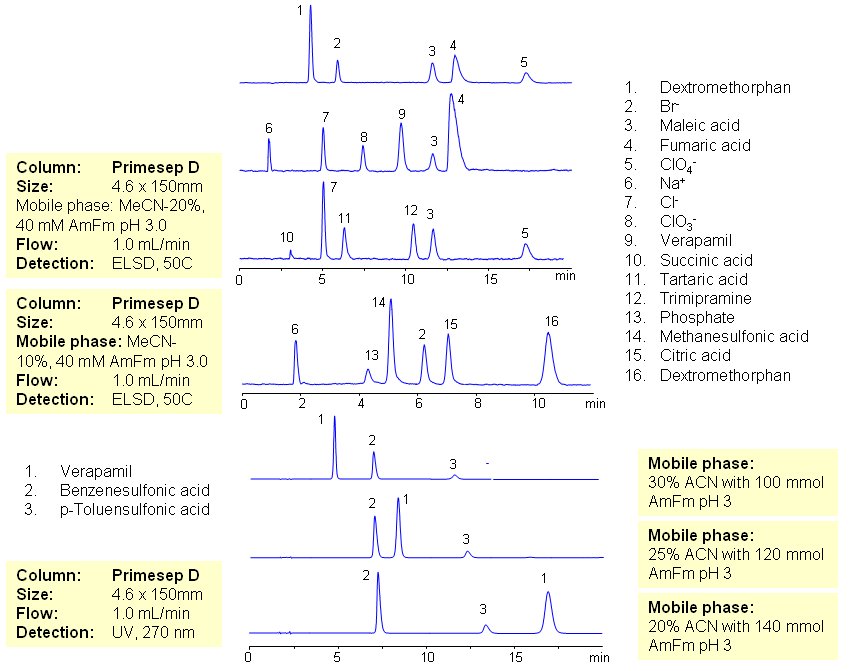
The majority of drugs in the pharmaceutical industry are administered in salt form. The presence of two counter-ions very often necessitates the use of two methods. The nature of these counterparts in drugs can be an inorganic cation and organic acid, inorganic anion and organic base, and organic cation and organic anion. Furthermore, the properties of the molecules will result in a differing stoichiometry. The task of simultaneous quantitation of counter-ions can be achieved by using mixed-mode columns. The general approach for analysis is based on properties of corresponding counter-ions. Hydrophobic basic drugs, like dextromethorphan, verapamil, trimipramine, and corresponding acidic counter-ions (chloride, chlorate, bromide, bromate, perchlorate, maleate, fumarate,tartrate, succinate, phosphate, citrate, benzosulfonate, toleuensulfonate) can be separated and quantitated in the same run on reversed-phase anion-exchange column. Basic hydrophobic drugs are retained by the reversed-phase mechanism, and counter-ions are retained by the reversed-phase and anion-exchange mechanism. Some polar counter-ions are retained only by the anion-exchange mechanism. Retention time and selectivity of HPLC separation of drugs and counter-ions can be achieved by changing the amount of acetonitrile and the amount of ions in the mobile phase. The detection technique depends on the properties of the counter-ions. In case of low or no UV activity, ELSD can be employed if the counter-ion forms a non-volatile salt with the mobile phase additive (ammonium formate). This HPLC method can be used for simultaneous quantitation of other basic drugs and counter-ions. The presence of two mechanisms of retention allows control over retention times of drug and counter-ion independently, and even allows a change of order of elution when necessary.
| Column | Primesep D , 4.6×150 mm, 5 µm, 100A |
| Mobile Phase | MeCN/H2O |
| Buffer | AmFm pH 3.0 |
| Flow Rate | 1.0 ml/min |
| Detection | ELSD, UV 270 |
| Class of Compounds | Ions, Hydrophilic, Hydrophobic, Base, Acids, Ionizable |
| Analyzing Compounds | Sodium Chloride, Sodium chloride, Sodium Chlorate, Sodium bromide, Sodium bromate, Perchloric Acid, Maleic Acid, Fumaric Acid, Tartaric Acid, Succinic Acid, Phosphoric Acid, Citric acid, Benzosulfonic acid, Dextromethorphan, Verapamil, Trimipramine |
Application Column
Primesep D
The Primesep family of mixed-mode columns offers a wide variety of stationary phases, boasting unprecedented selectivity in the separation of a broad array of chemical compounds across multiple applications. Corresponding Primesep guard columns, available with all stationary phases, do not require holders. SIELC provides a method development service available to all customers. Inquire about our specially-tailored custom LC-phases for specific separations.
Select optionsBromide
Chlorate
Chloride
Citric Acid
Dextromethorphan
Fumaric Acid
Maleic Acid
Organic Acids
Perchlorate
Phosphoric Acid
Pyrilamine
Succinic Acid
Tartaric Acid
Verapamil
p-Toluenesulfonic Acid (PTSA)
UV Detection
HILIC Separation of Carboxylic Acids
August 22, 2008
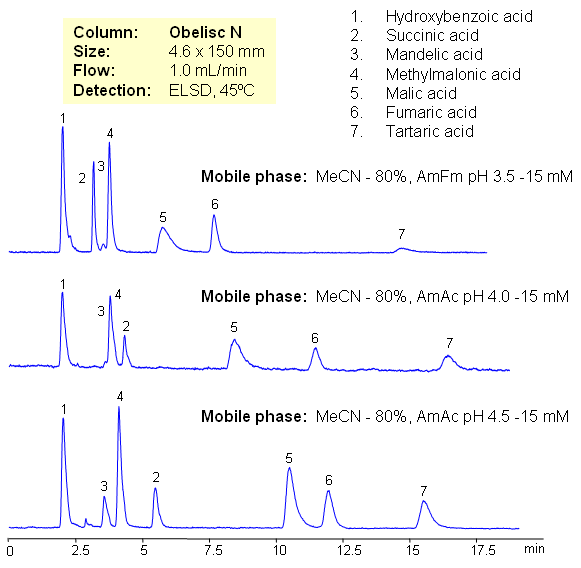
Hydrophilic acids are separated on Obelisc N mixed-mode HILIC column. Seven carboxylic acids are separated based on their polarity and pKa values. Changes in ionization states of acids and stationary phase can be used to control elution order of organic and inorganic acids.
Application Column
Obelisc N
SIELC has developed the Obelisc™ columns, which are mixed-mode and utilize Liquid Separation Cell technology (LiSC™). These cost-effective columns are the first of their kind to be commercially available and can replace multiple HPLC columns, including reversed-phase (RP), AQ-type reversed-phase, polar-embedded group RP columns, normal-phase, cation-exchange, anion-exchange, ion-exclusion, and HILIC (Hydrophilic Interaction Liquid Chromatography) columns. By controlling just three orthogonal method parameters - buffer concentration, buffer pH, and organic modifier concentration - users can adjust the column properties with pinpoint precision to separate complex mixtures.
Select optionsHydroxybenzoic Acid
Malic Acid
Mandelic Acid
Methylmalonic Acid
Organic Acids
Succinic Acid
Tartaric Acid
HPLC Separation of Organic Acids in HILIC Mode on Primesep N Column
December 6, 2007
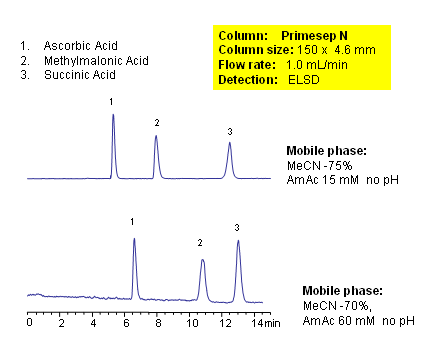
Ascorbic, methylmalonic and succinic are weak organic acids. Retention of these three acids is achieved on Primesep N column in HILIC mode using acetonitrile/water and ammonium acetate. Compounds are monitored by ELSD. Method can be used for determination of ascorbic acid (Vitamin C), methylmalonic acid and succinic acid in various matrices. Other polar organic acids can be analyzed on this HILIC column.
| Column | Primesep N , 4.6×150 mm, 5 µm, 100A |
| Mobile Phase | MeCN/H2O |
| Buffer | AmAc |
| Flow Rate | 1.0 ml/min |
| Detection | ELSD |
| Class of Compounds |
Acid, Vitamin B₆, Hydrophobic, Ionizable |
| Analyzing Compounds | Ascorbic acid (Vitamin C), Methylmalonic acid, Succinic acid |
Application Column
Primesep N
The Primesep family of mixed-mode columns offers a wide variety of stationary phases, boasting unprecedented selectivity in the separation of a broad array of chemical compounds across multiple applications. Corresponding Primesep guard columns, available with all stationary phases, do not require holders. SIELC provides a method development service available to all customers. Inquire about our specially-tailored custom LC-phases for specific separations.
Select optionsMethylmalonic Acid
Organic Acids
Succinic Acid
HPLC Application for Analysis of Sodium Succinate on Primesep 100
December 6, 2007
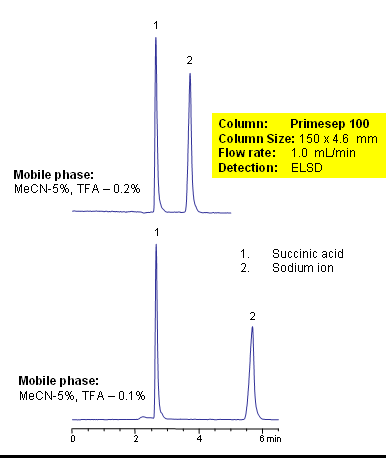
Succinic acid is a dicarboxylic acid that plays important role in citric acid cycle. Succinic acid is byproduct of sugar fermentation, and is present in wines and beer. In one of the forms it exists as a salt with sodium. Both sodium and succinic acid can be retained and separated on Primesep 100 column. Sodium is retained by cation-exchange mechanism, while succinic acid is separated by reverse phase mechanism. Method can be used for HPLC analysis of metal ions (sodium, potassium, lithium, calcium, etc) and carboxylic acids (hydrophobic carboxylic mono and diacids) in one chromatographic run. ELSD is detection of choice for non-UV active non-volatile compounds.
Application Column
Primesep 100
The Primesep family of mixed-mode columns offers a wide variety of stationary phases, boasting unprecedented selectivity in the separation of a broad array of chemical compounds across multiple applications. Corresponding Primesep guard columns, available with all stationary phases, do not require holders. SIELC provides a method development service available to all customers. Inquire about our specially-tailored custom LC-phases for specific separations.
Select options
Separation of Diacid Hydrophobic and Ion Exclusion Modes
October 4, 2005
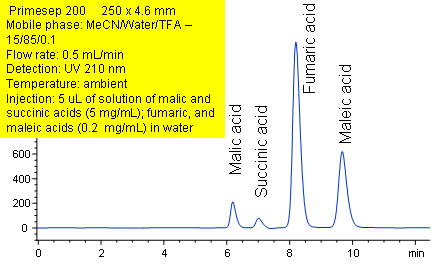
Primesep 200 retains and separates the organic diacids (malic, succinic, fumaric, and maleic) by a combination hydrophobic, reversed-phase interactions and ion exclusion. The separation uses a mobile phase of water, acetonitrile (MeCN, ACN) and trifluoracetic acid (TFA) with UV detection at 210 nm.
Application Column
Primesep 200
The Primesep family of mixed-mode columns offers a wide variety of stationary phases, boasting unprecedented selectivity in the separation of a broad array of chemical compounds across multiple applications. Corresponding Primesep guard columns, available with all stationary phases, do not require holders. SIELC provides a method development service available to all customers. Inquire about our specially-tailored custom LC-phases for specific separations.
Select optionsFumaric Acid
Maleic Acid
Malic Acid
Succinic Acid
Separation of Diacid: Ion Exclusion mode
August 6, 2003
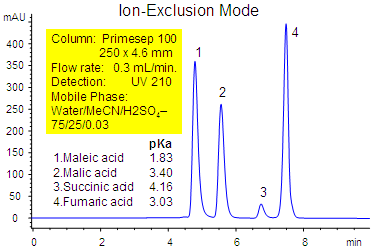
Primesep 100 separates a mixture of dicarboxylic acids in ion-exclusion mode with a mobile phase of water, acetonitrile (MeCN, ACN), and sulfuric acid (H2SO4) with UV detection at 210 nm. Baseline resolution of fumaric, maleic, malic, and succinic acids is obtained in less than 8 minutes. The separation combines ion-exclusion and reversed-phase mechanisms in one method.
Application Column
Primesep 100
The Primesep family of mixed-mode columns offers a wide variety of stationary phases, boasting unprecedented selectivity in the separation of a broad array of chemical compounds across multiple applications. Corresponding Primesep guard columns, available with all stationary phases, do not require holders. SIELC provides a method development service available to all customers. Inquire about our specially-tailored custom LC-phases for specific separations.
Select optionsFumaric Acid
Maleic Acid
Malic Acid
Succinic Acid
