
| CAS Number | 9002-93-1 |
|---|---|
| Molecular Formula | C14H22O(C2H4O)n(n=9-10) |
| Molecular Weight | 647 |
| Synonyms |
|
Applications:
Uv-Vis Spectrum of Triton X-100
March 30, 2026
Access the UV-Vis Spectrum SIELC Library
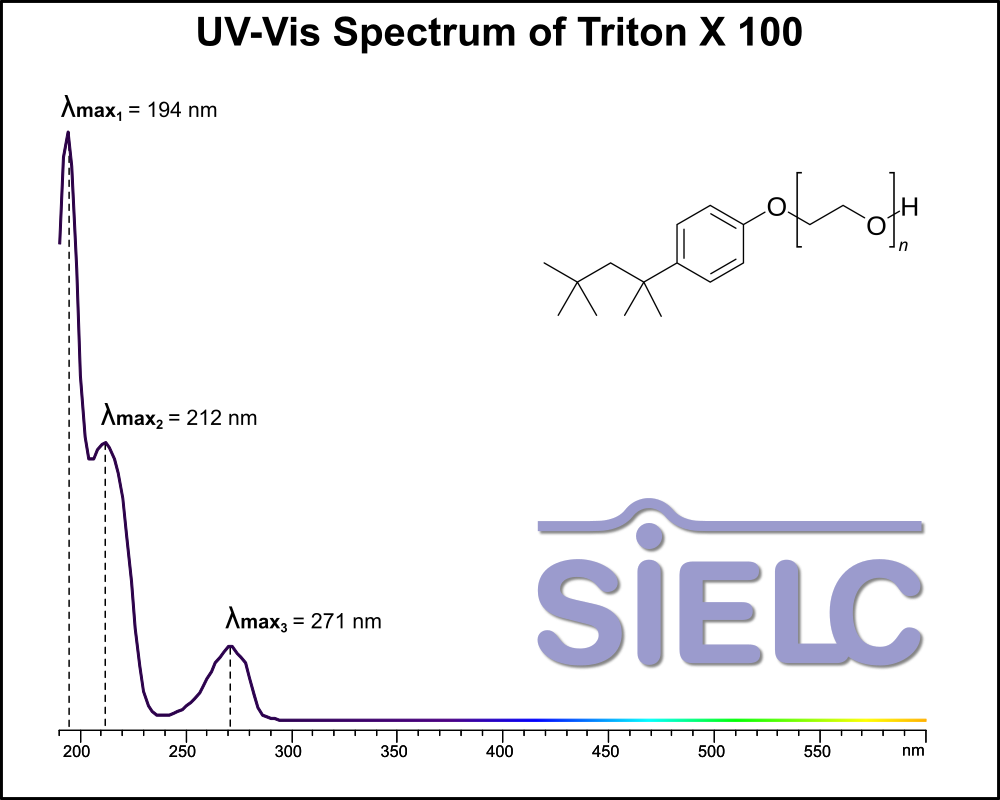
If you are looking for optimized HPLC method to analyze Triton X100 check our HPLC Applications library
For optimal results in HPLC analysis, it is recommended to measure absorbance at a wavelength that matches the absorption maximum of the compound(s) being analyzed. The UV spectrum shown can assist in selecting an appropriate wavelength for your analysis. Please note that certain mobile phases and buffers may block wavelengths below 230 nm, rendering absorbance measurement at these wavelengths ineffective. If detection below 230 nm is required, it is recommended to use acetonitrile and water as low UV-transparent mobile phases, with phosphoric acid and its salts, sulfuric acid, and TFA as buffers.
For some compounds, the UV-Vis Spectrum is affected by the pH of the mobile phase. This analysis was done with the mobile phase made of 20% acetonitrile and 80% water.

HPLC Method for Separation of Hydrophobic, Cationic, Nonionic and Anionic Surfactants on Newcrom BH Column
July 10, 2023
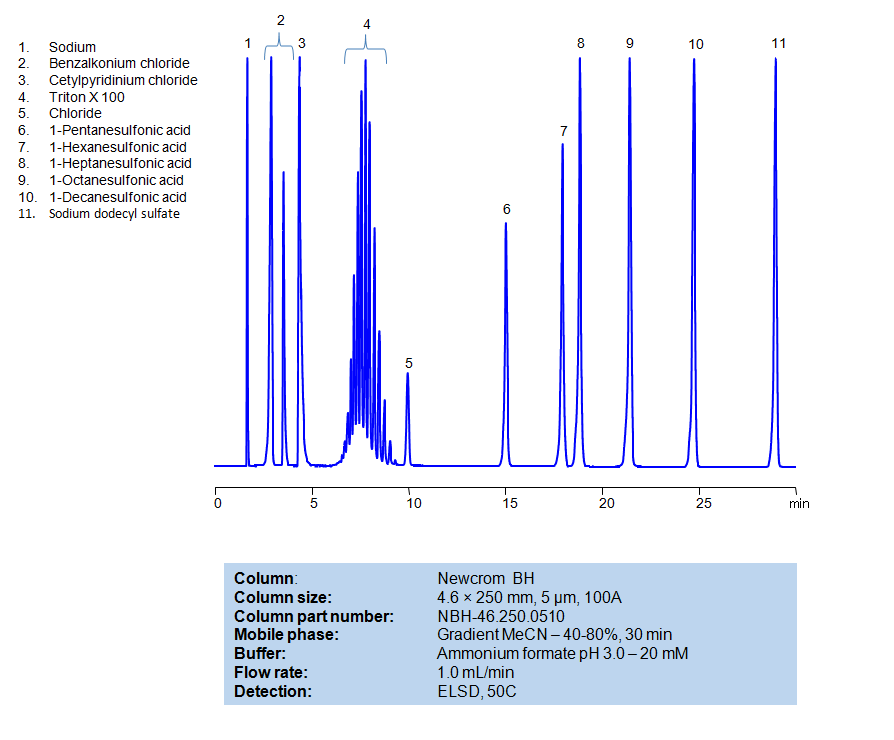
HPLC Method for Separation of Hydrophobic, Cationic, Nonionic and Anionic Surfactants on Newcrom BH by SIELC Technologies
Surfactants, also known as surface-active agents, are compounds that lower the surface tension (or interfacial tension) between two liquids or between a liquid and a solid. Surfactants may act as detergents, wetting agents, emulsifiers, foaming agents, or dispersants.
They are often classified according to the charge of the polar head group:
Anionic Surfactants: These surfactants have a negative charge on their polar head group. Common examples include soap, sodium laureth sulfate, and sodium lauryl sulfate. They are commonly used in detergents and shampoos due to their ability to emulsify oils and hold dirt in suspension, so it can be rinsed away.
Cationic Surfactants: These surfactants have a positive charge on their polar head group. Examples include cetyltrimethylammonium bromide (CTAB) and benzalkonium chloride. These are often used as antiseptics and can also be found in hair conditioners because they reduce static cling.
Nonionic Surfactants: These surfactants have no charge on their polar head group. Examples include alcohol ethoxylates, nonylphenol ethoxylates, and polysorbates. Nonionic surfactants are often used in laundry and dishwasher detergents.
Sodium, which has a chemical symbol of Na, is a soft alkali metal that is highly reactive. It is found in abundance in everyday materials like table salt, sea water, and even the Earth’s crust. It is crucial for the body’s function and fluid balance.
Benzalkonium chloride, also known as Zephiran or Alkyldimethylbenzylammonium chloride, is a positively charged surfactant with the chemical formula C6H5CH2N(CH3)2RCl. It is often used as a pharmaceutical preservative and as an antiseptic. You can find detailed UV spectra of Benzalkonium chloride and information about its various lambda maxima by visiting the following link.
Cetylpyridinium Chloride, also written as CPC, is a cationic quaternary ammonium compound with the chemical formula C21H38ClN. It is commonly used in mouthwashes, toothpastes, lozenges, throat sprays, breath sprays, and nasal sprays due to it’s antiseptic abilities. You can find detailed UV spectra of Cetylpyridinium Chloride and information about its various lambda maxima by visiting the following link.
Triton X100 is a nonionic surfactant with the chemical formula C14H22O(C2H4O)n. It is primarily used as a detergent in laboratories, but it has a wide variety of laboratory uses. Commercially, it can be found in cleaning compounds. You can find detailed UV spectra of Triton X100 and information about its various lambda maxima by visiting the following link.
Chloride is typically used to refer to a compound or molecule that contains a chlorine anion: Cl–. It is an electrolyte that is essential for bodily functions including blood pH, fluid balance, cellular functions, and more. Imbalance of chloride can indicate underlying health problems.
1-Pentanesulfonic acid is an organosulfonic acid with the chemical formula C5H12O3S. It is primarily used in it’s sodium salt form as an anionic pairing agent. You can find detailed UV spectra of 1-Pentanesulfonic acid and information about its various lambda maxima by visiting the following link.
1-Hexanesulfonic acid is an alkyl sulfonate compound with the chemical formula C6H13O3S– (or C6H13NaO3S as a sodium salt). It is primarily used in it’s sodium salt form as an ionic pairing agent in high-performance liquid chromatography.
1-Heptanesulfonic acid is an organosulfonic acid with the chemical formula C7H16O3S. It is primarily used in it’s sodium salt form as an ion-pairing agent. You can find detailed UV spectra of 1-Heptanesulfonic acid and information about its various lambda maxima by visiting the following link.
1-Octanesulfonic acid is an anionic organosulfonic acid with the chemical formula C8H18O3S. It is primarily used in it’s sodium salt form as an ion-pairing agent. You can find detailed UV spectra of 1-Heptanesulfonic acid and information about its various lambda maxima by visiting the following link.
1-Decanesulfonic acid is an alkyl sulfonic acid with the chemical formula C10H21NaO3S. It is primarily used in it’s sodium salt form as an ion-pairing agent. You can find detailed UV spectra of 1-Decanesulfonic acid and information about its various lambda maxima by visiting the following link.
Sodium dodecyl sulfate (SDS), or sodium lauryl sulfate (SLS), is a surfactant used in cleaning, hygienic, and food products. It has a chemical formula C12H25NaSO4, meaning it has twelve carbon hydrophobic tail attached to a polar sulfate. At low concentrations, it is used as a whipping aid and emulsifier in foods containing egg whites. It has a similar use in pharmaceutics as an ionic solubilizer and, also, an emulsifier. In laboratory uses, it is used as a component for lysing cells during RNA extraction or DNA extraction. You can find detailed UV spectra of Sodium dodecyl sulfate and information about its various lambda maxima by visiting the following link.
Benzalkonium chloride, Cetylpyridinium Chloride, Triton X100, 1-Pentanesulfonic acid, 1-Hexanesulfonic acid, sodium salt, 1-Heptanesulfonic acid, 1-Decanesulfonic acid, Sodium dodecyl sulfate, 1-Octanesulfonic acid can be retained, separated, and analyzed using a reverse-phase Newcrom BH, 4.6 x 250 mm, 5 µm, 100 A, dual ended column. The mobile phase for this method consists of water, acetonitrile (MeCN), and Ammonium formate, which serves as a buffer. This analytical method can be detected with an Evaporative Light Scattering Detector (ELSD) or any other evaporative detection method (CAD, ESI-MS).
Condition
| Column | Newcrom BH, 4.6 x 250 mm, 5 µm, 100 A, dual ended |
| Mobile Phase | Gradient MeCN -40-80%, 30 min |
| Buffer | Ammonium formate pH 3.0 – 20 mM |
| Flow Rate | 1.0 ml/min |
| Detection | ELSD, 50C |
Description
| Class of Compounds | Aliphatic sulfonic acid |
| Analyzing Compounds | Benzalkonium chloride, Cetylpyridinium Chloride, Triton X100, 1-Pentanesulfonic acid, 1-Hexanesulfonic acid, sodium salt, 1-Heptanesulfonic acid, 1-Decanesulfonic acid, Sodium dodecyl sulfate, 1-Octanesulfonic acid |
Application Column
Newcrom BH
Column Diameter: 4.6 mm
Column Length: 250 mm
Particle Size: 5 µm
Pore Size: 100 A
Column options: dual ended
1-Heptanesulfonic acid
1-Hexanesulfonic acid, sodium salt
1-Octanesulfonic acid
1-Pentanesulfonic acid
Benzalkonium chloride
Cetylpyridinium Chloride
Sodium dodecyl sulfate
Triton X100
HPLC Separation of the Nonionic Surfactant Triton-X-100
July 11, 2012
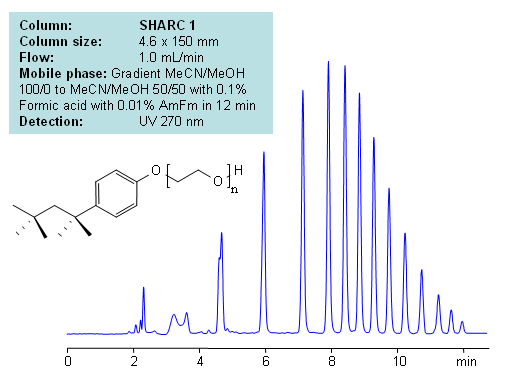
Triton X-100 is a non-ionic surfactant which has a hydrophilic polyethylene oxide group (on average it has 9.5 ethylene oxide units), and a hydrocarbon lipophilic or hydrophobic group. SHARC 1 HPLC columns are used to separate oligomers of Triton X-100. Separation is achieved in anhydrous conditions by hydrogen bonding using acetonitrile (ACN) and methanol (MeOH) as the mobile phase with formic acid and ammonium formate (AmFm) as buffer. This method can be used in determination of oligomers of Triton X-100 in detergents, liquid, paste, and powdered cleaning formulations. This separation can be monitored with almost any detection technique (UV, ELSD, LC/MS, RI, CAD, etc.)
| Column | Sharc 1, 4.6×150 mm, 5 µm, 100A |
| Mobile Phase | Gradient MeCN/MeOH – 100/0- 50/50%, 12 min |
| Buffer | Formic Acid 0.1% , AmFm – 0.01% |
| Flow Rate | 1.0 ml/min |
| Detection | UV, 270 nm |
| Class of Compounds |
Nonionic Surfactant, Hydrophobic, Ionizable |
| Analyzing Compounds | Triton-X-100 |
Application Column
SHARC 1
The SHARC™ family of innovative columns represents the first commercially available columns primarily utilizing separation based on hydrogen bonding. SHARC stands for Specific Hydrogen-bond Adsorption Resolution Column. Hydrogen bonding involves an interaction or attraction between a bound hydrogen atom and molecules containing electronegative atoms, such as oxygen, nitrogen, and fluorine.
Select options
HILIC Separation of Surfactant Triton X-100 on Obelisc N Column
August 22, 2008
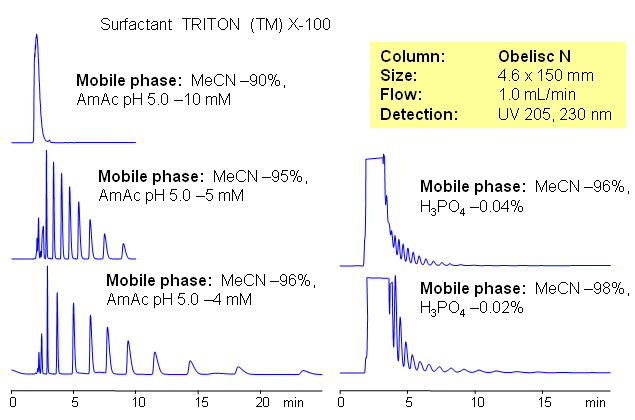
Triton X-100 is a non-ionic surfactant which has a hydrophilic polyethylene oxide group (on average it has 9.5 ethylene oxide units), and a hydrocarbon lipophilic or hydrophobic group. Obelisc N HPLC columns are used to separate oligomers of Triton X-100. Separation is achieved by hydrophilic interaction chromatography. This method can be used in determination of oligomers of Triton X-100 in detergents, liquid, paste, and powdered cleaning formulations. This separation can be monitored with almost any detection technique (ultra-violet, ELSD, LC/MS, RI, CAD, etc.)
| Column | Obelisc N, 4.6×150 mm, 5 µm, 100A |
| Mobile Phase | MeCN/H2O |
| Buffer | AmAc pH 5.0 |
| Flow Rate | 1.0 ml/min |
| Detection | UV 250, 230nm |
| Class of Compounds |
Surfactant, Hydrophobic, Ionizable |
| Analyzing Compounds | Triton X-100 |
Application Column
Obelisc N
Column Diameter: 4.6 mm
Column Length: 150 mm
Particle Size: 5 µm
Pore Size: 100 A
Column options: dual ended
HPLC Separation of Surfactants
November 21, 2006
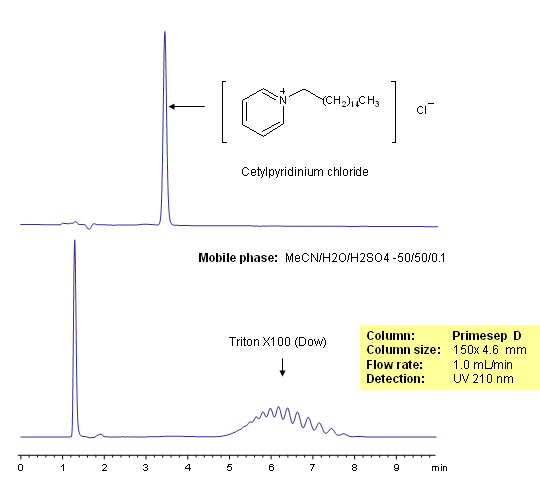
Surfactants are molecules that contain both hydrophilic and hydrophobic groups, usually in the form of a hydrophilic head and a hydrophobic tail. Surfactants are used in detergents where they can form micelles around hydrophobic dirt molecules and wash them away. Triton X-100 is a surfactant with a hydrophilic polyethylene oxide chain that can be separated on a Primesep D reverse-phase HPLC column based on the number of oxide units in the chain. The mobile phase is water, acetonitrile (MeCN, ACN) and sulfuric acid as buffer. UV detection at 210nm.
| Column | Primesep D, 4.6×50 mm, 5 µm, 100A |
| Mobile Phase | MeCN/H2O – 50/50% |
| Buffer | H2SO4- 0.1% |
| Flow Rate | 1.0 ml/min |
| Detection | UV 210nm |
| Class of Compounds |
Surfactant, Hydrophobic, Ionizable |
| Analyzing Compounds | Triton X-100, Cetylpyridinium Chloride |
Application Column
Primesep D
The Primesep family of mixed-mode columns offers a wide variety of stationary phases, boasting unprecedented selectivity in the separation of a broad array of chemical compounds across multiple applications. Corresponding Primesep guard columns, available with all stationary phases, do not require holders. SIELC provides a method development service available to all customers. Inquire about our specially-tailored custom LC-phases for specific separations.
Select optionsTriton X100
