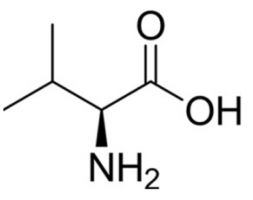
| CAS Number | 72-18-4 |
|---|---|
| Molecular Formula | C5H11NO2 |
| Molecular Weight | 117.148 |
| InChI Key | KZSNJWFQEVHDMF-BYPYZUCNSA-N |
| LogP | -2.03 |
| Synonyms |
|
Applications:
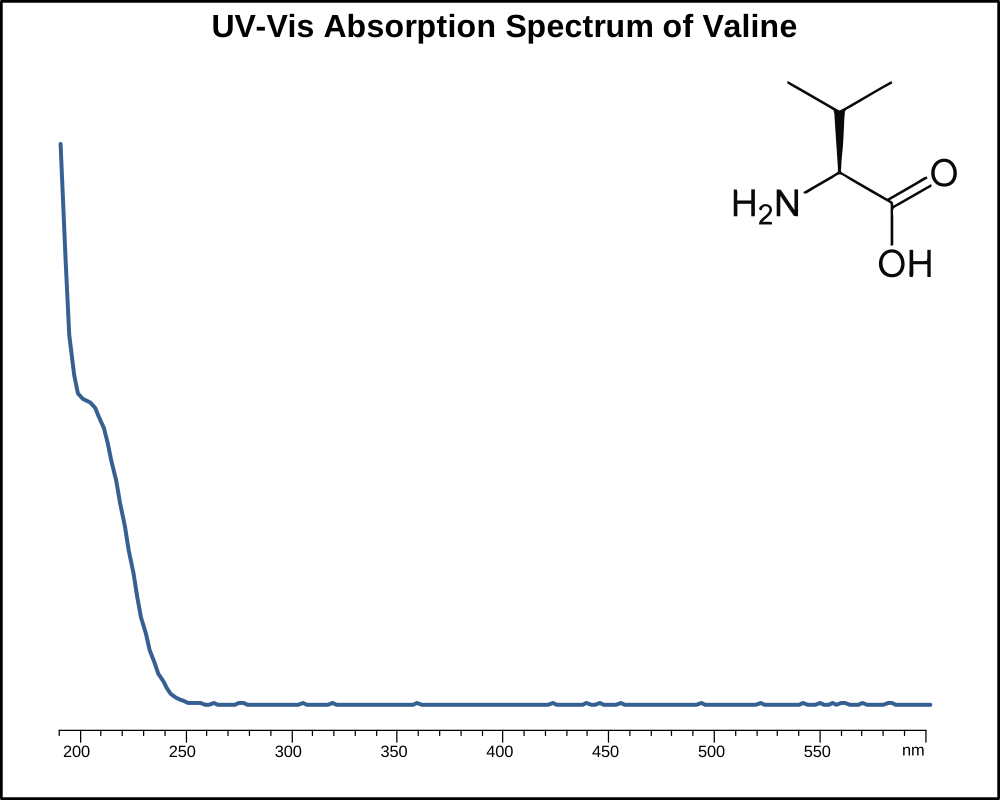
UV-Vis Spectrum of Valine
July 8, 2024
Access the UV-Vis Spectrum SIELC Library
If you are looking for optimized HPLC method to analyze Valine check our HPLC Applications library
For optimal results in HPLC analysis, it is recommended to measure absorbance at a wavelength that matches the absorption maximum of the compound(s) being analyzed. The UV spectrum shown can assist in selecting an appropriate wavelength for your analysis. Please note that certain mobile phases and buffers may block wavelengths below 230 nm, rendering absorbance measurement at these wavelengths ineffective. If detection below 230 nm is required, it is recommended to use acetonitrile and water as low UV-transparent mobile phases, with phosphoric acid and its salts, sulfuric acid, and TFA as buffers.

HPLC Separation of Mixture of Nine Essential Amino acids and Arginine on Newcrom AH Column
September 25, 2020
HPLC Method for L-Threonine, Valine, Methionine, Isoleucine, Leucine, Phenylalanine, Histidine, Tryptophan, Lysine, Arginine on Newcrom AH by SIELC Technologies
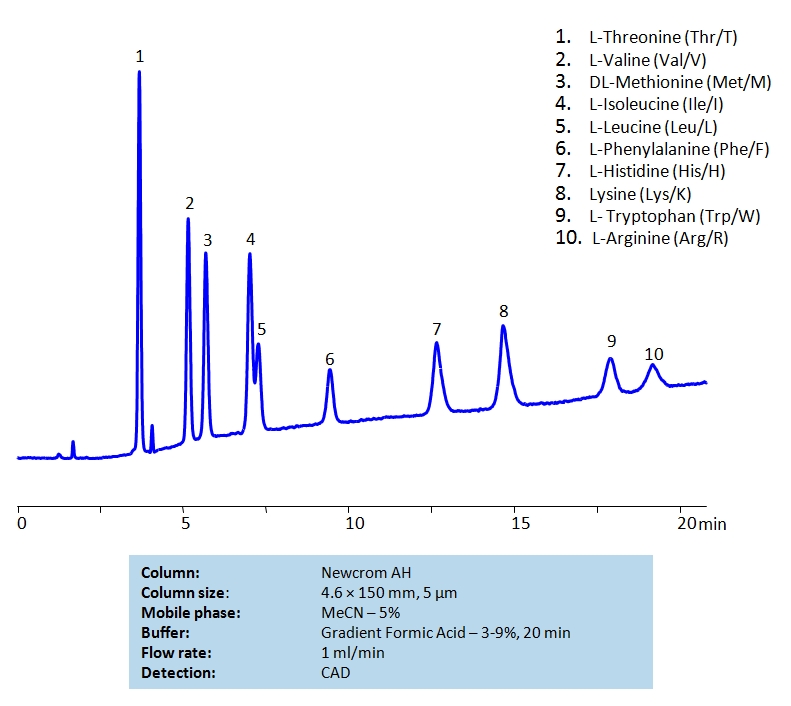
High Performance Liquid Chromatography (HPLC) Method for Analysis of L-Threonine, Valine, Methionine, Isoleucine, Leucine, Phenylalanine, Histidine, Tryptophan, Lysine, Arginine.
Essential amino acids cannot be made by the body. As a result, they must come from food.
The 9 essential amino acids are: histidine, isoleucine, leucine, lysine, methionine, phenylalanine, threonine, tryptophan, and valine.
L-Threonine is an essential amino acid with the chemical formula C4H9NO3. It cannot be produced within the body and must be obtained through consuming it. It’s found in many protein-rich foods, including but not limited to eggs, meat, dairy, legumes, and seeds. It is necessary in the body as a building block of protein like collagen and elastin. The two proteins are crucial for skin, hair, and connective issue.
L-Valine is an essential amino acid with the chemical formula C5H11NO2. It cannot be produced within the body and must be obtained through consuming it. It’s found in foods including but not limited to nuts, legumes, whole grains, and seeds. It is especially beneficial for athletes. It is important for muscle repair, growth, and energy regulation.
DL-Methionine is an essential amino acid with the chemical formula C5H11NO2S. It cannot be produced within the body and must be obtained through consuming it. It is required for protein synthesis. It also helps build and repair tissue including, but not limited to, skin, hair, muscles, and nails. In a veterinary context, DL-Methionine is used to address bladder issues in dogs.
L-Isoleucine is an essential amino acid with the chemical formula C6H13NO2. It cannot be produced within the body and must be obtained through consuming it. It is a building block of protein that are essential for muscle growth, repair, and other bodily functions. It also helps regulate blood sugar levels and supports the immune system. It is found in foods like meat, fish, eggs, dairy, beans, lentils, nuts, and seeds.
L-Leucine is an essential amino acid with the chemical formula C6H13NO2. It cannot be produced within the body and must be obtained through consuming it. It stimulates production of protein that are essential for muscle building and repair. Meats are the easiest way to get L-Leucine in significant amounts.
L-Phenylalanine is an essential amino acid with the chemical formula C6H9NO2. It cannot be produced within the body and must be obtained through consuming it. It is typically found in high protein foods such as meat, eggs, and fish. Outside of being important for creation of protein, it is also used in treatment for skin disorders and depression.
L-Histidine is an essential amino acid with the chemical formula C9H11N3O2. It cannot be produced within the body and must be obtained through consuming it. It s fundamental for repair of damaged tissue, growth of muscles, and making of blood cells. Outside of protein, it also has the unique property of being able to act as a buffer to help maintain stable pH levels in the body. Sources of it include meat, fish, dairy products, beans, and nuts.
L-Tryptophan is an essential amino acid with the chemical formula C11H12N2O2. It cannot be produced within the body and must be obtained through consuming it. Like the other essential proteins, it is a building block for protein and muscle tissue, but it is also converted in the body into serotonin, which affects mood. L-Tryptophan is also used in treatments for severe PMS symptoms, depression, and insomnia. It is naturally found in red meat, poultry eggs, and dairy.
Lysine is an essential amino acid used in the synthesis of proteins. In biological conditions, it is a basic, charged molecule.
L-Arginine is an essential amino acid used in the synthesis of proteins.
L-Threonine, Valine, Methionine, Isoleucine, Leucine, Phenylalanine, Histidine, Tryptophan, Lysine, Arginine can be retained and analyzed using the Newcrom AH stationary phase column. The analysis utilizes a gradient method with a simple mobile phase consisting of water and acetonitrile (MeCN) with a Formic Acid buffer. Detection is performed using CAD.
| Column | Newcrom AH, 4.6 x 150 mm, 5 µm, 100 A, dual ended |
| Mobile Phase | MeCN – 5% |
| Buffer | Gradient Formic Acid – 3-9%, 20 min |
| Flow Rate | 1.0 ml/min |
| Detection | CAD |
| Class of Compounds |
Drug, Acid, Hydrophilic, Ionizable, Vitamin, Supplements, Amino acid |
| Analyzing Compounds | L-Threonine, Valine, Methionine, Isoleucine, Leucine, Phenylalanine, Histidine, Tryptophan, Lysine, Arginine |
Application Column
Newcrom AH
Column Diameter: 4.6 mm
Column Length: 150 mm
Particle Size: 5 µm
Pore Size: 100 A
Column options: dual ended
Histidine
Isoleucine
L-Threonine
Leucine
Lysine
Methionine
Phenylalanine
Tryptophan
Valine
HPLC Separation of Mixture of 12 Amino Acids on Primesep 100 Column
March 11, 2019
HPLC Method for Asparagine, L-Cysteine, Cysteine, Proline, Valine, D-Valine, Methionine, L-Methionine, Isoleucine, D-Isoleucine, DL-Isoleucine, D-Leucine, Phenylalanine, Tryptophan, Histidine, Arginine, Amino Acids, Leucine, L-Threonine on Primesep 100 by SIELC Technologies
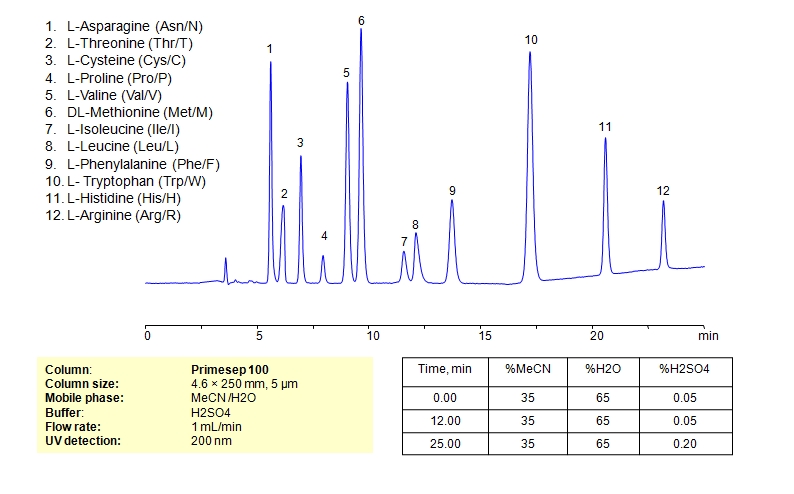
High Performance Liquid Chromatography (HPLC) Method for Analysis of Asparagine, L-Cysteine, Cysteine, Proline, Valine, D-Valine, Methionine, L-Methionine, Isoleucine, D-Isoleucine, DL-Isoleucine, D-Leucine, Phenylalanine, Tryptophan, Histidine, Arginine, Amino Acids, Leucine, L-Threonine.
Amino acids are the building blocks of proteins. Based on their dietary requirement, they are classified into essential and non-essential amino acids. Essential amino acids cannot be synthesized by the human body in sufficient quantities and must be obtained from the diet. Non-essential amino acids, on the other hand, can be synthesized by the body and are not dependent on dietary intake.
It’s worth noting that while these amino acids are considered “non-essential” for adults under normal circumstances because the body can synthesize them, there are situations where some may become “conditionally essential.” This means that under certain conditions like illness, stress, or trauma, the body might not produce them in sufficient quantities, and dietary intake becomes necessary. Arginine, for instance, is considered conditionally essential, especially during periods of rapid growth, illness, or trauma.
Amino acids can be retained, separeted and analyzed on a Primesep 100 mixed-mode stationary phase column using an isocratic analytical method with a simple mobile phase of water, Acetonitrile (MeCN), and a sulfuric acid (H2SO4) as a buffer. This analysis method can be detected in the UV regime at 200 nm.
| Column | Primesep 100, 4.6 x 250 mm, 5 µm, 100 A, dual ended |
| Mobile Phase | MeCN/H2O – 35/65% |
| Buffer | H2SO4 0.05% 12 min hold, gradient 0.05-0.20, 13 min |
| Flow Rate | 1.0 ml/min |
| Detection | UV, 200 nm |
| Class of Compounds |
Drug, Acid, Hydrophilic, Ionizable, Vitamin, Supplements, Amino acid |
| Analyzing Compounds | Asparagine, L-Cysteine, Cysteine, Proline, Valine, D-Valine, Methionine, L-Methionine, Isoleucine, D-Isoleucine, DL-Isoleucine, D-Leucine, Phenylalanine, Tryptophan, Histidine, Arginine, Amino Acids, Leucine, L-Threonine |
Application Column
Primesep 100
Column Diameter: 4.6 mm
Column Length: 250 mm
Particle Size: 5 µm
Pore Size: 100 A
Column options: dual ended
Arginine
Asparagine
Cysteine
D-Isoleucine
D-Leucine
D-Valine
DL-Isoleucine
Histidine
Isoleucine
L-Cysteine
L-Methionine
L-Threonine
Leucine
Methionine
Phenylalanine
Proline
Tryptophan
Valine
HPLC Separation of Mixture of Essential Amino Acids on Primesep 100 Column
March 11, 2019
HPLC Method for Valine, D-Valine, Methionine, L-Methionine, Isoleucine, D-Isoleucine, DL-Isoleucine, L-Isoleucine, D-Leucine, Phenylalanine, Histidine, L-Histidine hydrochloride monohydrate, Tryptophan, Amino Acids, L-Threonine on Primesep 100 by SIELC Technologies
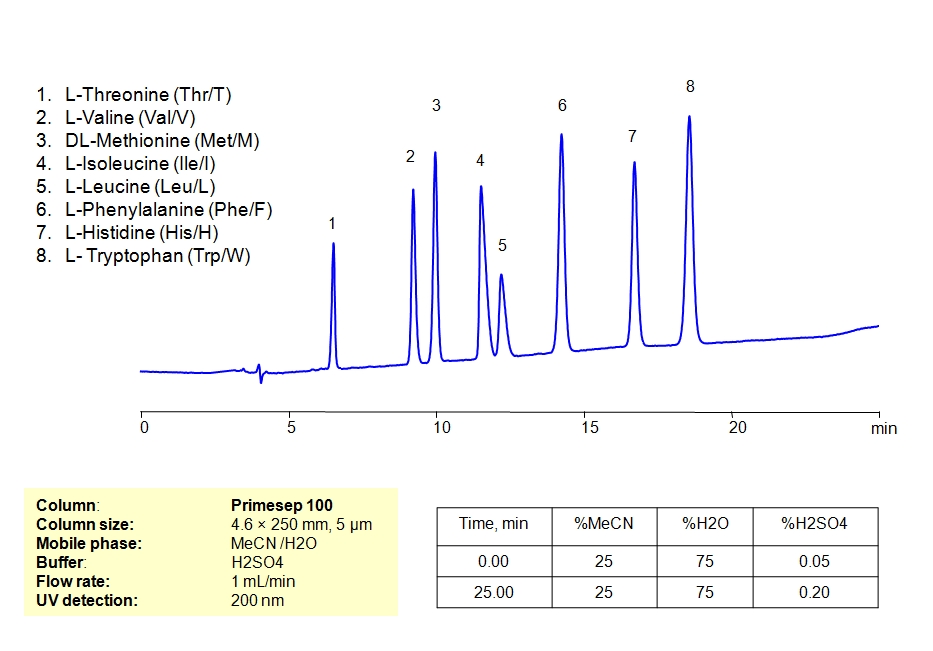
High Performance Liquid Chromatography (HPLC) Method for Analysis of Valine, D-Valine, Methionine, L-Methionine, Isoleucine, D-Isoleucine, DL-Isoleucine, L-Isoleucine, D-Leucine, Phenylalanine, Histidine, L-Histidine hydrochloride monohydrate, Tryptophan, Amino Acids, L-Threonine.
L-Threonine is an essential amino acid with the chemical formula C4H9NO3. It cannot be produced within the body and must be obtained through consuming it. It’s found in many protein-rich foods, including but not limited to eggs, meat, dairy, legumes, and seeds. It is necessary in the body as a building block of protein like collagen and elastin. The two proteins are crucial for skin, hair, and connective issue.
L-Valine is an essential amino acid with the chemical formula C5H11NO2. It cannot be produced within the body and must be obtained through consuming it. It’s found in foods including but not limited to nuts, legumes, whole grains, and seeds. It is especially beneficial for athletes. It is important for muscle repair, growth, and energy regulation.
DL-Methionine is an essential amino acid with the chemical formula C5H11NO2S. It cannot be produced within the body and must be obtained through consuming it. It is required for protein synthesis. It also helps build and repair tissue including, but not limited to, skin, hair, muscles, and nails. In a veterinary context, DL-Methionine is used to address bladder issues in dogs.
L-Isoleucine is an essential amino acid with the chemical formula C6H13NO2. It cannot be produced within the body and must be obtained through consuming it. It is a building block of protein that are essential for muscle growth, repair, and other bodily functions. It also helps regulate blood sugar levels and supports the immune system. It is found in foods like meat, fish, eggs, dairy, beans, lentils, nuts, and seeds.
L-Leucine is an essential amino acid with the chemical formula C6H13NO2. It cannot be produced within the body and must be obtained through consuming it. It stimulates production of protein that are essential for muscle building and repair. Meats are the easiest way to get L-Leucine in significant amounts.
L-Phenylalanine is an essential amino acid with the chemical formula C6H9NO2. It cannot be produced within the body and must be obtained through consuming it. It is typically found in high protein foods such as meat, eggs, and fish. Outside of being important for creation of protein, it is also used in treatment for skin disorders and depression.
L-Histidine is an essential amino acid with the chemical formula C9H11N3O2. It cannot be produced within the body and must be obtained through consuming it. It s fundamental for repair of damaged tissue, growth of muscles, and making of blood cells. Outside of protein, it also has the unique property of being able to act as a buffer to help maintain stable pH levels in the body. Sources of it include meat, fish, dairy products, beans, and nuts.
L-Tryptophan is an essential amino acid with the chemical formula C11H12N2O2. It cannot be produced within the body and must be obtained through consuming it. Like the other essential proteins, it is a building block for protein and muscle tissue, but it is also converted in the body into serotonin, which affects mood. L-Tryptophan is also used in treatments for severe PMS symptoms, depression, and insomnia. It is naturally found in red meat, poultry eggs, and dairy.
Valine, D-Valine, Methionine, L-Methionine, Isoleucine, D-Isoleucine, DL-Isoleucine, L-Isoleucine, D-Leucine, Phenylalanine, Histidine, L-Histidine hydrochloride monohydrate, Tryptophan, Amino Acids, L-Threonine can be retained and analyzed using the Primesep 100 stationary phase column. The analysis utilizes an isocratic method with a simple mobile phase consisting of water and acetonitrile (MeCN) with a sulfuric acid buffer. Detection is performed using UV.
| Column | Primesep 100, 4.6 x 250 mm, 5 µm, 100 A, dual ended |
| Mobile Phase | MeCN/H2O – 25/75% |
| Buffer | Gradient H2SO4 0.05-0.2% 25 min |
| Flow Rate | 1.0 ml/min |
| Detection | UV, 200 nm |
| Class of Compounds |
Drug, Acid, Hydrophilic, Ionizable, Vitamin, Supplements, Amino acid |
| Analyzing Compounds | Valine, D-Valine, Methionine, L-Methionine, Isoleucine, D-Isoleucine, DL-Isoleucine, L-Isoleucine, D-Leucine, Phenylalanine, Histidine, L-Histidine hydrochloride monohydrate, Tryptophan, Amino Acids, L-Threonine |
Application Column
Primesep 100
Column Diameter: 4.6 mm
Column Length: 250 mm
Particle Size: 5 µm
Pore Size: 100 A
Column options: dual ended
D-Isoleucine
D-Leucine
D-Valine
DL-Isoleucine
Histidine
Isoleucine
L-Histidine hydrochloride monohydrate
L-Isoleucine
L-Methionine
L-Threonine
Methionine
Phenylalanine
Tryptophan
Valine
HPLC Separation of Amino Acids in Zero Organic Mode on Primesep 200 column
July 8, 2011
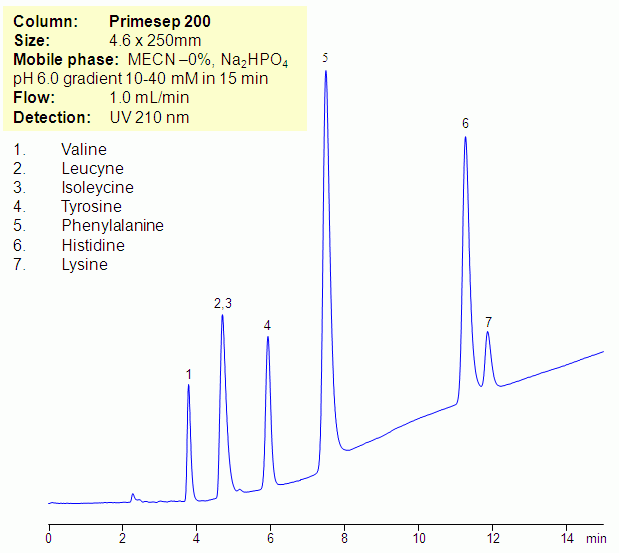
Essential and non-essential amino acids can be retained and separated in zero-organic mode on Primesep mixed-mode HPLC columns. Zero-organic mode is required to monitor isotopes of carbon. Amino acids are retained by combination of reversed-phase and cation-exchange mechanisms. At lower pH, some of the amino acids are more hydrophobic. Buffer pH will affect ionization state of amino acids, and at higher pH (above 2.5), the amino acids will be less hydrophobic and retentive in zero-organic mode. Amino acids can be monitored by low UV. Method can be used in archeological research for analysis of various molecules where presence of organic component of the mobile phase interferes with analysis.
| Column | Primesep 200, 4.6×250 mm, 5 µm, 100A |
| Mobile Phase | MeCN/H2O |
| Buffer | Na2HPO4 |
| Flow Rate | 1.0 ml/min |
| Detection | UV 210 nm |
| Class of Compounds |
Drug, Acid, Hydrophilic, Ionizable, Vitamin, Supplements |
| Analyzing Compounds | Valine, Leucyne, Isoleycine, Tyrosine, Phenylalanine, Histidine, Lysine |
Application Column
Primesep 200
The Primesep family of mixed-mode columns offers a wide variety of stationary phases, boasting unprecedented selectivity in the separation of a broad array of chemical compounds across multiple applications. Corresponding Primesep guard columns, available with all stationary phases, do not require holders. SIELC provides a method development service available to all customers. Inquire about our specially-tailored custom LC-phases for specific separations.
Select optionsIsoleucine
Leucine
Lysine
Phenylalanine
Tyrosine
Valine
HPLC-ELSD Method for Analysis of Amino Acids on Primesep 100 Column
September 18, 2006
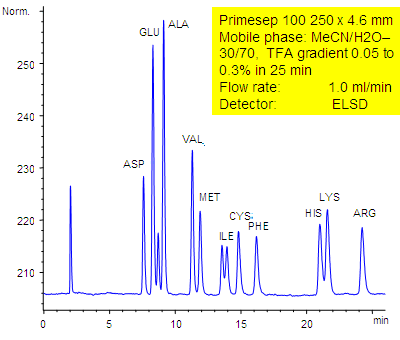
11 underivatized amino acids (aspartic acid, glutamic acid, alanine, valine, methionine, isoleucine, cysteine, phenylalanine, histidine, lysine, and arginine) are separated by a Primesep 100 HPLC column by reversed-phase and ion-exchange mechanisms with LC/MS compatible conditions without the use of ion-pair reagents. The HPLC separation uses a TFA (trifluoroacetic acid) gradient in a mobile phase of water acetonitrile (MeCN, ACN with evaporative light scattering detection (ELSD).
| Column | Primesep 100, 4.6×250 mm, 5 µm, 100A |
| Mobile Phase | MeCN/H2O – 30/70% |
| Buffer | TFA , gradient 0.05-0.3 % , 25 min |
| Flow Rate | 1.0 ml/min |
| Detection | ELSD |
| Class of Compounds |
Drug, Acid, Hydrophilic, Ionizable, Vitamin, Supplements |
| Analyzing Compounds | Aspartic acid, Glutamic acid, Alanine, Valine, Methionine, Isoleucine, Cysteine, Phenylalanine, Histidine, Lysine, Arginine |
Application Column
Primesep 100
The Primesep family of mixed-mode columns offers a wide variety of stationary phases, boasting unprecedented selectivity in the separation of a broad array of chemical compounds across multiple applications. Corresponding Primesep guard columns, available with all stationary phases, do not require holders. SIELC provides a method development service available to all customers. Inquire about our specially-tailored custom LC-phases for specific separations.
Select optionsAmino Acids
Arginine
Aspartic Acid
Cysteine
Glutamic Acid
Histidine
Isoleucine
Lysine
Methionine
Phenylalanine
Valine
HPLC Separation of Amino Acids in Supplements Capsules
April 10, 2005
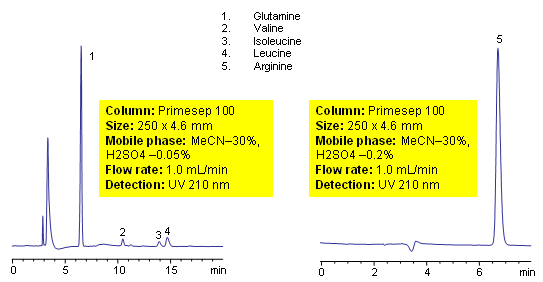
Glutamine, valine, isoleucine, and leucine are baseline resolved in a dietary supplement with a mobile phase of acetonitrile, water, and sulfuric acid with ultraviolet (UV) detection at 210 nm on a Primesep 100 column. Increasing the sulfuric acid concentration allows elution of arginine. Primesep 100 separates underivatized amino acids and amines by combining reversed-phase and ion-exchange mechanisms. The HPLC separation uses a mobile phase of water, acetonitrile (MeCN, ACN), and sulfuric acid with ultraviolet (UV) detection at 210 nm.
| Column | Primesep 100, 4.6×250 mm, 5 µm, 100A |
| Mobile Phase | MeCN/H2O – 30/70% |
| Buffer | H2SO4 |
| Flow Rate | 1.0 ml/min |
| Detection | UV, 210 nm |
| Class of Compounds |
Drug, Acid, Hydrophilic, Ionizable, Vitamin, Supplements, Amino acid |
| Analyzing Compounds | Arginine, Glutamine, L-Valine (Val/V), L-Isoleucine (Ile/I), L-Leucine (Leu/L) |
Application Column
Primesep 100
The Primesep family of mixed-mode columns offers a wide variety of stationary phases, boasting unprecedented selectivity in the separation of a broad array of chemical compounds across multiple applications. Corresponding Primesep guard columns, available with all stationary phases, do not require holders. SIELC provides a method development service available to all customers. Inquire about our specially-tailored custom LC-phases for specific separations.
Select optionsGlutamine
Isoleucine
Leucine
Valine
Bufferless Ion Separation (BLIS™) Chromatography of Amino Acids (2)
January 30, 2005
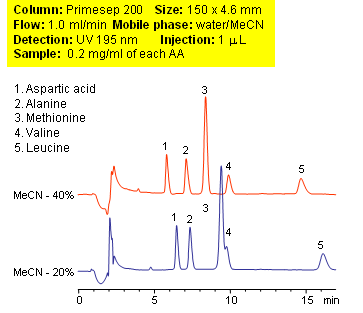
Adding on to the previous HPLC separation of amino acids using Bufferless Ion Separation (BLIS) Chromatography; here we have additional amino acids separated on Primesep 200 column using only water and acetonitrile (MeCN, ACN) in the mobile phase. Primesep 200 is a reverse-phase (RP) column with weak acidic ion-pairing groups embedded. With no buffer present in the mobile phase, detection can be achieved with UV, mass spectrometry (MS), evaporative light scattering detection (ELSD).
| Column | Primesep 200, 4.6×150 mm, 5 µm, 100A |
| Mobile Phase | MeCN |
| Buffer | No |
| Flow Rate | 1.0 ml/min |
| Detection | UV, 195 nm |
| Class of Compounds |
Drug, Acid, Hydrophilic, Ionizable, Vitamin, Supplements, Amino acid |
| Analyzing Compounds | Aspartic acid, Alanine, Valine, Methionine, Leucine |
Application Column
Primesep 200
The Primesep family of mixed-mode columns offers a wide variety of stationary phases, boasting unprecedented selectivity in the separation of a broad array of chemical compounds across multiple applications. Corresponding Primesep guard columns, available with all stationary phases, do not require holders. SIELC provides a method development service available to all customers. Inquire about our specially-tailored custom LC-phases for specific separations.
Select optionsAmino Acids
Aspartic Acid
Leucine
Methionine
Valine
